space
Space: The Final Frontier. Exploring space developments and theorizing about how humans fit into the universe.
🌙 Solar Power at Night: The Science Behind Anti-Solar Panels Explained
For years, solar energy has been one of the most promising and eco-friendly power sources available. But it’s always come with one undeniable flaw: it doesn’t work at night. Once the sun goes down, solar panels stop generating electricity, and we rely on batteries or backup grids to keep things running. But what if we could flip the script? What if solar panels could produce energy in the dark? Welcome to the world of anti-solar panels — a revolutionary concept where panels generate electricity at night using the heat escaping from the Earth. It’s a fascinating blend of science, engineering, and futuristic thinking. And it’s not science fiction anymore — it’s already in the works. 🔬 What Are Anti-Solar Panels? Unlike traditional solar panels that absorb sunlight and convert it into electricity, anti-solar panels (also known as thermoradiative cells) work in reverse. Here’s the core idea: During the day, the Earth absorbs energy from the sun. At night, that heat slowly radiates back into space. Anti-solar panels capture this outgoing infrared radiation and convert it into usable energy. It’s the same basic principle as solar, just inverted. ⚙️ How Do They Work? Anti-solar panels use a special material that emits infrared light as it cools down. When facing the cold night sky — which is effectively a heat sink — these panels release heat and generate a thermal gradient. That temperature difference can be converted into electricity. The core technology relies on: Thermoradiative diodes (a reverse of traditional photovoltaic cells) Radiative cooling (heat flowing away from warm Earth to cool sky) Infrared light emission, not absorption Stanford University researchers first tested this idea in 2020. By 2022, they managed to produce 50 milliwatts per square meter — enough to power small electronics like LED lights or sensors. Today in 2025, advancements are pushing the potential even further. 🌍 Why the World Needs Nighttime Solar Power Here’s why anti-solar panels could be a game changer: ✅ 1. 24/7 Renewable Energy Traditional solar panels only work 6–10 hours a day. Anti-solar panels could fill the gap overnight, reducing the need for costly energy storage systems. ✅ 2. Remote and Off-Grid Use Night panels could power remote areas or disaster zones where grid access is limited but nighttime sky is clear and cool. ✅ 3. Climate-Friendly Urban Tech They can power nighttime streetlights, remote sensors, or smart buildings — without relying on batteries or grid connections. 🌐 Countries Leading the Innovation 🇺🇸 United States Stanford, UC Davis, and other U.S. institutions are leading in thermoradiative research. California startups are now testing hybrid panels that harvest power day and night on smart homes and EV chargers. 🇨🇳 China Chinese researchers are deploying early-stage anti-solar prototypes on rural rooftops and light poles to test scalability and efficiency. 🇦🇺 Australia With long clear nights and vast open land, Australian universities are piloting dual-purpose panels for agriculture and rural communities. ⚠️ Challenges to Overcome While exciting, anti-solar panels still face major hurdles: Low energy output (currently \~0.05 watts/m² vs 200–300 for solar) High cost of thermoradiative materials Weather dependence — needs clear skies for effective heat radiation Scaling production for commercial or residential use However, these are the same issues solar panels faced in the 1990s. And we all know how far they’ve come. 🔮 What’s Next? Looking ahead, we can expect: Hybrid panels that switch modes (solar during day, anti-solar at night) Urban integration for powering sensors, smart signage, and lighting Space tech use, where heat differences are extreme More efficient thermoradiative cells, possibly within 5–7 years As innovation accelerates and prices fall, anti-solar technology could become a core part of the clean energy movement. 💡 Final Thoughts The idea of solar power at night once seemed impossible. But today, with anti-solar panels, the impossible is becoming reality. While the technology is still young, it holds the potential to revolutionize how we think about renewable energy. No longer limited by sunlight, we may soon live in a world where power flows 24/7 — from both the heat of the sun and the coolness of the night. If we can learn to capture the invisible energy all around us, the future of clean power will be brighter — even in the dark. anti-solar panels
By Tech Horizonsabout a year ago in Futurism
What If Earth Had a Ring Like Saturn?
An Imaginative Scenario with Surprisingly Real Consequences When we picture Saturn, one feature instantly steals the spotlight: its magnificent rings. Wide, glittering, and ethereal, they give the gas giant its signature look and make it one of the most iconic planets in our solar system. But what if Earth had rings too?
By Holianyk Ihorabout a year ago in Futurism
A Leap on the Moon: How Your Walk Would Change with One-Sixth Gravity
Imagine standing on the surface of the Moon. Above you hangs the Earth a distant, glowing blue orb suspended in a pitch-black sky. Beneath your boots stretches a dusty gray landscape, silent and alien. You take a step forward… and suddenly realize something feels very different. Each movement is oddly slow, floaty, almost dreamlike. No, you’re not imagining it, this is the reality of lunar gravity.
By Holianyk Ihorabout a year ago in Futurism
The Genetic Code of the Gods: Are We Engineered?
The Genetic Code of the Gods Throughout history and across various cultures, a profound question has resonated in myths, scriptures, and scientific discussions: Did something, or someone, engineer humanity? Beneath the surface of ancient tales and modern discoveries lies a compelling idea that challenges our understanding of our origins. Could our very DNA contain traces of divine beings or perhaps visitors from the stars? This mystery, woven into the fabric of our existence, invites us to delve deeper into the mysterious origins of our species.
By The Secret History Of The Worldabout a year ago in Futurism
How Much Does the Universe Weigh? A Bold Attempt to Weigh Everything That Exists
When we talk about weight, we usually think of something tangible an apple, a car, maybe even a skyscraper. But what if we try to measure something truly colossal? What if we dared to ask: How much does everything weigh? Stars, planets, black holes, dark matter even light. In short: how much does the universe weigh?
By Holianyk Ihorabout a year ago in Futurism
Spinning Cities: Can We Build a Space Station with Artificial Gravity?
In science fiction, rotating space stations have become an iconic vision of the future massive rings slowly turning in the silence of space, simulating Earth-like gravity as they glide in orbit. But how realistic is this concept? Could humanity actually build a spinning space city where coffee stays in cups, plants grow upwards, and people walk as naturally as they do on Earth?
By Holianyk Ihorabout a year ago in Futurism
How Scientists Made Life Possible in Space
Orbiting 400 kilometers above the Earth, the International Space Station (ISS) is a marvel of science, engineering, and international cooperation. At first glance, it might seem small from the ground, but in reality, it’s about the size of a football field and weighs over 420,000 kilograms—roughly equivalent to 300 cars.
By Chronicle of Powerabout a year ago in Futurism
The Strangest Rains in the Universe: From Molten Glass to Diamonds
When you hear the word rain, what do you picture? Probably gray skies, the soothing patter of droplets on your window, and the fresh scent of earth. But rain across the universe can be anything but gentle or familiar. On distant worlds, it can come as searing molten glass, burning iron, or even glittering diamonds. Welcome to the bizarre and dangerous meteorology of alien planets where rain becomes one of the most extraordinary phenomena in the cosmos.
By Holianyk Ihorabout a year ago in Futurism
Exhale in the Vacuum: What Really Happens If You Remove Your Helmet in Space?
Imagine this: you're floating in the infinite blackness of outer space, surrounded by silent stars and cosmic stillness. You're inside your spacesuit, everything is fine… until something goes terribly wrong. For some reason whether by accident or design you remove your helmet. What happens next? Instant death? A dramatic explosion? Do you freeze like a popsicle?
By Holianyk Ihorabout a year ago in Futurism
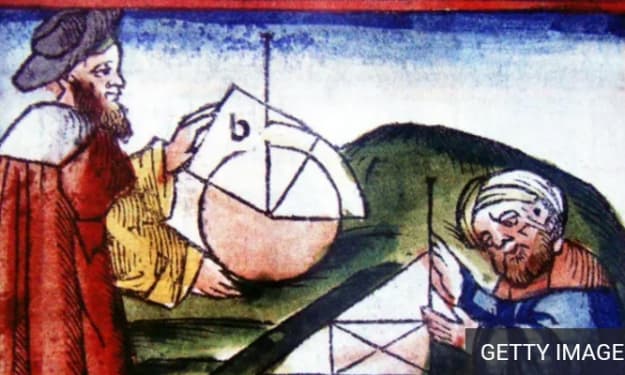
Ibn Tufail: The Andalusian Philosopher Who Inspired Tarzan, Robinson Crusoe, and The Jungle Book
In the heart of 12th-century Islamic Spain, known as Al-Andalus, a polymath named Abū Bakr Muhammad ibn ‘Abd al-Malik ibn Tufail, better known as Ibn Tufail, crafted a philosophical tale that would echo through centuries. His novel, Ḥayy ibn Yaqẓān (Alive, Son of Awake), tells the story of a boy raised by a doe on a deserted island, untouched by society. Through nature and reason alone, he discovers survival, morality, science, and God. This allegorical tale not only shaped Arabic literature but profoundly influenced European philosophy and inspired literary classics such as Tarzan, The Jungle Book, and Robinson Crusoe. Despite his revolutionary work, Ibn Tufail’s name remains lesser known outside academic circles, buried under the weight of time. --- The Tale of Ḥayy ibn Yaqẓān: A Boy, an Island, and the Quest for Truth The novel’s protagonist, Ḥayy, is mysteriously born or appears on an uninhabited island. Raised by a deer, he mimics animal behavior to survive. As he matures, he begins observing the natural world—studying the stars, dissecting animals, and investigating life and death. Through self-education and reflection, Ḥayy develops deep philosophical insights. He arrives at the concept of a singular, divine Creator and a moral code—without scripture, religion, or societal instruction. Eventually, he encounters another human—Asal, from a neighboring island—who introduces him to organized religion and civilization. However, Ḥayy discovers that most people are unable or unwilling to embrace deep philosophical truths. Disillusioned, he returns to his island, choosing solitude over superficial societal life. --- Ibn Tufail: Physician, Philosopher, and Astronomer Born around 1110 CE near Granada, Ibn Tufail was a physician, court official, and philosopher during the Almohad Caliphate. He served as a vizier to Caliph Abu Yaqub Yusuf and played a vital role in promoting intellectual life in Al-Andalus. As a physician, Ibn Tufail was among the early advocates of dissection and post-mortem examination—a bold stance for his time. His medical poem Rajaz Taweel fi al-Tibb explored disease diagnosis and treatment, recently rediscovered in Morocco. His contributions went beyond medicine. Ibn Tufail was a renowned astronomer who challenged Ptolemaic cosmology. He influenced later astronomers like al-Bitrūjī, helping pivot Islamic astronomy toward empirical observation and rational critique, foreshadowing the scientific revolution centuries later.
By Ikram Ullahabout a year ago in Futurism
When Earth Was a Giant Snowball: The Chilling Story of a Frozen Apocalypse
Imagine Earth completely encased in ice from the poles all the way to the equator. No green forests, no blue oceans, just a vast, frozen wasteland reflecting sunlight into the empty silence of space. It may sound like science fiction, but this scenario was a chilling reality hundreds of millions of years ago. Welcome to one of the most mysterious and extreme chapters in Earth’s history: the Snowball Earth era.
By Holianyk Ihorabout a year ago in Futurism