science
Topics and developments in science and medicine, presented by Futurism.
When the Universe Was One Second Old: The Birth of the First Hydrogen Atoms
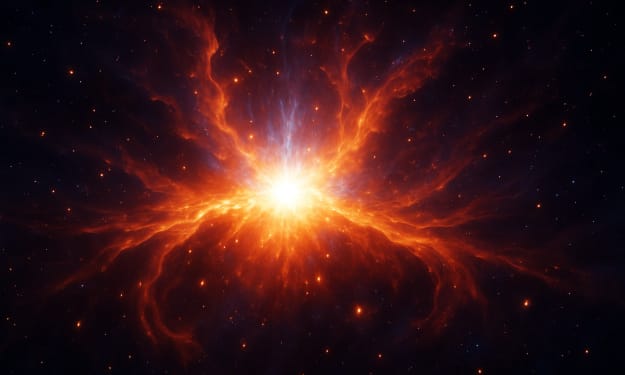
Imagine a cosmic stopwatch starting at the very instant the Universe burst into existence. It clicks once—one second has passed. Just a single heartbeat. That moment is so short that most of us wouldn’t even notice it. But on the scale of the cosmos, one second after the Big Bang marks a profound turning point. It’s the moment when the foundations of all future matter—including stars, planets, and eventually us—began to solidify.
By Holianyk Ihor11 months ago in Futurism
Why Astronauts Lose Up to One Liter of Fluid Per Day in Orbit
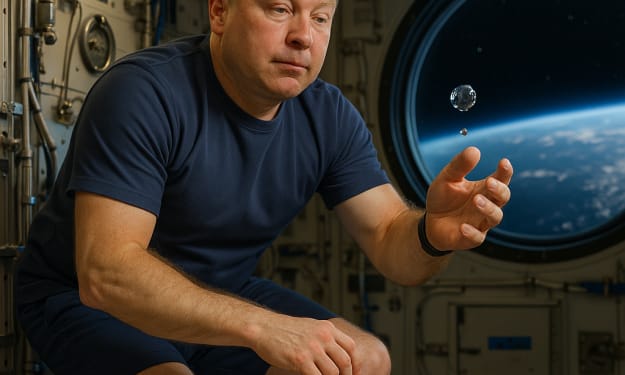
When astronauts leave Earth, their bodies begin to change almost immediately. Bones weaken, muscles shrink, and even the sense of taste can shift. But one of the most surprising effects of spaceflight happens within the first few days in orbit: astronauts start losing up to one liter of bodily fluid per day.
By Holianyk Ihor11 months ago in Futurism
The Universe and it's facts. Content Warning.
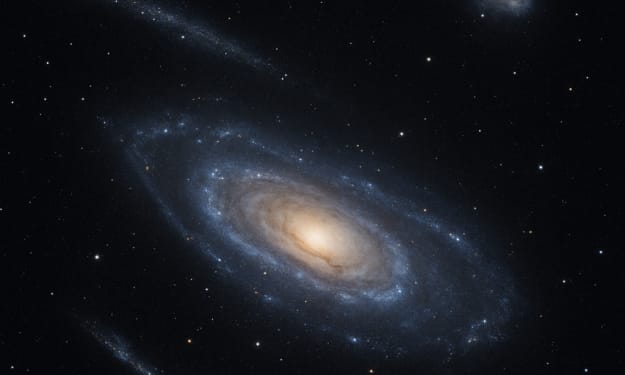
The Universe is the huge collection of stars, planets, asteroids, constellations, galaxies, dark matter, dark energy, and more. In simple words, it is all of space and time, including all matter, energy, and the forces that control them. Scientists believe the Universe began with the Big Bang about 13.8 billion years ago, and it has been growing ever since. From tiny particles smaller than atoms to massive galaxies and cosmic structures like filaments and voids, everything is part of this incredible Universe. Here are six crazy facts about it: 1. 95% of the Universe is invisible Everything we see through telescopes –from planets in our solar system to distant galaxies – makes up only about 5% of the Universe. The rest, 95%, is made of mysterious dark matter (27%) and even stranger dark energy (68%), which is pushing the Universe to expand faster and faster. Scientists are still trying to figure out what dark matter and dark energy really are, and that’s what makes the Universe so mysterious. 2. Space is almost completely silent Space is a vacuum, which means there is no air for sound to travel. So, even if you shouted in space, nobody would hear you –it would be completely silent. Scientists have special instruments that turn signals from space into sound, letting us “listen” to stars, planets, and even black holes. Some of these sounds are so strange, they feel like music from another world! 3. There are more stars in the Universe than grains of sand on all the Earth’s beaches It may sound hard to believe, but the Universe has far more stars than all the grains of sand on every beach on Earth. Scientists estimate there are at least a billion trillion stars. Imagine that — each star could have its own planets, and maybe even life. The Universe is so big that no human mind can really picture it. 4. The Universe is extremely cold Even though there are hot stars like our Sun, most of space is freezing. This is because space has almost no matter to hold heat. Heat moves by particles bumping into each other, but in the empty parts of space, heat can only travel by radiation, which is very slow. Some areas of space are just above -270°C, which is almost absolute zero — colder than anything on Earth! 5. A single teaspoon of a neutron star would weigh as much as Mount Everest This is hard to imagine, but it’s true. A single teaspoon of neutron star material weighs about 6 billion tons, roughly the same as Mount Everest. To picture it, imagine trying to fit an entire mountain into one tiny teaspoon — that’s how dense these stars are. The extreme pressure inside a neutron star squeezes matter to an unbelievable level. 6. The Universe is constantly expanding The Universe is not staying the same; it is growing all the time. Galaxies are moving away from each other faster and faster because of dark energy. The light from very distant galaxies stretches as they move, a phenomenon called redshift. This shows us that the Universe is alive and changing, and what we see today is not what it looked like billions of years ago. Can you even imagine how different the Universe will look millions of years from now? Conclusion The Universe is one of the most amazing and mysterious things we can study. From invisible dark matter and dark energy to freezing cold space, the countless stars, and the super-dense neutron stars, every fact reminds us how incredible everything around us is. Learning about the Universe helps us understand our place in the cosmos and inspires us to keep exploring. The more we discover, the more we realize how much is still unknown —and that is what makes the Universe endlessly fascinating.
By Void Reality11 months ago in Futurism
Astronauts Drink Water Recycled from Sweat and Breath — And It’s Not as Weird as You Think
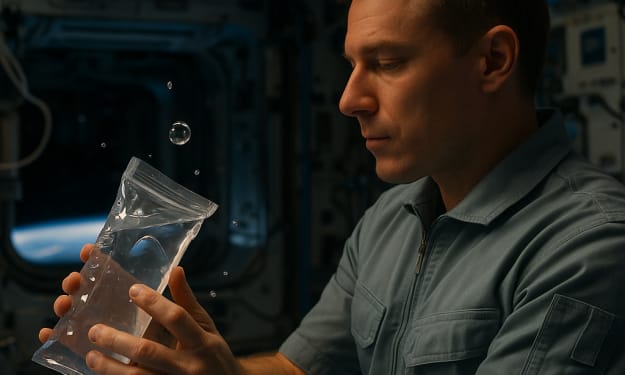
When most people imagine life in space, they picture astronauts floating gracefully in zero gravity, conducting futuristic experiments, or gazing out at the blue curve of Earth. What rarely comes to mind is one of the most vital — and surprisingly complicated — aspects of living beyond our planet: water.
By Holianyk Ihor11 months ago in Futurism
The Milky Way Has Already “Devoured” Several Smaller Satellite Galaxies
When we look up at the night sky, the Milky Way appears calm and ethereal—an elegant misty band stretching across the darkness. But behind this peaceful appearance lies a dramatic and sometimes violent cosmic history. Our galaxy is not a quiet spectator of the universe. In reality, the Milky Way has spent billions of years growing by tearing apart and absorbing smaller galaxies that stray too close.
By Holianyk Ihor11 months ago in Futurism
Binary Asteroids: The Cosmic Dance of Twin Worlds
When most people think of an asteroid, they picture a lonely, rugged rock drifting through the solar system—silent, solitary, and self-contained. But space, as it often does, surprises us. Not all asteroids travel alone. Some of them form remarkable partnerships: binary asteroid systems, or what you might call asteroid twins, orbiting around a shared center of mass. These systems behave like miniature versions of binary stars, engaging in an endless gravitational dance that can last billions of years.
By Holianyk Ihor12 months ago in Futurism
Who Really Controls Your Company’s Reputation?
The World After the Click There was a time when PR and SEO neatly divided the map of digital influence. PR built trust — emotional capital and symbolic authority among people. SEO built discoverability — ensuring those meanings appeared in the search results.
By Alena Belova12 months ago in Futurism
Earth’s Mysterious “Third Radiation Belt”: What NASA’s Van Allen Probes Really Discovered
When NASA launched the twin Van Allen Probes in 2012, scientists expected to study something familiar — the two well-known belts of charged particles surrounding Earth, first discovered in 1958. These “Van Allen radiation belts” had been mapped, modeled, and largely understood.
By Holianyk Ihor12 months ago in Futurism
Earth: The Only Planet That Breathes, Moves, and Holds Liquid Water
When we gaze up at the night sky — a vast ocean of stars scattered across the darkness — it’s easy to forget how special our home planet really is. Among billions of worlds orbiting distant suns, Earth stands alone. It’s the only known planet that combines two astonishing traits: active plate tectonics and liquid water flowing freely on its surface.
By Holianyk Ihor12 months ago in Futurism
Laika: The Stray Dog Who Became the First Space Explorer
A Little Dog, a Giant Leap for Science On November 3, 1957, a small stray dog from the streets of Moscow made history. Her name was Laika, and she became the first living creature to orbit the Earth. While humans had long dreamed of touching the stars, it was this humble dog who first crossed the boundary between our planet and the vast unknown.
By Holianyk Ihor12 months ago in Futurism
The Curious Case of Space Fire: Why Flames Turn Spherical in Zero Gravity
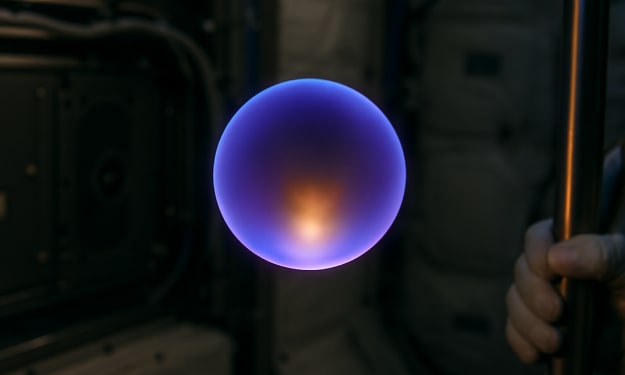
When you picture a flame, you probably imagine a flickering teardrop stretching upward — the warm glow of a candle or the orange tongues of a campfire dancing toward the sky. But take that same flame into space, and something extraordinary happens: it stops stretching. Instead of a flickering tongue, it becomes a floating, glowing sphere, calm and ghostly blue.
By Holianyk Ihor12 months ago in Futurism