science
Topics and developments in science and medicine, presented by Futurism.
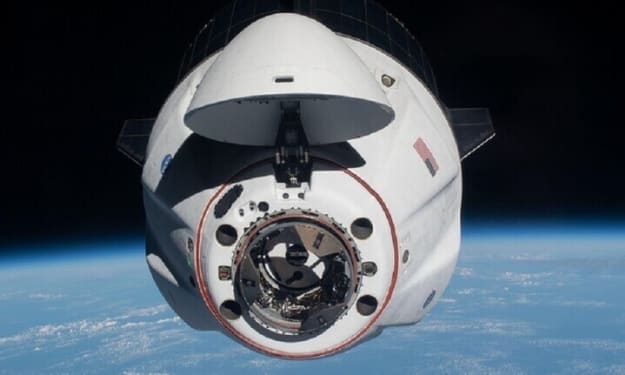
Delaying the Dragon spacecraft's separation from the International Space Station
And a statement issued by the agency said: “After assessing the expected weather situation in the area where the Crew Dragon vehicle will land on the ground after its return from the station, it was decided to postpone the date of the vehicle’s separation from the station, which was scheduled for March 8, at 03:00 local time.” East Coast of the United States (March 9, 11:00 Moscow time).
By News Correct4 years ago in Futurism
The Science Behind Luck: Exploring the Role of Chance in Our Lives
Introduction Luck is often thought of as a random and unpredictable force that influences the outcomes of our lives. Some people believe that luck is the result of supernatural powers, while others believe that it is simply a matter of chance. However, recent research in psychology and neuroscience suggests that luck may be more of a psychological construct than a supernatural one. In this article, we will explore the science behind luck and how it affects our lives. Luck is a term that is often used to describe an unexpected or fortuitous event that occurs without any apparent cause or explanation. However, there are different ways to define luck. Some people see luck as a chance event that has a positive outcome, while others view it as a negative event that has a fortunate outcome. The concept of luck can also be related to individual beliefs and cultural norms. The Psychology of Luck The psychology of luck is a complex field that involves various factors such as personality traits, cognitive biases, and behavioral patterns. Research has shown that people who are optimistic and open to new experiences are more likely to experience good luck. They tend to have a positive attitude and look for opportunities in situations that others may see as obstacles. On the other hand, people who are pessimistic and have a negative outlook on life are less likely to experience good luck. They may perceive situations as more challenging and feel that they have less control over their lives. This can lead to a self-fulfilling prophecy, where their negative thoughts and attitudes influence their behavior and ultimately shape their outcomes. Cognitive biases also play a role in the psychology of luck. For example, the confirmation bias can cause people to look for evidence that supports their beliefs and ignore evidence that contradicts them. This can lead to a biased perception of reality and affect the way people interpret events as either lucky or unlucky. The Role of Chance in Luck While psychology plays a significant role in luck, chance is also an essential component. Chance events are random and unpredictable, and they can have a significant impact on our lives. For example, winning the lottery or getting struck by lightning are both chance events that can drastically change a person's life. However, chance events are not entirely random. They are subject to probabilities and statistics, and they can be influenced by factors such as environmental conditions and human behavior. Understanding the probabilities and statistics of chance events can help people make more informed decisions and improve their chances of success. The Neuroscience of Luck Recent research in neuroscience has shed new light on the science behind luck. Studies have shown that luck is associated with the brain's reward system, which is responsible for regulating feelings of pleasure and satisfaction. When we experience good luck, our brain releases dopamine, a neurotransmitter that plays a key role in the reward system. However, the brain's reward system can also be influenced by external factors such as stress and anxiety. When we are under stress, our brain releases cortisol, a hormone that can interfere with the reward system and reduce our ability to experience pleasure and satisfaction. This can lead to a negative cycle where stress and anxiety reduce our ability to experience good luck and ultimately shape our outcomes. Impress luck to your side- Be proactive: Take action and make things happen. Luck often favors those who are willing to put in the effort and take risks. Stay positive: A positive attitude can help you stay motivated and focused on your goals, even when things get challenging. Keep learning: Continuously acquire knowledge and develop new skills. This can increase your opportunities and make you more adaptable to changing circumstances. Network: Connect with others in your field and build relationships. This can lead to new opportunities and collaborations. Be grateful: Acknowledge and appreciate the good things in your life. A grateful attitude can attract positive energy and help you feel more content and fulfilled. Conclusion Luck is a complex phenomenon that is influenced by various psychological, cognitive, and neurological factors. While chance plays a significant role in luck, our attitudes, beliefs, and behaviors can also impact our outcomes. By understanding the science behind luck, we can improve our chances of success and lead more fulfilling lives. Whether luck is a matter of chance or a psychological construct, it is clear that it plays a significant role in our lives and can have a profound impact on our happiness and well-being.
By Pro Writer4 years ago in Futurism
AI's Impact on Remote Freelancing
The advent of artificial intelligence abbreviated for AI has revolutionized the world of work, particularly in the freelance sector. AI has changed everything from how freelancers operate to the skillsets they need to succeed in their field. As a result, remote freelancing has seen a surge in popularity in recent years.
By Naabiae Nenubari4 years ago in Futurism
AI image generators
Introduction: AI image generators, also known as GANs (Generative Adversarial Networks), have quickly become one of the most exciting and innovative applications of artificial intelligence. These networks are designed to learn from a set of input data and then create new, realistic images from scratch. The generator network is responsible for creating the new images, while the discriminator network evaluates how realistic they are. Through an iterative process, the generator network is trained to create images that are difficult for the discriminator network to distinguish from the real ones.
By Muhammad Aown Rafaqat4 years ago in Futurism
Investing in Bitcoin: The Future of Finance
Bitcoin, the world's first decentralized cryptocurrency, has taken the financial world by storm. With its revolutionary technology and limitless potential, it's no wonder that Bitcoin has become one of the most popular investment options in recent years.
By Winklerkim4 years ago in Futurism
Genetic Disparity: How Close Are We to the Sci-Fi Future of GATTACA?
“Designer babies could be just two years away”, wrote CNN journalist Jack Guy in 2019. His article highlighted what was, at the time, the hottest news in the world of bioethics, that gene editing was becoming safe enough for use on human embryos.
By Olivia L. Dobbs4 years ago in Futurism
Green Hydrogen
Green hydrogen is seen as a key component in the shift to green energy and renewable. This type of hydrogen is produced using renewable sources such as wind, solar or hydroelectricity and does not produce any carbon dioxide (CO2) emissions. It can then be used for a variety of applications such as power generation, transportation fuel and even electricity storage.
By Jigar Thakar4 years ago in Futurism
How can ChatGPT be used?
ChatGPT is a powerful artificial intelligence language model developed by OpenAI that has been trained on a vast amount of text data. The model is capable of understanding natural language and generating human-like responses to questions and prompts. This makes ChatGPT a highly useful tool in a variety of contexts, from customer service to education to research.
By Nathen Blackeye4 years ago in Futurism