science
Topics and developments in science and medicine, presented by Futurism.
What If You Came Across a Time Traveler?
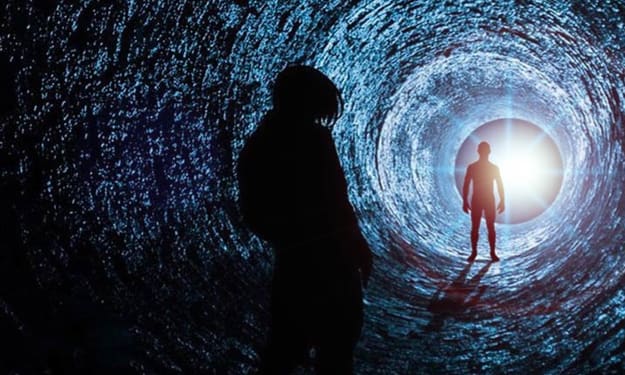
If time travel is possible, why haven't we met time travelers yet? And if we did, how would we know they weren't faking it? What would their time machine look like, and how would it work? Do time travelers have to follow the rules? And what would happen if they decided to break them? This is what would happen if you met a time traveler in 1998 and did so. Mr. John Titor arrived from the future, or so he said in his timeline, because he claimed that General Electric succeeded in inventing time travel in the year 2034. He even introduced and described his time travel device in great detail, and then Tito disappeared as suddenly as he appeared. Did he complete his mission, or was he even real? How would we know? If we could prove that someone travelled from another time, that would be really cool for science, even if it replaced Albert Einstein's theory of relativity. Einstein approached time as a fourth dimension; space is a three-dimensional spectrum that gives us length, width, and height. Time gives direction; together they form a space-time continuum that can be affected by gravity according to Einstein's theory of relativity. Gravity is a curve in space-time, and technically, since space and time are one, gravity can bend both time and space, but it takes something really big to detect changes in the movement of time. If you somehow managed to get close to a black hole like Sagittarius, you would experience time half as fast as humans on Earth. That's because Sagittarius packs the mass of four million suns into an unspecified dense point, creating a very strong gravitational field around itself. Another way to travel through time is to move very fast. The closer you get to the speed of light, the slower time passes for you. If you were a passenger on a train that could somehow travel at 99% of the speed of light, for every year spent on the train, 223 years would have passed back at the station. That would make you a time traveler from the future. But how about travelling back in time, just like John Titor said he would? Titor claims that this machine makes time travel possible in any direction. C 204, as he called it, allowed him to manipulate gravity using two micro-solar singularities packed inside. It also had gravity sensors that locked the machine and the time traveler to a specific location in space. Tito put this machine in a car almost like in the old days, travelling in a DeLorean, but it only needs 60 years of its time. How do you know Titus actually travelled back in time and didn't just make it up? Proving that someone is actually a time traveler can be even more difficult than time travel itself. Time travelers could make future predictions, show off their futuristic technology, or even take a genetic test to back up their story. Perhaps the best way to demonstrate time travel is to take yourself on your next adventure. Of course, there are simpler ways to demonstrate the possibility of time travel. In 2009, world-renowned theoretical physicist Stephen Hawking threw a party — not just any party, but one where only future time travelers were invited. Hawking did not send the invitations until after the party because he believed that if future travelers arrived before the invitation was issued, it would prove time travel possible. One day he sat there and waited for hours, but no one showed up. This does not mean that time travel is impossible. It is possible that future time travelers will learn to use wormholes or bridges in space and time. We haven't seen any of them yet, but general relativity predicts their existence. The main problem with wormholes is that they are microscopic and collapse too quickly for a human traveler to pass through them, but perhaps the reason no one attended Hawking's party is that time travel isn't necessarily that precise. Maybe the guests arrived from the future but were late to the party, or going back in time is strictly forbidden for time travelers because if they do, they can completely change their timeline. Perhaps they are simply trying to avoid the risk of disease spreading to us from afar, or perhaps the knowledge of time travel is so advanced that few trust it. Perhaps travelling back in time is not possible; perhaps time can only move forward and never backward. Maybe John Titor told a big lie. There are still a few years left until 2034 to find out that there are already time travelers in our lives. Astronauts on the International Space Station travel at eight kilometers per second, so they age more slowly, although the difference is measured in hundreds of seconds. If you listen, you will be invited to a time-travelling reception hosted by Stephen Hawking. The celebration will take place at the University of Cambridge in Great Britain on June 28, 2009. No RSVP is required, and hey, if you have the chance to hop on a spaceship and enjoy the time travel effects of a black hole, do it. Make sure you don't run into that gravity monster, but that's a story for another day.
By Durga Prasad3 years ago in Futurism
Beyond Human: Exploring the Transhumanist Frontier
Transhumanism, a term that might sound more like science fiction than reality, has gained traction in recent years as a profound and transformative philosophical and intellectual movement. Rooted in a vision of the future where boundaries of the human condition are not just blurred but erased, transhumanism advocates for the use of advanced science and technology to elevate our physical and cognitive abilities, well beyond what evolution designed us for. Its proponents see it as a beacon guiding humanity towards a new horizon, one where mortality is optional, disease is a thing of the past, and human potential is unbounded.
By Uzair Mirza3 years ago in Futurism
What Humans Will Look Like In 1,000 Years?
Human beings have come a long way since our early ancestors walked the Earth. Our ability to adapt and evolve has been a defining characteristic of our species. As we peer into the future, it is natural to wonder what changes await us. How will the passage of time shape our physical appearance? Let us embark on a speculative journey and explore what humans might look like in 1,000 years.
By Vijay Paul3 years ago in Futurism
Apple's vision: With iOS 17, locked iPhones can become smart displays.
Apple is reportedly developing a strategy to take locked iPhones and turn them into interactive smart displays with the upcoming iOS 17. The goal of this innovative feature is to enable seamless access and control of various functions and data without having to unlock the devices to unleash the hidden potential of unused iPhones. Apple's latest innovation continues to improve the user experience by setting new standards and redefining the capabilities of its products. Locked iPhones change.
By Kush Mangens3 years ago in Futurism
Can we go back in the time using spacetime machine?
Can we go back in the time using spacetime machine One of the most intriguing questions we've all wondered about when we were kids is whether we can travel into the future or go back in time using some sort of time machine
By Kamusiime Comrade3 years ago in Futurism
Key Skills Required for Front-End Development in Mobile App Development
Introduction: Unleashing the Power of Front-End Development in Mobile App Development In today's digital age, mobile app development has become an integral part of businesses, catering to the ever-growing smartphone user base. To create visually appealing and user-friendly mobile applications, front-end development plays a crucial role. Front-end developers are responsible for designing and implementing the user interface (UI) of mobile apps, ensuring an engaging and seamless user experience.
By Angela Smith3 years ago in Futurism
Antimatter and the Big Bang
Located in the depths of the universe lies a potent and enigmatic force that remains concealed, awaiting discovery. This force has the capacity to revolutionize our world as we know it and is known as antimatter. Although often associated with science fiction, antimatter is a genuine scientific phenomenon that has been the subject of study for over a century.
By Cyril Nsiah Baafi3 years ago in Futurism
The Future of Artificial Intelligence: Balancing Innovation and Ethics in an AI-Driven World
Introduction: Artificial intelligence (AI) has emerged as a game-changer, revolutionizing industries and reshaping the way we live and work. This article delves into the potential impact of AI across various sectors while highlighting the critical ethical considerations that accompany its rapid advancement.
By Your Worker3 years ago in Futurism
ABOUT PLANET
The Solar System consists of the Sun, eight official planets and various non-stellar objects such as dwarf planets, asteroids, comets, meteoroids, debris, and ice clusters. It was created 4.6 billion years ago, when a large cloud of gas and dust, called a molecular cloud, collapsed due to gravitational force.
By Gayathri Vinayagam3 years ago in Futurism
Essential Considerations When Shopping for a Computer Monitor
When it comes to purchasing a computer monitor, there are several essential considerations that you should keep in mind. With so many different options on the market, it can be challenging to determine which features are essential and which are just unnecessary bells and whistles. In this blog post, we'll explore some of the key specifications you should look for in a good computer monitor, so you can make an informed decision that will enhance your overall computing experience. A computer monitor is an essential piece of equipment for anyone who spends a significant amount of time in front of a computer screen. Whether you're a gamer, designer, or writer, a good computer monitor can make all the difference in your productivity and overall experience. But with so many different types and specifications available on the market, it can be challenging to know which monitor is the best fit for your needs. In this blog post, we'll outline some essential considerations to keep in mind when shopping for a computer monitor.
By Subah Ahmed3 years ago in Futurism