science
Topics and developments in science and medicine, presented by Futurism.
“Who Really Saw Aliens First? The Truth Behind the Mystery”
Have you ever looked up at the night sky and felt a strange question echo in your mind — Are we truly alone? For thousands of years, humans have stared at the stars with wonder, fear, and curiosity. Long before rockets, telescopes, or modern science, ancient civilizations imagined that other worlds might exist beyond our own. The mystery of aliens — life beyond Earth — did not begin with movies or science fiction. It began with simple human curiosity.
By imtiazalam8 months ago in Futurism
The Cosmic Influence of the Sun on the Inner Planets and Climate
At the center of our planetary system lies Sun, a G-type main-sequence star that governs the physical and climatic evolution of the inner planets: Mercury, Venus, Earth, and Mars. Although these worlds share a common origin and relatively close orbital distances, their climates differ dramatically. The explanation lies in how each planet interacts with solar radiation, solar wind, and long-term stellar evolution.
By Holianyk Ihor8 months ago in Futurism
The Dynamics of the Interstellar Medium and Galactic Magnetism
At first glance, the space between stars appears empty — a silent vacuum separating luminous islands of light. In reality, this vast region is filled with a complex, restless environment known as the interstellar medium (ISM). Far from being inert, it is a dynamic system of gas, plasma, dust, radiation, turbulence, and magnetic fields. Within galaxies such as the Milky Way, the interstellar medium functions as both the raw material and the regulating mechanism for star formation, cosmic ray transport, and large-scale galactic structure.
By Holianyk Ihor8 months ago in Futurism
Samsung’s Satellite Strategy Just Upended the Market: Retroactive Support and A-Series Inclusion Leave Apple Scrambling
1. Introduction: The Long-Awaited Connection For years, the smartphone industry has treated satellite connectivity as a high-stakes arms race where Samsung was strangely absent. Apple ignited the trend in 2022 with the iPhone 14, and Google solidified it in 2024 with the Pixel 9 series. While its rivals dominated the headlines, Samsung remained uncharacteristically silent. From a strategic perspective, this delay wasn't a lack of innovation, but likely a calculated wait for 5G Non-Terrestrial Network (NTN) standards to mature and for carrier-satellite partnerships—like the T-Mobile and Starlink alliance—to reach critical mass. That silence has finally been broken with the Galaxy S26 announcement. Samsung isn't just catching up; it is executing a strategic disruption of the hardware lifecycle that fundamentally changes the value proposition of both new and existing Galaxy devices. 2. Takeaway 1: It’s Not Just for the S26 Ultra In a move that prioritizes ecosystem-wide safety over tiered gatekeeping, Samsung has confirmed that satellite connectivity will be standard across the entire Galaxy S26 lineup: the S26, S26+, and S26 Ultra. By democratizing this feature across the flagship tier, Samsung is moving away from the "luxury safety" model. While competitors often reserve their most advanced hardware features for "Pro" or "Ultra" variants, Samsung is establishing a baseline of protection for any user investing in their current flagship generation. "This expansion reflects Samsung’s continued commitment to enhancing user safety and providing seamless mobile experiences through next-generation connectivity — particularly in the era of AI as everyday infrastructure." 3. Takeaway 2: The Retroactive Reach (The S22 and Beyond) The most unprecedented aspect of this rollout is the retroactive support for older hardware. This isn't just about the newest chips; Samsung is enabling satellite capabilities on devices that have been in users' pockets for years. Specifically, for T-Mobile users, support extends to flagship models released after the Galaxy S21 series—meaning the Galaxy S22, S23, S24, and S25 series are eligible. This reveals a fascinating industry "insider" truth: the Qualcomm and Exynos modems used since the S22 era likely possessed dormant NTN capabilities that Samsung is only now choosing to activate through software and carrier handshakes. This level of retroactive support for a hardware-adjacent feature is nearly unheard of in the mobile space, instantly increasing the resale and utility value of three-year-old handsets. 4. Takeaway 3: A Surprising Win for the Mid-Range A-Series Samsung is also aggressively targeting the mid-range market, a segment where Apple and Google have strictly withheld satellite features. By including "select Galaxy A series models" in this rollout (specifically via T-Mobile, KDDI, and Japanese carriers), Samsung is leapfrogging the competition. This move puts immense pressure on Google’s "A-series" Pixels and Apple’s iPhone SE. By offering life-saving connectivity on mid-tier hardware, Samsung is positioning the Galaxy brand as the superior choice for value-conscious consumers who refuse to compromise on safety. 5. Takeaway 4: The "Carrier Catch" and Regional Fragmentation Despite the broad hardware compatibility, the user experience remains dictated by a complex web of carrier partnerships. Your phone’s capability is now inextricably linked to your service provider's infrastructure. Carrier Region Supported Services Eligible Devices T-Mobile USA T911, Text, and Data via Starlink Post-S21 Flagships (S22+); Select A-series Verizon USA eSOS and Text Following S25 series (S26 and later) AT&T USA Coming Soon TBD KDDI Japan Text and Data S22 and later flagships; Select A-series SoftBank / docomo Japan Flagship / A-series Support Launching later in 2026 Rakuten Mobile Japan Coming Soon TBD Virgin Media O2 UK Satellite Communication Select Galaxy smartphones Vodafone UK Coming Soon TBD MasOrange Spain Field Trials Beginning March 2026 This fragmentation creates a strange reality: a Galaxy S22 user on T-Mobile may soon have more robust off-grid capabilities than a Galaxy S25 user on Verizon. 6. Takeaway 5: Satellite Connectivity as "AI Infrastructure" The most significant strategic insight lies in Samsung’s framing of satellite connectivity as "infrastructure for the era of AI." To a digital strategist, this reveals that Samsung doesn't view satellite links merely as an emergency "SOS" tool for hikers. Because Samsung’s Galaxy AI features often rely on hybrid processing—partially on-device and partially in the cloud—the company needs a persistent data link to ensure their AI services remain functional. By providing a satellite backbone, Samsung is attempting to transform a safety feature into a service-reliability feature. They are ensuring that "everyday AI" doesn't stop working just because a user moves into a terrestrial dead zone. 7. Conclusion: The Future of Constant Connection Samsung’s entry into the satellite market was delayed, but the scope of its rollout is undeniably more ambitious than its predecessors. By reaching back to the S22 series and extending down to the A-series, Samsung has effectively neutralized one of Apple's key marketing advantages while simultaneously future-proofing millions of existing devices. We are witnessing the beginning of the end for the mobile "dead zone." For the consumer, the takeaway is clear: the value of a smartphone is no longer just about the glass and silicon in your hand, but the reach of the network above it. As these features go live, one must wonder if a "new" phone is even necessary when your current Galaxy is about to receive its most significant upgrade years after you bought it.
By Tech Gear Hub8 months ago in Futurism
Is Starlink Available in Your Area? The Map, the Hype, and the Quiet Revolution Over Your Head
How Elon Musk’s satellite internet rollout is quietly rewriting who gets to be “connected” The first time my internet died in the middle of a job interview, I was standing on a chair, router in one hand, phone in the other, praying the signal would come back.
By abualyaanart8 months ago in Futurism
Euclid and the Precision Era of Dark Cosmology
In 2023, the European Space Agency launched Euclid with a sharply defined objective: to map the geometry of the Universe and determine, with unprecedented precision, how dark matter and dark energy shape cosmic evolution. Rather than focusing on individual spectacular objects, Euclid operates as a large-scale cartographer. Its mission is statistical and structural. It surveys billions of galaxies across a third of the sky to reconstruct a three-dimensional map of the cosmic web stretching over 10 billion years of cosmic history.
By Holianyk Ihor8 months ago in Futurism
Launch and Scientific Impact of NASA’s Nancy Grace Roman Space Telescope (2026)
In 2026, NASA is preparing to launch one of the most ambitious space observatories of the decade: the Nancy Grace Roman Space Telescope. Designed to survey the universe at an unprecedented scale in near-infrared light, Roman is expected to reshape modern astrophysics by combining high resolution with an extraordinarily wide field of view. If the Hubble Space Telescope revealed the fine details of the cosmos, Roman will provide the panoramic context.
By Holianyk Ihor8 months ago in Futurism
Space Discoveries Powered by Machine Learning
Over the past decade, machine learning has evolved from a useful analytical tool into a central engine of discovery in astronomy. Modern observatories no longer produce manageable datasets measured in gigabytes—they generate petabytes of images, spectra, and time-series signals. Human analysis alone is no longer sufficient. In many areas of space research, algorithms now act as the first line of discovery.
By Holianyk Ihor8 months ago in Futurism
Exoplanets with Signs of Active Geology: Worlds That Refuse to Stay Still
For decades, exoplanets were little more than data points—subtle dips in starlight, faint radial velocity shifts, abstract entries in astronomical catalogs. Today, they are increasingly understood as dynamic worlds with atmospheres, climates, and in some cases, signs of active geology. For planetary science and astrobiology, that distinction is critical. A geologically active planet is not static. It has internal heat, material circulation, and potentially long-term environmental stability.
By Holianyk Ihor8 months ago in Futurism
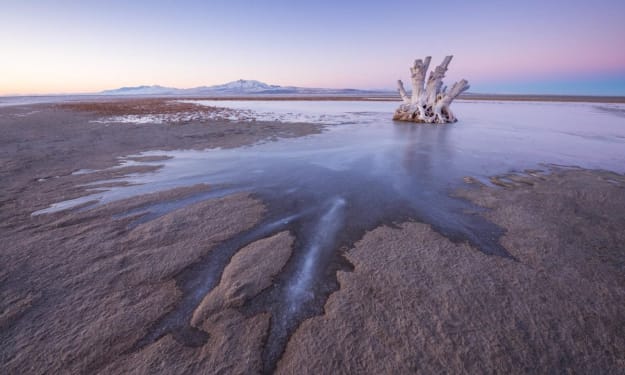
A Hidden World Beneath the Salt: The Remarkable Discovery of a New Roundworm in Utah’s Great Salt Lake
Utah’s Great Salt Lake is one of the harshest environments on Earth. Its waters are several times saltier than the ocean, creating conditions that would kill most living creatures almost instantly. For years, scientists believed only a handful of hardy species—like brine shrimp and brine flies—could survive in its open waters. But in a groundbreaking find announced in early 2026, researchers uncovered something extraordinary: a tiny roundworm, a species entirely new to science, thriving in this extreme saltwater world.
By Tech Gear Hub8 months ago in Futurism
According to neuroscientists, this typical nightly ritual significantly enhances sleep.
It has been demonstrated that reading a book in bed improves sleep quality more than immediately turning out the lights. That straightforward practice simultaneously activates the systems of memory, language, and emotion, and that consistent concentration can facilitate the transition to sleep.
By Francis Dami8 months ago in Futurism
Alzheimer’s Disease, the Renin-Angiotensin System, and COVID-19
I. Alzheimer’s Disease: More Than Amyloid Alzheimer's disease has long been framed as a proteinopathy defined by extracellular β-amyloid plaques and intracellular tau tangles. While these remain central pathological hallmarks, the explanatory model of the disease has expanded considerably over the past two decades.
By Alain SUPPINI8 months ago in Futurism