science fiction
The bridge between imagination and technological advancement, where the dreamer’s vision predicts change, and foreshadows a futuristic reality. Science fiction has the ability to become “science reality”.
Tomorrow’s Children
The Forecast Year: 2146 — Solar Arc Sector 12, Neo-Earth Grid. The sky above shimmered with artificial stars—satellite-generated constellations synchronized with the global heartbeat. Below, humans watched from pod homes stacked like honeycombs, each hexagonal unit humming with regulated calm.
By Muhammad Abbas khanabout a year ago in Futurism
The Black Stone of Mecca: Adam, Eve, and the Alien Connection
The Black Stone of Mecca At the heart of Islam's holiest site, in the eastern corner of the Kaaba in Mecca, lies a profound object of mystery and deep reverence: the Black Stone, known in Arabic as Al-Hajar al-Aswad. This mysterious stone has been kissed, touched, and circled by millions of pilgrims for over a millennium. However, beneath these sacred traditions lies a mystery that stretches back to the very beginning of humanity, and perhaps even beyond this world.
By The Secret History Of The Worldabout a year ago in Futurism
No Blindness Anymore; They Can See
Imagine a world where a person who has never seen light, shape, or color suddenly begins to perceive the world around them—not through their eyes, but directly through their brain. Thanks to Elon Musk’s Neuralink, that world is no longer just a dream. With a revolutionary technology called Blindsight, Neuralink promises to restore vision in individuals who are completely blind—even those born without functioning eyes or optic nerves. This is not science fiction anymore. This is happening now.
By Keramatullah Wardakabout a year ago in Futurism
The End Times
Who knew survival was so hard? Life was easy for Harry. Now, Harry struggled to eat daily. Before the cataclysm, Harry was a billionaire. One of the few that made money in his sleep. There was nothing Harry couldn’t experience or buy because of his vast wealth. It had been six months since the meteor shower destroyed the world, and four months since he had any interaction with another living soul. It was quiet now. The air stood still around him; still thick with unsettled dust. Whenever Harry went to scavenge for food, he would wrap a scarf around his nose and mouth. Six months of living like a wild animal. The only difference was Harry always returned to the ruins of his once luxurious home.
By Desirae Anayaabout a year ago in Futurism
2026: The Year of War Between Israel and Turkey. AI-Generated.
The Middle East has long been a powder keg of geopolitical tensions, but 2026 could mark the eruption of a full-scale war between two regional heavyweights—Israel and Turkey. At the heart of this conflict lies Syria, a fractured nation that both countries seek to control for vastly different reasons. Israel, pursuing its expansionist policies, aims to weaken Iranian influence and secure its northern borders, while Turkey envisions a "free Syria" under its sphere of influence, free from Kurdish autonomy and Assad’s regime.
By INAM ULLAHabout a year ago in Futurism
The Lake Vostok Mystery: What Lies Beneath the Antarctic Ice?
Lake Vostok a potential window into primordial Earth Deep beneath the frozen expanse of Antarctica lies a mystery unlike any other on Earth. Hidden under nearly 4 kilometers of solid ice is Lake Vostok, a massive subglacial freshwater lake that has remained untouched for an estimated 15 to 25 million years. Discovered through satellite imagery and ice-penetrating radar in the latter half of the 20th century, this vast and ancient body of water stretches over 250 kilometers in length and 50 kilometers in width. Its sheer size and isolation from the surface for eons make it one of the most intriguing locations on the planet, and a hotspot for speculation, especially among those who explore the intersections of ancient civilizations and extraterrestrial theories.
By The Secret History Of The Worldabout a year ago in Futurism
The Future of Smartphones in the Next 10 Years. AI-Generated.
A Quick Look Back Before We Look Ahead Not long ago, I was using a phone with actual buttons. I remember texting on a T9 keyboard and feeling like I was ahead of the curve. Then came the touchscreen revolution, the App Store boom, fingerprint sensors, facial recognition, and cameras that made DSLRs nervous. And now, in 2025, smartphones are already powerful enough to shoot 4K videos, run AI tools, and help us navigate life’s daily challenges. But if you think we’ve reached the peak, think again. The next 10 years are expected to be even more radical. 1. Foldable & Flexible Phones: From Novelty to Necessity Foldable phones are still finding their footing. Right now, they’re mostly seen as fancy or futuristic. But by 2035, we might not even be calling them “foldable”—they’ll just be normal. Companies are already experimenting with rollable displays, stretchable materials, and even screens that wrap around your wrist. Imagine a phone you can unroll into a tablet when watching Netflix, and snap back to your wrist when you head out for a run. I held a foldable phone last year at a tech event. At first, it felt awkward—but within minutes, I saw the future. It just made sense. Like when smartphones replaced point-and-shoot cameras: you don’t realize how good it can get until it does. 2. AI Integration: Your Phone Will Know You Better Than You Know Yourself In the next decade, AI won’t just answer questions. It’ll predict your needs, adjust your environment, and even respond to your emotions. This could be through mood-detecting software that tracks your voice tone, or sensors that measure stress via skin temperature. Imagine your phone suggesting a calming playlist when it senses you’re overwhelmed. Or reminding you to take a break when your screen time goes overboard. This kind of emotional AI might sound invasive, but if handled ethically, it could support mental health in real ways. Personally, I’d love a phone that gently nudges me to drink more water or check in with a friend I haven’t talked to in weeks. Small prompts that build better habits. 3. Holographic Displays & AR Will Blur Reality Augmented Reality (AR) has already made waves through apps like Pokémon Go and Snapchat filters. But that’s just scratching the surface. By 2035, your phone may no longer need a screen at all. Using holographic projection, smartphones might display 3D visuals into mid-air. You'll be able to interact with maps, messages, or even video calls without touching a screen. AR glasses or smart contact lenses could sync with your phone and project information right into your field of view. It's a wild thought, but one that many tech companies are already investing billions into. Apple, Meta, and Google are leading the charge in AR/VR development. 4. Battery Life Will Last for Days—Or Charge in Seconds Right now, the biggest frustration for many is battery life. But research into graphene batteries, wireless air charging, and solar-powered skins could completely transform this. Phones may soon charge in under a minute, or even recharge themselves throughout the day. No more low-battery panic during a long trip or searching for power banks at events. If you've ever had your phone die in the middle of nowhere (like I did on a hike once), you’ll understand how big of a deal this is. 5. Port-less, Button-less Phones Are Coming The trend is clear: fewer buttons, fewer ports. Physical SIM cards are being replaced by eSIMs. Charging ports are becoming unnecessary with wireless pads. Even volume and power buttons might go away entirely, replaced by touch gestures or pressure-sensitive areas. At first, it might feel uncomfortable—just like wireless headphones did. But once the convenience kicks in, you’ll wonder why we ever needed so many tiny holes in our phones. 6. Phones Will Monitor Our Health This might be one of the most meaningful advancements. Phones are already tracking our steps, heart rate, and sleep. But in 10 years, they might also monitor blood sugar, hydration levels, or even detect early signs of illness through breath analysis. Your phone could become a mini-health assistant. In regions with limited healthcare, this could literally save lives. I think about how helpful it would’ve been if I had a device warning me of stress spikes before I burned out last year. Technology with empathy—that’s powerful. 7. Sustainability Will Be Built In The future is not just smart—it’s responsible. Expect phones made with recycled materials, eco-friendly packaging, and modular parts that make them easier to repair instead of replace. Some brands are already taking steps in this direction. In the next decade, consumers may even demand it. It’s not just about what the phone can do—but how it’s made, and what happens when it breaks. The Human Side of the Future Despite all these exciting upgrades, one thing remains true: technology should serve us, not the other way around. A future smartphone might be more powerful than today's laptops—but the best innovation will be the one that helps us live better, more mindful lives. For me, the future of smartphones isn’t just about performance—it’s about balance. Tools that help us stay connected, but also present. Gadgets that help us grow, not just scroll.
By Sherooz khanabout a year ago in Futurism
The Earthquake Machine of Nikola Tesla: A Forgotten Power That Shook the World
A Genius Beyond His Time In the flickering light of a Manhattan laboratory, a peculiar man worked alone. Surrounded by coils, tubes, and devices that defied comprehension, he pursued ideas that most people couldn't even dream of. His name was Nikola Tesla.
By The Secret History Of The Worldabout a year ago in Futurism
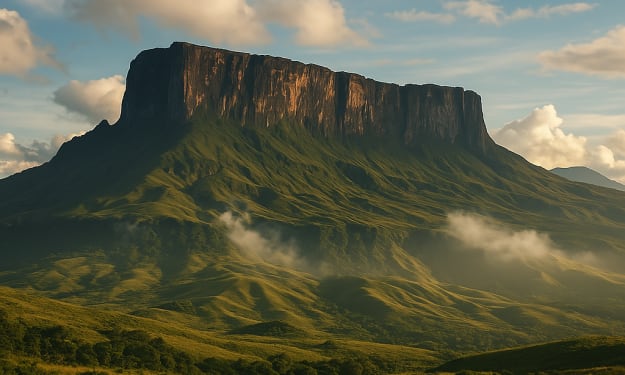
The Mysteries of Mount Roraima: Evidence of Artificial Cuts and the echoes of an Ancient Power
Introduction: The Lost World Above the Clouds High above the Amazon rainforest, where the borders of Venezuela, Brazil, and Guyana meet, a mountain rises like something from another world. Shrouded in mist and mystery, Mount Roraima towers over 9,000 feet, featuring vertical cliffs and a flat summit that stretches across 12 square kilometers.
By The Secret History Of The Worldabout a year ago in Futurism
Apollo 15 Astronaut Claims Extraterrestrials Created the Human Race
A Voice from the Stars The cold silence of space has a profound way of transforming individuals. For those few who have walked on the Moon and gazed back at Earth from a quarter million miles away, the experience is more than just physical; it is spiritual, transformative, and even cosmic. Some return feeling humbled, some return questioning everything, and others, like Apollo 15 astronaut Al Worden, return with a message that challenges the very roots of human identity.
By The Secret History Of The Worldabout a year ago in Futurism