product review
Reviewing the latest and greatest science fiction gadgets, tech, and accessories.
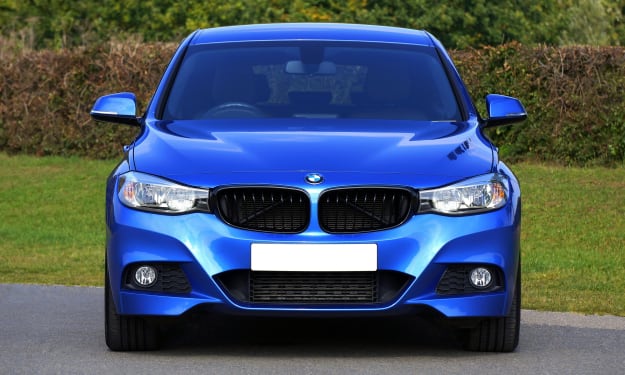
The Secret Rebel Inside Every BMW: What You Didn’t Know About the Ultimate Driving Machine
When most people think of BMW, they imagine sleek design, premium engineering, and a badge of status. It’s a brand that practically breathes confidence and class. But beneath the polished surface of "The Ultimate Driving Machine" lies a surprisingly rebellious spirit—a story of innovation, wartime secrets, defiance, and unexpected quirks that make BMW much more than just another luxury automaker. From Warplanes to the Autobahn BMW didn’t start by making cars. In fact, the company’s origin traces back to 1916, and it made aircraft engines during World War I. The famous blue-and-white logo? It’s not just a random design—it symbolizes a spinning airplane propeller against a blue sky, a tribute to its aviation roots. That sleek BMW badge you see on modern cars? It’s a legacy from a time when the company’s machines ruled the skies, not the roads. Ironically, it was the Treaty of Versailles that forced BMW out of the aviation business after World War I. Suddenly grounded, the company had to pivot. That pivot eventually led them to motorcycles, and later, automobiles—but not without setbacks. The Car That Saved BMW... Was Italian Fast-forward to the 1950s. BMW was teetering on the edge of bankruptcy. The German economy was recovering, but people didn’t want big luxury cars—they wanted something small and efficient. In an unexpected twist, BMW’s savior came from Italy. They licensed the design for a tiny bubble car called the Isetta—a strange, egg-shaped vehicle with a single front door that opened like a refrigerator. Weird? Absolutely. But the Isetta was a hit. It kept BMW alive when no one else was betting on them. It’s hard to believe, but the same company that now produces fire-breathing M-series monsters once relied on a 12-horsepower microcar to stay afloat. The “M” Stands for Madness (Kind Of) Today, BMW’s M Division is synonymous with high-performance vehicles that dominate racetracks and highways alike. But originally, "M" stood for "Motorsport"—and it wasn’t meant for public consumption. In the 1970s, BMW started producing race-ready cars under the M label, strictly for competition. Then came the BMW M1—a road-legal supercar that blurred the line between race and street. Only 453 were made, and it wasn’t a huge commercial success. But it lit a fire. That fire became the BMW M3, M5, and eventually the M2, M4, M8—cars that push limits and break rules. Here's something most people don’t know: when BMW was developing the E39 M5, the engineers deliberately underreported its horsepower to avoid triggering insurance red flags in some markets. The car was officially rated at 394 horsepower. Reality? Closer to 420. That’s BMW's quiet rebellion again—hiding performance in plain sight. When BMW Went Electric… in 1972 You might think BMW jumped on the EV trend recently with the i3, i4, and the iX series. But BMW’s electric ambitions go all the way back to the 1972 Munich Olympics. They built a prototype called the 1602e, an all-electric version of their compact sedan. It only had a range of about 37 miles and a top speed of 62 mph, but it stunned people. It was clean, silent, and unlike anything else on the road. Of course, the world wasn’t ready. Charging infrastructure didn’t exist, and battery technology was primitive. But the 1602e proved BMW wasn’t afraid to innovate way ahead of its time—even if it meant shelving the idea for decades. BMW’s Secret “Sound Engineers” Love the way a BMW growls when you step on the gas? That’s not just an accident—it’s been engineered, quite literally. BMW employs sound designers to create the ideal engine note for their vehicles. In fact, starting with the F10 M5, they even began piping artificial engine sounds into the cabin through the speakers—called "Active Sound Design." This revelation shocked some purists. “Fake engine noise?” they cried. But here’s the twist: BMW isn’t faking anything. They’re enhancing the real sound, tuning it like a musical instrument, just to give you that addictive, adrenaline-pumping feedback. It’s artistry, not trickery. They’ve Made Cars That Drive Without You While Tesla tends to dominate headlines about autonomous driving, BMW has quietly been testing self-driving cars for decades. As far back as the early 2000s, BMW demonstrated a 7 Series that could lap the Nürburgring without a human behind the wheel. In 2009, they introduced "Track Trainer," an autonomous M5 that could follow a perfect racing line. It was so good that even professional drivers used it to sharpen their skills. BMW doesn’t just follow trends—they prototype the future in secret, test it in the shadows, and then release it only when it meets their meticulous standards. The Quirky Side of Perfection BMW drivers are often stereotyped as a bit... intense. But here’s something charming: BMW engineers have always had a playful side. Take the E30 M3, for exampleWhile designing it, engineers intentionally made it difficult to drive at the limit—because they believed mastering the car should take skill and practice. It was their way of building a relationship between man and machine. Even today, BMW often embeds “Easter eggs” into their cars—like hidden compartments, subtle design references to past models, or secret codes in the vehicle identification numbers that reveal fun facts. Conclusion: BMW Is More Than a Brand. It’s a Statement. BMW is not just about luxury or speed. It’s about pushing boundaries without always shouting about it. It’s about sneaking performance into elegant packages and dropping microcars into luxury lineups when nobody expects it. It’s a brand that blends contradictions—precision with passion, history with futurism, rebellion with refinement. So next time you see a BMW roaring down the highway or silently gliding by in electric mode, remember: that car carries a legacy of warplanes, Italian microcars, motorsport madness, and engineering Easter eggs. BMW doesn’t just build machines. It builds myths—and invites you to drive one.
By Umair Khanabout a year ago in Futurism
Agentic AI
The artificial intelligence landscape is undergoing a profound transformation, moving beyond the dazzling capabilities of generative AI to the more ambitious realm of Agentic AI. This shift, widely recognized by industry leaders like Gartner as the top tech trend for 2025, signifies a fundamental change in how AI systems interact with the world. No longer content with simply generating content or answering queries, agentic AI models are designed to be proactive, autonomous entities capable of understanding high-level goals, breaking them down into actionable steps, executing those steps, and iterating to achieve desired outcomes with minimal human supervision.
By Mahmud's Vinesabout a year ago in Futurism
The Global Economic Tightrope
The global economy in May 2025 finds itself at a precarious juncture, a complex tapestry woven with threads of persistent inflation, escalating geopolitical tensions, and a frustratingly uneven recovery from recent shocks. While some regions show signs of resilience, the overarching sentiment is one of caution and uncertainty. The United Nations' recent "World Economic Situation and Prospects as of mid-2025" report paints a sobering picture, revising global GDP growth forecasts downward to a mere 2.4% for the year, a significant drop from 2.9% in 2024. This downward revision is broad-based, affecting both developed and developing economies, underscoring the interconnectedness of the global financial system.
By Mahmud's Vinesabout a year ago in Futurism
How to Type Bengali on Android in 2025 – Translate English Voice to Bangla Using Voice Typing in Bengali Keyboard App
Want to Type in Bengali on Your Android Phone? Here's the Easiest Way in 2025! Do you want to type in Bengali but don't know how? Or maybe you speak English and want it to turn into Bengali? In 2025, you don’t need to learn hard tricks or use big tools. Just try the Bangla Keyboard: Type Bengali app. It’s super easy, and you can speak or type in English and it changes to Bengali right away!
By MUHAMMAD ZAFARabout a year ago in Futurism
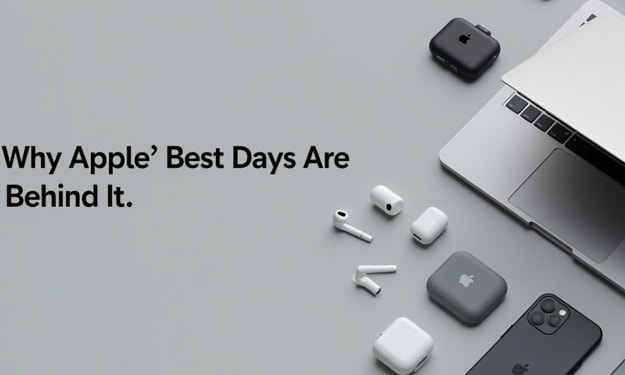
Why Apple’s Best Days Are Behind It. AI-Generated.
For over two decades, Apple Inc. has been the crown jewel of Silicon Valley. From revolutionizing personal computing to reshaping the mobile phone industry, Apple didn’t just follow trends—it created them. But here’s a controversial take: Apple’s best days are behind it. While the company remains a financial powerhouse, cracks are forming under the surface. Loyalty is slipping. Innovation is stalling. And rivals are catching up—fast. 1. Innovation Has Slowed to a Crawl Let’s be honest—when was the last time Apple truly blew our minds? The iPhone was groundbreaking in 2007. The iPad in 2010 was impressive. AirPods reshaped wearable tech. But recently? Apple has leaned heavily on incremental updates. The iPhone 13, 14, 15… they look eerily similar. The design tweaks are minor. The software improvements are nice, but not revolutionary. Compare that to the energy of the Steve Jobs era, when each keynote was a cultural moment. Today, Apple’s product launches feel predictable. There’s a sense that they’re playing it safe—optimizing profit over pushing boundaries. 2. Apple Is No Longer the Cool Brand Apple once represented rebellion, creativity, and sleek modernity. Today, it represents… the status quo. Teenagers and Gen Z aren’t as infatuated with Apple as Millennials were. In fact, platforms like TikTok are filled with creators who mock the lack of customization on iPhones compared to Android. Tech-savvy users are turning to Samsung, Google Pixel, and even Chinese brands like Xiaomi and OnePlus for cutting-edge features and flexibility. The cult-like devotion Apple once enjoyed is fading. People no longer line up around the block for the latest iPhone. Apple has become “just another phone brand”—with a premium price tag. 3. The Apple Ecosystem Is a Walled Garden—and It’s Backfiring Apple’s ecosystem used to be its greatest strength: Mac, iPhone, iPad, AirPods, Watch—everything just works together. But in 2025, that strength is turning into a cage. People want choice. They want compatibility. Apple’s refusal to adopt universal standards like USB-C (until forced by regulation) and their tight control over the App Store has frustrated users and developers alike. In regions like Europe, Apple is facing legal heat over monopolistic practices. Developers are increasingly questioning why Apple takes a 30% cut of their earnings just to appear on the App Store. These battles are chipping away at Apple’s pristine image. 4. China Is a Growing Threat A decade ago, Apple owned the premium smartphone market in China. But now, Chinese brands like Huawei, Oppo, and Xiaomi are taking over—offering better hardware at lower prices. Add to that growing geopolitical tensions, government restrictions, and a movement to “buy local,” and Apple’s dominance in one of its largest markets is being seriously challenged. In 2023 and 2024, Apple saw declining sales in China. If this trend continues, it could mark the beginning of a long-term decline in global market share. 5. AI Is the Future—and Apple Is Behind While Microsoft integrates ChatGPT into everything from Word to Windows, and Google pushes AI into Search and Android, Apple has been oddly silent on the AI front. Sure, they’ve made moves—like enhancing Siri or making quiet acquisitions—but compared to the AI arms race happening right now, Apple feels like it’s standing still. In a world where people expect intelligent assistants, creative tools, and smart automation, Apple’s reluctance to lead in AI could prove costly. If Apple doesn’t catch up fast, its devices could feel outdated—not because of hardware, but because of what they can’t do compared to competitors. 6. Tim Cook Is Not a Visionary—He’s a Manager Steve Jobs was an innovator. He saw the future and built it. Tim Cook is a master of operations. He made Apple a $3 trillion company by optimizing supply chains, maximizing margins, and pleasing shareholders. But you can’t spreadsheet your way to the next iPhone moment. Under Cook’s leadership, Apple has become more cautious, more corporate. The magic, the mystery, the bold risks—many feel they died with Jobs. And unless someone new steps up with radical vision, Apple may slowly drift into irrelevance—just like Nokia or BlackBerry once did. So, Is Apple Doomed? Not Yet… Let’s be clear: Apple isn’t going to vanish tomorrow. It still sits on mountains of cash, controls a massive user base, and dominates multiple product categories. But here’s the warning: giants fall slowly—until they fall all at once. If Apple doesn’t reignite its culture of innovation, embrace open ecosystems, and lead in AI, it risks becoming the next case study in corporate complacency. It won’t happen overnight. But it will happen—if they don’t change course. Final Thoughts: The Clock Is Ticking Apple's legacy is secure. But legacies don’t sell phones. Vision does. Innovation does. Risk does. Right now, Apple looks more like IBM in the '90s than Apple in the 2000s—powerful, respected, but slowly becoming irrelevant to the next generation. If that doesn’t change, we might one day say, “Remember when Apple ruled the world?”
By GadgetGroundabout a year ago in Futurism
The Creator-CEO Era. AI-Generated.
How influencers are becoming entrepreneurs—and what traditional businesses can learn from them In 2025, the lines between content creator, entrepreneur, and CEO are blurrier than ever. What began as a movement of individuals filming makeup tutorials or sharing travel vlogs has evolved into a multi-billion-dollar ecosystem, where personal brands drive product sales, launch startups, and reshape entire industries. Welcome to the Creator-CEO era—a business revolution led not by suits in boardrooms, but by charismatic storytellers behind smartphones.
By HAMMAD KHAN OFFICIALabout a year ago in Futurism