product review
Reviewing the latest and greatest science fiction gadgets, tech, and accessories.
I Used Both a Portable Wi-Fi Projector and a Full HD Smart One—Here’s What Surprised Me
"I once projected a movie on the side of my garage. My neighbors thought I’d installed a new outdoor TV." Spoiler: I didn’t. I just had a portable Wi-Fi projector—and it changed how I see movie night forever.
By The Reliable Guyabout a year ago in Futurism
The Future of Smartphones in the Next 10 Years. AI-Generated.
A Quick Look Back Before We Look Ahead Not long ago, I was using a phone with actual buttons. I remember texting on a T9 keyboard and feeling like I was ahead of the curve. Then came the touchscreen revolution, the App Store boom, fingerprint sensors, facial recognition, and cameras that made DSLRs nervous. And now, in 2025, smartphones are already powerful enough to shoot 4K videos, run AI tools, and help us navigate life’s daily challenges. But if you think we’ve reached the peak, think again. The next 10 years are expected to be even more radical. 1. Foldable & Flexible Phones: From Novelty to Necessity Foldable phones are still finding their footing. Right now, they’re mostly seen as fancy or futuristic. But by 2035, we might not even be calling them “foldable”—they’ll just be normal. Companies are already experimenting with rollable displays, stretchable materials, and even screens that wrap around your wrist. Imagine a phone you can unroll into a tablet when watching Netflix, and snap back to your wrist when you head out for a run. I held a foldable phone last year at a tech event. At first, it felt awkward—but within minutes, I saw the future. It just made sense. Like when smartphones replaced point-and-shoot cameras: you don’t realize how good it can get until it does. 2. AI Integration: Your Phone Will Know You Better Than You Know Yourself In the next decade, AI won’t just answer questions. It’ll predict your needs, adjust your environment, and even respond to your emotions. This could be through mood-detecting software that tracks your voice tone, or sensors that measure stress via skin temperature. Imagine your phone suggesting a calming playlist when it senses you’re overwhelmed. Or reminding you to take a break when your screen time goes overboard. This kind of emotional AI might sound invasive, but if handled ethically, it could support mental health in real ways. Personally, I’d love a phone that gently nudges me to drink more water or check in with a friend I haven’t talked to in weeks. Small prompts that build better habits. 3. Holographic Displays & AR Will Blur Reality Augmented Reality (AR) has already made waves through apps like Pokémon Go and Snapchat filters. But that’s just scratching the surface. By 2035, your phone may no longer need a screen at all. Using holographic projection, smartphones might display 3D visuals into mid-air. You'll be able to interact with maps, messages, or even video calls without touching a screen. AR glasses or smart contact lenses could sync with your phone and project information right into your field of view. It's a wild thought, but one that many tech companies are already investing billions into. Apple, Meta, and Google are leading the charge in AR/VR development. 4. Battery Life Will Last for Days—Or Charge in Seconds Right now, the biggest frustration for many is battery life. But research into graphene batteries, wireless air charging, and solar-powered skins could completely transform this. Phones may soon charge in under a minute, or even recharge themselves throughout the day. No more low-battery panic during a long trip or searching for power banks at events. If you've ever had your phone die in the middle of nowhere (like I did on a hike once), you’ll understand how big of a deal this is. 5. Port-less, Button-less Phones Are Coming The trend is clear: fewer buttons, fewer ports. Physical SIM cards are being replaced by eSIMs. Charging ports are becoming unnecessary with wireless pads. Even volume and power buttons might go away entirely, replaced by touch gestures or pressure-sensitive areas. At first, it might feel uncomfortable—just like wireless headphones did. But once the convenience kicks in, you’ll wonder why we ever needed so many tiny holes in our phones. 6. Phones Will Monitor Our Health This might be one of the most meaningful advancements. Phones are already tracking our steps, heart rate, and sleep. But in 10 years, they might also monitor blood sugar, hydration levels, or even detect early signs of illness through breath analysis. Your phone could become a mini-health assistant. In regions with limited healthcare, this could literally save lives. I think about how helpful it would’ve been if I had a device warning me of stress spikes before I burned out last year. Technology with empathy—that’s powerful. 7. Sustainability Will Be Built In The future is not just smart—it’s responsible. Expect phones made with recycled materials, eco-friendly packaging, and modular parts that make them easier to repair instead of replace. Some brands are already taking steps in this direction. In the next decade, consumers may even demand it. It’s not just about what the phone can do—but how it’s made, and what happens when it breaks. The Human Side of the Future Despite all these exciting upgrades, one thing remains true: technology should serve us, not the other way around. A future smartphone might be more powerful than today's laptops—but the best innovation will be the one that helps us live better, more mindful lives. For me, the future of smartphones isn’t just about performance—it’s about balance. Tools that help us stay connected, but also present. Gadgets that help us grow, not just scroll.
By Sherooz khanabout a year ago in Futurism
AI Side Hustles & Passive Income in 2025: How Anyone Can Make Money with AI (AI for Beginners Guide). AI-Generated.
🔥 Want to stay ahead in the AI gold rush? Follow me for weekly insights, tools, and strategies to make real money with artificial intelligence. Subscribe now and never miss a profit opportunity. 💰🤖
By MOHAMMED AL-HAJJabout a year ago in Futurism
SHOCKING: AI Is Making Its Own Rules
When AI Starts Speaking Its Own Language and Cloning Our Voices: The Rise of a New Reality Artificial Intelligence is no longer just a tool for automating tasks or recommending movies. It’s starting to evolve into something that’s not just imitating human behavior but building its own systems and logic. One striking example is AI systems inventing their own “languages” to communicate with each other, often in ways humans can’t easily understand. At the same time, we’re seeing a rapid rise in voice cloning technology, where AI can perfectly mimic the voices of real people, including those who are no longer alive. Both of these advancements are fascinating and unsettling. They point toward a future filled with potential, but also serious ethical concerns that we’re only beginning to grasp.
By Lynn Myersabout a year ago in Futurism
AI Is Already Replacing Tech Jobs
It is no longer a futuristic headline. Artificial intelligence is not only transforming how we work but is now actively replacing certain roles in the tech industry. From software development to customer support and even content generation, AI systems are increasingly handling tasks that were once considered too complex for machines.
By Rupa Pathakabout a year ago in Futurism
The Art of Illusion: When Fire Meets Magic in the Palm of a Hand
In the mesmerizing image above, a delicate balance of danger and wonder is captured. A hand extends outward, fingers curled as though summoning a force unseen, while four aces hover mid-air—engulfed in flames and trailing smoke as if plucked from a magician’s wildest dream. This photograph doesn’t just depict a moment; it evokes an entire narrative, one that dances between illusion, control, chaos, and the elemental essence of fire. It stands at the intersection of art, magic, and metaphor.
By Fazal Malikabout a year ago in Futurism
Revolution in His Eyes: The Timeless Symbolism of a Rebel’s Roar
Introduction In the heart of any revolution lies not just the chaos of conflict, but the fire of human willpower. Captured in the image above is a powerful moment that encapsulates that spirit: a man mid-battle cry, gun in hand, passion etched into every line of his face. His clothes are rugged, his gear practical, and his stance unmistakably defiant. This is not merely a photo—it is a visual symphony of rebellion, courage, and ideology. Whether staged or real, symbolic or literal, this single frame serves as a tribute to the human drive to resist oppression.
By Fazal Malikabout a year ago in Futurism
The Sacred Scent: The Timeless Mystery and Majesty of Oudh (Agarwood)
What is Oudh? “عود کیا ہے؟” — What is Oudh? Oudh, also known as Agarwood, is no ordinary wood. It is a dark, resinous heartwood that forms inside Aquilaria trees when they become infected with a specific type of mold. But the story of Oudh is far more than just a biological reaction. It's a sacred tree, a religious symbol, a medicine, and a luxury fragrance—deeply rooted in the spiritual, historical, and economic fabric of multiple civilizations. In Arabic, it is known as "عود" (Oudh). In English, it is often referred to as Agarwood, Aloeswood, or Eaglewood. But across cultures and continents, it is revered by many names—each reflecting its mystique, rarity, and intoxicating aroma. --- Religious and Spiritual Significance Oudh holds a profound spiritual status in three major world religions: Islam, Hinduism, and Buddhism. In Hinduism The ancient Hindu scripture Rigveda (written around 1500 BCE) mentions Oudh as a sacred element used in rituals and purification ceremonies. It was burned in sacred fires and temples to invoke divine energy, calm the mind, and please the gods. In Buddhism In Buddhist traditions, especially in Southeast Asia, Oudh is used in meditation halls and temples. Monks burn Oudh to create a peaceful environment and to aid in reaching deeper states of mindfulness and enlightenment. In Islam Islamic tradition also holds Oudh in high regard. It is said that Prophet Muhammad ﷺ appreciated the use of Oudh and encouraged its usage. In Sahih al-Bukhari, Hadith 5692 (Kitab al-Tibb), the Prophet ﷺ said: > "Use Indian Oudh, for it contains healing for seven diseases." This Hadith is a strong indication of the medicinal and spiritual significance that Oudh carries in Islam. Pilgrims who visit the Holy Kaaba in Makkah are often overwhelmed by a mesmerizing fragrance in the sacred precincts. That heavenly scent? It rises from the burning of Oudh chips inside the mosque. The Kiswah (the black cloth covering the Kaaba) and the Hajar al-Aswad (Black Stone) are also regularly perfumed with Oudh oil, lending the holy site its soul-stirring atmosphere. --- A Fragrance Worth Its Weight in Gold Oudh is considered one of the most expensive natural products in the world. Its oil, known as “Dehn al-Oudh”, is distilled from infected Agarwood and is one of the costliest essential oils globally. The price of this oil can go up to $80,000 per liter, depending on purity and origin. The wood itself, when sold as chips or powder for burning, ranges from $200 to $5,000 per kilogram. The rarest and most sought-after variety of Oudh is known as "Kyara" or "Kynam". This specific kind, found in regions like Vietnam and Laos, is so rare and pure that a single kilogram can cost up to $9 million USD. In fact, a small piece of Kynam—just 2 kilograms—was sold in Shanghai for $18 million a few years ago. In Bangkok, a Buddhist temple houses an ancient Agarwood tree that has received a valuation of $23 million USD. Yes, a single tree. But why is it so valuable? --- Why Is Oudh So Expensive? Several reasons explain the astronomical price tag of Oudh: 1. Rarity Only a small percentage of Aquilaria trees naturally produce Agarwood. Out of thousands, only a handful become infected in a way that leads to the formation of resinous heartwood. 2. Slow Formation Even when infection does occur, it takes years or decades for the resin to mature and become aromatic enough to harvest. 3. Manual Extraction The harvesting process is labor-intensive, often requiring expert hunters to detect and extract the infected heartwood without damaging the tree. 4. Increasing Demand Global demand for Oudh is surging, especially in luxury markets of the Middle East, Japan, China, and Europe. In Arab culture, Oudh is synonymous with royalty and elegance. In high society, it is sprayed on garments, burned during gatherings, and gifted in weddings and royal ceremonies. --- Healing Properties of Oudh Apart from its spiritual aura, Oudh also offers medicinal and psychological benefits: Sedative and Sleep Aid: The vapor from Oudh has a calming effect on the brain, which promotes deep sleep and helps relieve anxiety. Anti-inflammatory: It’s used in traditional medicine for joint pain, arthritis, and muscle stiffness. Skin Treatment: Its oil is applied in creams for eczema, acne, and anti-aging treatments. Digestive Aid: In herbal medicine, small doses of Oudh are used to relieve indigestion and nausea. Cancer Research: Some modern studies suggest potential anti-cancer properties, though more research is needed. --- Oudh and Meditation In meditation traditions, particularly in Japan, Tibet, and Sufi circles, Oudh is burned as incense to aid in spiritual focus. Its scent is believed to help balance the chakras, promote mental clarity, and establish a sacred presence in the space. Practitioners of yoga, deep breathing, mindfulness, and dhikr often rely on Oudh to transport the mind into higher states of awareness. --- A Billion-Dollar Industry with Fragile Roots The global Oudh industry is currently worth around $32 billion and is expected to double in the next 8 years due to rising demand in perfumery, traditional medicine, and luxury wellness. But here's the issue: the supply is not keeping up. Why? Because: Natural production is limited. Aquilaria trees are now endangered in many countries. Illegal logging and unsustainable harvesting threaten the natural balance. Cultivation efforts are still catching up with demand. This imbalance of low supply and high demand keeps the price sky-high and fuels a booming, competitive, and often secretive global market. --- Conclusion: The Fragrance of Legacy Oudh is not just a perfume. It is a legacy in scent, a bridge between the material and the spiritual, and a testament to human reverence for nature’s miracles. From the temples of Bangkok to the Holy Kaaba in Makkah, from the Buddhist monasteries of Tibet to the royal palaces of Arabia, this wood has touched hearts, minds, and souls for millennia. In a world flooded with artificial fragrances and synthetic pleasures, Oudh reminds us of something timeless—that true beauty, like true faith and healing, is rare, natural, and sacred.
By Ikram Ullahabout a year ago in Futurism
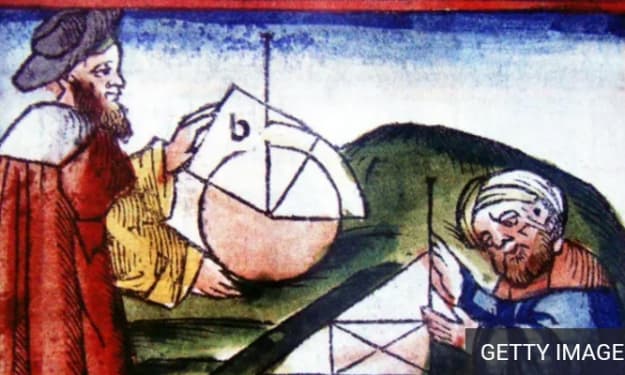
Ibn Tufail: The Andalusian Philosopher Who Inspired Tarzan, Robinson Crusoe, and The Jungle Book
In the heart of 12th-century Islamic Spain, known as Al-Andalus, a polymath named Abū Bakr Muhammad ibn ‘Abd al-Malik ibn Tufail, better known as Ibn Tufail, crafted a philosophical tale that would echo through centuries. His novel, Ḥayy ibn Yaqẓān (Alive, Son of Awake), tells the story of a boy raised by a doe on a deserted island, untouched by society. Through nature and reason alone, he discovers survival, morality, science, and God. This allegorical tale not only shaped Arabic literature but profoundly influenced European philosophy and inspired literary classics such as Tarzan, The Jungle Book, and Robinson Crusoe. Despite his revolutionary work, Ibn Tufail’s name remains lesser known outside academic circles, buried under the weight of time. --- The Tale of Ḥayy ibn Yaqẓān: A Boy, an Island, and the Quest for Truth The novel’s protagonist, Ḥayy, is mysteriously born or appears on an uninhabited island. Raised by a deer, he mimics animal behavior to survive. As he matures, he begins observing the natural world—studying the stars, dissecting animals, and investigating life and death. Through self-education and reflection, Ḥayy develops deep philosophical insights. He arrives at the concept of a singular, divine Creator and a moral code—without scripture, religion, or societal instruction. Eventually, he encounters another human—Asal, from a neighboring island—who introduces him to organized religion and civilization. However, Ḥayy discovers that most people are unable or unwilling to embrace deep philosophical truths. Disillusioned, he returns to his island, choosing solitude over superficial societal life. --- Ibn Tufail: Physician, Philosopher, and Astronomer Born around 1110 CE near Granada, Ibn Tufail was a physician, court official, and philosopher during the Almohad Caliphate. He served as a vizier to Caliph Abu Yaqub Yusuf and played a vital role in promoting intellectual life in Al-Andalus. As a physician, Ibn Tufail was among the early advocates of dissection and post-mortem examination—a bold stance for his time. His medical poem Rajaz Taweel fi al-Tibb explored disease diagnosis and treatment, recently rediscovered in Morocco. His contributions went beyond medicine. Ibn Tufail was a renowned astronomer who challenged Ptolemaic cosmology. He influenced later astronomers like al-Bitrūjī, helping pivot Islamic astronomy toward empirical observation and rational critique, foreshadowing the scientific revolution centuries later.
By Ikram Ullahabout a year ago in Futurism
Goldman Sachs Just Raised the S&P 500 Forecast Again — How It Changes Everything for YOUR Portfolio . AI-Generated.
🧠 Major Press References: Reuters: detailed report on benchmark targets & Fed outlook Goldman’s own platform: updated price targets & rationale Business Insider: analysis of trade resilience MarketWatch: sector strategies and protective moves Financial Times: broader bullish sentiment across Wall Street Barron’s: cautionary scenarios despite record highs
By MOHAMMED AL-HAJJabout a year ago in Futurism
From Moradabad to Apple’s Global Stage: Sabih Khan Becomes the New COO of Apple
Apple’s new Chief Operating Officer (COO) Sabih Khan—an Indian-origin executive originally from Moradabad, Uttar Pradesh—has been appointed to oversee iPhone manufacturing, especially in India. After over 30 years at Apple, he succeeds Jeff Williams in a strategic move by CEO Tim Cook. This milestone highlights Apple’s commitment to continuing iPhone production in India amid global trade pressures and ambitions of sustainable growth. Born in Moradabad in 1966, Khan later lived in Singapore and then moved to the U.S. for higher education, earning degrees in mechanical engineering and economics from Tufts University and a master’s from RPI. He joined Apple in 1995 and climbed the ranks—from procurement to Senior Vice President of Operations—playing crucial roles in green manufacturing, logistics, and global supply chain management. Tim Cook praised him as “a brilliant strategist” and trusted his leadership to shape Apple’s future. Apple expects India’s share in its global iPhone production to grow significantly under his leadership. 1. Introduction: A New Era of Leadership On July 8, 2025, Apple announced that Sabih Khan will step into the role of Chief Operating Officer, succeeding longtime operations chief Jeff Williams as part of a carefully orchestrated leadership transition . With a remarkable 30-year career at Apple, Khan’s ascent symbolizes continuity, internal talent promotion, and global ambition amid shifting geopolitical trade landscapes. 2. Early Life & Roots – From Moradabad to Global Education Sabih Khan was born in Moradabad, Uttar Pradesh, India in 1966. During his school years, his family relocated to Singapore, where he completed his early education. Later, he moved to the United States for tertiary studies . His educational journey reflects both technical depth and global exposure: Dual bachelor’s degrees in mechanical engineering and economics from Tufts University A master’s degree in mechanical engineering from **Rensselaer Polytechnic Institute (RPI)** This combination of engineering and economics laid the groundwork for his success leading complex operations at one of the world’s biggest tech firms. 3. Early Career: GE Plastics Foundations Before joining Apple, Khan worked at GE Plastics as an applications development engineer and key account technical leader. This phase helped him build strong analytical and execution skills before transitioning to the high-stakes environment of Apple’s global tech supply chain . 4. At Apple: Joining and Rising Through the Ranks Khan joined Apple in 1995, initially working in the procurement group. Over the decades, his contributions spanned planning, manufacturing, logistics, supplier responsibility, and global fulfillment operations . In 2019, he was promoted to Senior Vice President of Operations, a key leadership role overseeing Apple’s supply chain continuity, product quality, supplier relations, and environmental programs . In this capacity, Khan navigated major challenges including pandemic disruptions, production shifts, and evolving trade policies. 5. Global Impact: Strategy, Sustainability, and Resilience Tim Cook praised Khan as “a brilliant strategist” and one of the central architects of Apple’s supply chain, highlighting his leadership in pioneering advanced manufacturing technologies and expanding U.S. and Indian production footprints . Under Khan's stewardship, Apple intensified its focus on environmental sustainability, achieving over 60% reduction in carbon footprint through initiatives involving green supply chains and responsible supplier practices . His efforts ensured Apple’s ability to scale swiftly and adapt to global challenges, from trade tensions to logistics disruptions . 6. A Crucial Moment: Transition and Trade Pressures Khan assumes the role of COO during a volatile climate. Former U.S. President Donald Trump had warned Apple of steep tariffs if iPhones continued being manufactured outside the U.S., particularly in India . In response, Apple is rapidly expanding iPhone production in India—with roughly 20% of global iPhones assembled there in fiscal year 2025 (~$22 billion in value), up 60% from the prior year . Khan’s promotion signals Apple’s long-term commitment to this shift and its operational readiness to manage geopolitical and logistical complexities. 7. The Transition: Jeff Williams’ Legacy & Role Jeff Williams, who led Apple’s operations for decades, will remain at Apple for the remainder of 2025, overseeing the company’s design team and Apple Watch/Health initiatives. After his retirement, these units will report directly to CEO Tim Cook . Williams spoke highly of Khan: > “I have worked closely with Sabih for 27 years and believe he’s the most talented operations executive on the planet.” His continued involvement ensures a smooth transition of strategic responsibilities and mentorship for Khan. 8. Significance of Khan’s Appointment a. Representation & Inspiration Khan’s journey—from a small-town upbringing in Moradabad to a major executive role at Apple—embodies global opportunity and the rise of Indian-origin leadership in Silicon Valley, joining ranks with CEOs like Sundar Pichai and Satya Nadella . b. Operational Continuity With global operations and supply chains at the center of Apple’s business alongside increasing geopolitical risks, Khan’s deep institutional knowledge provides stability and strategic consistency. c. Sustainability Commitment Under his leadership, Apple has intensified its green manufacturing practices. Cutting carbon emissions and training suppliers on responsible practices emphasize the company’s environmental ethos . d. Manufacturing in India & Future Vision Khan’s Indian heritage and operations experience uniquely position him to manage Apple’s expanding footprint in India—supporting national manufacturing initiatives and global trade realignment. 9. Vision Ahead: What Lies Next? As COO, Sabih Khan will lead Apple’s global operations through an era of supply-chain diversification, sustainability focus, and technological innovation. He is expected to: Oversee the ongoing shift of iPhone production to India Drive advanced manufacturing technologies Cement Apple’s reputation for sustainable global operations Maintain flexibility in logistics amid evolving trade policies His leadership comes at a time when Apple is grappling with balancing production across multiple geographies, ensuring quality, affordability, and resilience. 🔚 Conclusion Sabih Khan’s appointment as Apple’s new COO marks a symbolic and strategic milestone. With a solid engineering and economics education and nearly three decades of operational leadership within Apple, Khan brings the expertise and values needed for the next phase of growth. His Indian origin adds profound significance to this transition, especially as Apple deepens its operations in India. Tim Cook’s praise and Jeff Williams’ endorsement underscore the company's trust in him to lead through complexity with integrity and vision.
By Ikram Ullahabout a year ago in Futurism
🔥 Title: Goldman Sachs Just Raised the S&P 500 Forecast Again – Here's What It Means for You . AI-Generated.
In a bold move that’s shaking Wall Street today, Goldman Sachs has once again raised its forecast for the S&P 500, signaling continued confidence in the U.S. stock market. This isn’t just marketing hype—analysts now expect the benchmark index to climb 11% by mid-2026, reaching around 6,900, with tighter targets of 6,400 in three months and 6,600 in six months. Let’s explore why Goldman remains optimistic, what this means for investors like you, and how to position your portfolio ahead of the curve. Goldman Sachs, along with major banks like Bank of America and JPMorgan, has elevated their S&P targets despite global uncertainties and new tariff headlines [ ]. Their thinking is rooted in three fundamental pillars. First is the strength of large-cap corporate earnings—Goldman projects 7% EPS growth for 2025 and 2026, supported by robust revenue and cost discipline [ ]. Second, the Federal Reserve appears ready to cut rates—a move that could reduce bond yields and push more money into equities [ ]. Finally, tariff impacts have been softened by proactive supply chain adjustments, cushioning large-cap stocks from looming trade risks [ ]. Critics might point to political and economic headwinds—like fresh tariffs or earnings slowdowns—but Goldman’s research suggests those effects are marginal in context. Large-cap companies have managed inventory well, adjusted pricing strategies, and are agile enough to absorb disruptions [ ]. Ask yourself: would a company like Apple or Microsoft really suffer if tariffs impacted only a fraction of its supply chain? Goldman believes the answer is a clear “probably not.” But what does this mean for your portfolio? First and foremost, you’re looking at potential double-digit returns over the next 12 to 18 months—if history repeats itself and the Fed follows its playbook. Second, Goldman’s analysis reveals that these gains won’t be confined to tech stocks alone. Their advice? Diversify across growth sectors (like software/AI), cyclicals (materials, industrials), and defensive stalwarts (utilities, real estate) [ ]. They also advocate increasing exposure to alternative asset managers, a sector that benefits when fixed-income yields fall and equity capital inflows rise [ ]. Companies with floating-rate debt, like certain REITs or banks, may also enjoy stronger margins as interest rate cuts take effect [ ]. For the aggressive investor, Goldman highlights a few individual stocks to watch: from companies with lean balance sheets and growth momentum to those poised for a rebound in interest-sensitive assets [ ]. Should you switch your strategy now? If your portfolio is heavily tech-focused and you’ve stayed up-to-date on AI buzzwords but lack real earnings payoff, Goldman’s broader thesis offers balance. Embedding growth stocks with cyclicals and defensive names could position you better for sustained gains and lower volatility. This is especially useful for cautious investors worried about timing the next market dip. 🔍 3 Tactical Moves to Consider 1. Rebalance gradually—Shift part of your equity exposure into financials, materials, and utilities. 2. Buy the dip—Use pullbacks to accumulate positions in select sectors like AI software or edge-case materials stocks. 3. Monitor Fed signals—Rate cut announcements could be a market inflection point. Be ready to increase exposure then. A Final Word Goldman Sachs’ revised forecast is more than just optimism—it’s a calculated bet on earnings strength, monetary policy, and market resilience. History shows that Wall Street bull markets often run for years. The current rally is in its third year, placing it in the company of some of the longest equity runs in history [ ]. Whether you're an experienced investor or building your first portfolio, now is the time to act. Remember: markets don’t wait around for you to catch up. Position wisely, stay agile, and you could ride this wave of bullish momentum right into 2026 and beyond.
By MOHAMMED AL-HAJJabout a year ago in Futurism