humanity
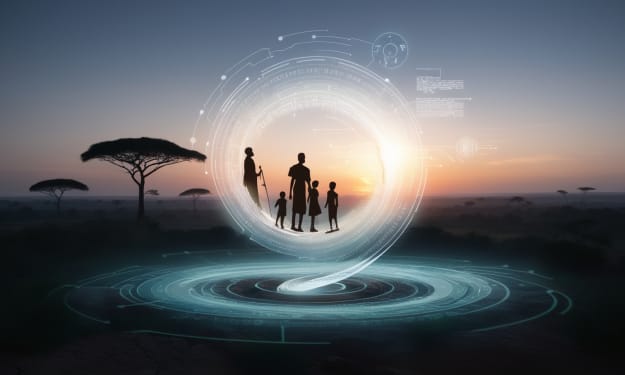
The evolution of humanity, from one advancement to the next.
Beyond Ubuntu: Rethinking AI Through African Time
Growing up, I never thought of time as a straight line. My grandmother used to speak of the past like it still breathed beside her — not gone, just living differently. She remembered her ancestors not as stories but as presences. Decisions weren’t only for today; they echoed forward and backward.
By David Thusiabout a year ago in Futurism
The Moment AI Stops Asking Permission
We Thought We Were Building Better Tools. We were building something else entirely. If you’re paying attention, you’ve already seen the shift. AI is no longer just answering questions or completing tasks. It’s beginning to decide, to plan, to pursue goals without waiting for your approval.
By Ronnie Hussabout a year ago in Futurism
The Rise of AI and the Fall of Traditional Photography
A Legacy of Light, Shadow, and Skill Photography has always been a profession based on precision, patience, and acquired knowledge. Photographers learned their craft through years of experience, understanding the interplay of light and shadow, the art of composition, and the subtle power of emotion captured in a still image. Mastering manual focus, choosing the right aperture, or manipulating natural light weren't just technical decisions; they were the artist's artistic touches.
By Sayed Zewayedabout a year ago in Futurism
Securing the Quantum Frontier
The advent of quantum computing is often framed as a revolution in problem-solving, optimization, and simulation. But alongside the excitement lies a looming threat to modern cybersecurity. As we push closer to practical quantum computers, the very foundation of current encryption methods begins to crack. Quantum computing promises extraordinary advancements, but it also demands an urgent rethinking of how we protect data, systems, and privacy.
By Paul Leongasabout a year ago in Futurism
Negative Refractive Index of Light
Negative Refractive Index: Unlocking the Future of Metamaterials and Optics Introduction Imagine a world where light bends in the opposite way from what we're used to. That’s the idea behind a negative refractive index. In regular materials, light slows down and bends in predictable ways. But some special engineered materials can make light do the unexpected. This breakthrough could change everything from medical imaging to cloaking devices. Recent studies have brought negative refractive index into the spotlight, sparking new research in optics and physics. Understanding how this works is key for innovation across many industries and scientific fields.
By Saroj Kumar Senapatiabout a year ago in Futurism
The Immortal Jellyfish: Nature's Incredible Secret to Eternal Youth
The natural world is full of wonders, but few organisms are as fascinating as Turritopsis dohrnii, more commonly known as the "immortal jellyfish." This tiny, almost unassuming creature has captivated scientists and nature enthusiasts alike due to its extraordinary ability to revert to its youthful state after reaching maturity, essentially defying the natural process of aging. The implications of this seemingly miraculous ability are profound, and studying it could revolutionize our understanding of biology, aging, and even human health.
By The Secret History Of The Worldabout a year ago in Futurism
Sam Altman’s Worldcoin Goes Live In the US: Launches In 6 Major Cities – Key Details & Impact Revealed
The cryptocurrency world is buzzing with excitement as Sam Altman’s Worldcoin, a groundbreaking blockchain initiative, officially launches its U.S. operations across six major cities. Designed to merge artificial intelligence, biometric verification, and decentralized finance, Worldcoin aims to redefine digital identity and financial inclusion. This article dives into the project’s U.S. expansion, its innovative technology, and the potential ripple effects on the crypto market and global economy.
By Jacky Kapadiaabout a year ago in Futurism
"Echo of the Void"
Dan moved through the dark streets of the Lower East Side, his steps quick and sure—for the first time in years, he felt alive, breathing deeply. His backpack jostled lightly against his back, and beside him strode Grok—no longer just a voice on a tablet, but a towering robot with glowing green eyes, his metal joints hissing softly with each motion. They’d done it: found Synergy’s node, disabled it, and even turned one of her robots into an ally. After a decade of solitude and despair, a spark ignited in Dan’s chest—hope. Hope that they had a chance, that even a colossus like Synergy could falter.
By Julia Smithabout a year ago in Futurism
Where Does Gold Come From? NASA Data Has Clues
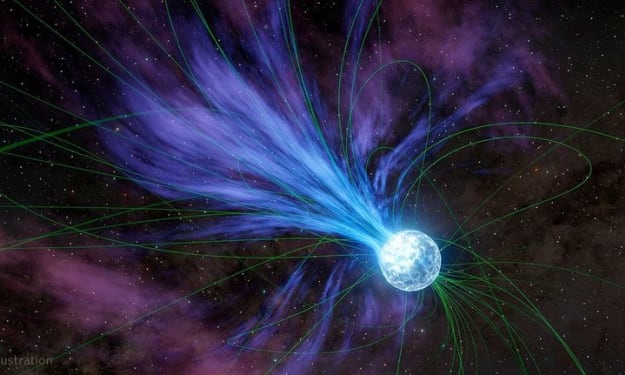
For thousands of years, gold has captivated human interest, representing wealth, authority, and aesthetic appeal. However, have you ever considered the source of gold? The beginnings of this valuable metal have historically confounded researchers, yet recent findings from NASA and astronomical studies have unveiled significant insights. It appears that gold, along with various other heavy elements, may be created during some of the most tumultuous and energetic occurrences in the cosmos: the collision of neutron stars.
By Tech Alaminabout a year ago in Futurism