humanity
The evolution of humanity, from one advancement to the next.
What If You Hibernated For 100 Years ?
Pack your cosmic suitcase, for you're about to journey to the enigmatic realm of Alpha Centauri. A slight hiccup? The voyage spans a staggering century. But worry not, for we are about to traverse the cosmos while slumbering. Venture into a world where hibernation reigns, as we explore the prospects of a century-long repose. As we drift through this hypothetical voyage, contemplate the required technology, unravel the physiological mysteries, and dare to envision the future that awaits. [Music] Welcome to "What If," where we embark on a celestial odyssey bound by time and physics. Our destination: Alpha Centauri, a stellar realm cloaked in mystery. However, the temporal abyss that separates us poses a challenge—a 100-year sojourn. Immerse yourself in the realm of dreams, as we consider the viability of a century-long hibernation, propelled by science fiction's promise and humanity's ingenuity. Hibernation, an extended state of dormancy often observed in animals during harsh winters or periods of food scarcity, beckons us into its ethereal embrace. During this quiescent phase, body temperature, heart rate, and metabolism plummet, mirroring an almost dormant existence. Yet, translating this terrestrial phenomenon into a deep cosmic slumber spanning a century presents monumental hurdles. The quest to induce human hibernation unveils complexities intertwined with our biological nature. Unlike rodents, humans find their body temperature less amenable to drastic reduction, a challenge compounded by our greater body mass. While the prospect of reaching absolute zero degrees Celsius remains elusive, a strategy rooted in cooling emerges—a process used in surgical settings to induce torpor. Cooling, achieved through ice packs, coolers, or cooled saline infusions, lays the groundwork for the transformative transition into the torpor state. Nonetheless, a conundrum endures—current cooling technology remains sustainable for a mere 14-day interval. A stark dichotomy emerges: how do we bridge this temporal chasm, preserving the slumbering voyage? Enter cryogenics, a prospect fraught with intrigue. By substituting regular bodily fluids with anti-freezing agents, scientists have enabled the freeze-thaw cycle of tissue without causing irreversible harm. Cryogenics, this bold gambit, opens the gateway to an extended sojourn, where biological slumber intertwines with the intricacies of cosmic travel. Yet, in the wake of such ethereal dreams, a realm far beyond the physical beckons—a world that has undergone tectonic shifts in society, technology, and environment. Awakening from your prolonged somnolence, you'd find yourself adrift in the stream of time's relentless flow. Societies would have metamorphosed, technology blossomed, and landscapes morphed beyond recognition. Over the span of a century, innovations spanning from talking movies and penicillin to nuclear bombs, computers, and the internet would dot the horizon of history. Climate change, a contemporary specter, could forge an Earth profoundly different from the one you last glimpsed. The tapestry of our planet would be woven with new threads—environmental disasters, shifts in geography, and untold changes. Alpha Centauri, your ultimate destination, would harbor the potential to be an alien oasis or an inhospitable realm. But what if, in a different epoch, your trajectory veered towards another destination? Earth's climate change, a motive for your cosmic voyage, would dim in significance. Yet, the physiological framework of the human body poses an insurmountable hurdle. The chasm separating human physiology from the dormant resilience of animals is vast. Attempting to mirror the hibernation of a bear, for instance, would precipitate dire consequences. Your body, not built for such extended dormancy, would grapple with an array of health issues, confronting muscle atrophy, arterial thickening, and a host of other challenges. In the grand pursuit of hibernation, the puzzle remains incomplete. The mechanics of slumber, cosmic travel, and adaptation coalesce into a tapestry woven of dreams and reality. As we venture forth into the celestial horizon, yearning to conquer temporal barriers, we grasp at the essence of a question: Could humanity traverse the cosmic abyss, ensconced in centuries-long hibernation? [Music] The journey lingers beyond our grasp, an aspiration as elusive as it is enchanting. As we journey onward, curiosity still ablaze, the promise of the universe's mysteries beckons—enticing us to explore, to speculate, and to embrace the boundless realm of "What If." Watch the video on YouTube @whatif
By Allan Njarumi3 years ago in Futurism
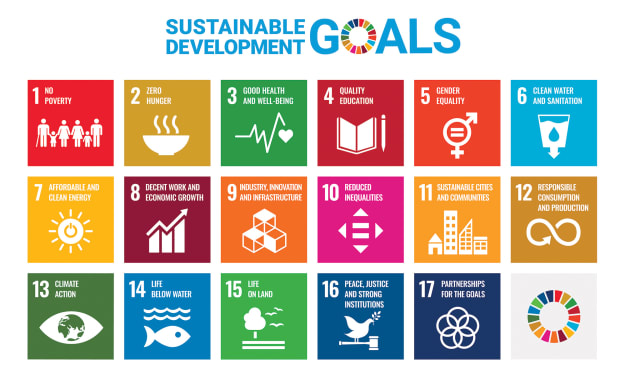
The Imperative of Promoting Sustainable Development Goals: Shaping a Resilient Future
Introduction In an era marked by unprecedented environmental challenges, social inequalities, and economic uncertainties, the call for promoting Sustainable Development Goals (SDGs) has never been more imperative. The SDGs, adopted by United Nations member states in 2015 as part of the 2030 Agenda for Sustainable Development, encompass a comprehensive framework that seeks to address a wide array of global issues. From eradicating poverty and hunger to ensuring quality education, clean water, and climate action, these goals underscore the interconnectedness of social, economic, and environmental factors in shaping the future of our planet.
By Alhagie Manneh3 years ago in Futurism
The Rise of AI and its implications on human Roles
In the ever-evolving landscape of technology, the question of whether artificial intelligence (AI) can eventually replace humans remains a subject of profound contemplation. While popular virtual assistants like Ceri, Alexa, Cortana, and Google Assistant have become household names, the realm of artificial intelligence extends far beyond these voice-activated helpers. AI encompasses a vast array of applications that are fundamentally altering the dynamics of human-machine interaction and reshaping the very fabric of modern society.
By Damilare Samson3 years ago in Futurism
Technological advancement and innovation
In the vast landscape of human progress, technological advancement stands as one of the most defining hallmarks of our species. From the invention of the wheel to the exploration of space, our journey has been marked by a ceaseless pursuit of innovation. In this article, we delve into the captivating realm of technological advancement and innovation, exploring its impact on society, the economy, and our very way of life. The Dynamics of Technological Advancement Technological advancement is a force that has propelled human civilization from humble beginnings to the modern era of interconnectedness and digital marvels. Rooted in the insatiable human curiosity and quest for improvement, innovation has driven the development of tools, machines, and systems that have revolutionized every aspect of our lives. From the Industrial Revolution to the Information Age, each era has brought forth a new wave of technological wonders, reshaping industries, cultures, and societies. Innovation as a Catalyst for Change Innovation, often referred to as the spark of progress, is not limited to technological fields alone. It encompasses a mindset that transcends disciplines, encouraging creative problem-solving and novel approaches to challenges. The rapid pace of innovation in recent decades can be attributed to the interconnectedness of the world and the ease of sharing ideas across borders. Collaborative efforts across diverse domains have led to groundbreaking discoveries, ranging from medical breakthroughs to energy-efficient technologies. Economic Implications of Technological Advancement One of the most palpable effects of technological advancement is its profound impact on the global economy. Innovation drives productivity gains, enhances efficiency, and generates new avenues for economic growth. However, this progress is not without its challenges. Automation, a byproduct of technological advancement, raises concerns about job displacement and the need for upskilling the workforce. Striking a balance between innovation-driven growth and ensuring equitable distribution of benefits remains a key consideration. The Evolution of Industries Industries that were once the bedrock of economies have been reshaped by the waves of technological innovation. The rise of digitalization has transformed sectors such as finance, healthcare, manufacturing, and entertainment. E-commerce has disrupted traditional retail models, while advancements in artificial intelligence have revolutionized customer experiences and supply chain management. Adapting to these changes is imperative for businesses to remain competitive in the dynamic landscape of technological progress. Societal Transformations Technological advancement has ushered in societal transformations that touch every aspect of our lives. Communication has evolved from handwritten letters to instant global connectivity through social media and messaging platforms. Education has been revolutionized by e-learning and digital resources, making knowledge accessible to a wider audience. However, the digital divide remains a concern, highlighting the need for inclusive access to technology to prevent marginalization. Ethical Considerations and Responsibility As the realm of technological advancement expands, ethical considerations come to the forefront. Innovations like artificial intelligence, biotechnology, and autonomous systems raise questions about privacy, security, and accountability. Striking a balance between pushing the boundaries of innovation and safeguarding against unintended consequences is a challenge that requires collaboration between researchers, policymakers, and society at large. Environmental Sustainability and Innovation The relationship between technological advancement and environmental sustainability is a complex one. While innovation has the potential to mitigate environmental challenges, it can also contribute to resource depletion and pollution. Clean energy technologies, sustainable agriculture practices, and circular economy models showcase the potential of innovation in fostering a more sustainable future. It is imperative for innovators to prioritize solutions that align with environmental stewardship. The Human Experience in the Age of Innovation Amidst the whirlwind of technological advancement, it's essential to remember that innovation should enhance the human experience, not diminish it. The pursuit of convenience, efficiency, and novelty must be balanced with preserving human connections, fostering creativity, and nurturing mental well-being. As we march forward, it's crucial to reflect on how each innovation contributes to the overall quality of life and societal harmony. Conclusion Technological advancement and innovation are the twin engines propelling us into the future. From the invention of the wheel to the wonders of artificial intelligence, our journey has been marked by relentless curiosity and a passion for progress. The transformative power of innovation is boundless, touching every facet of our existence. As we navigate the complexities of this dynamic landscape, our responsibility lies in harnessing innovation to create a world that is not only technologically advanced but also compassionate, inclusive, and sustainable. Through careful consideration and collaboration, we can ensure that the story of technological advancement is one of progress, promise, and positive change. F
By Gift Abotsi 3 years ago in Futurism
robot colleague at work places
In a not-so-distant future, where technology had leaped beyond imagination, a new addition was made to the bustling workplace of NexaTech Corporation. Amid the sea of cubicles and clatter of keyboards, a sleek and sophisticated creation named R1V3R joined the ranks as the company's first-ever robot colleague.
By talkaboutosa brokyn3 years ago in Futurism
Phantom Shift- Limits of Our Vision
This is Part Five in a series. You can read Parts One, Two, Three, and Four here. 09:15 pm, Georgetown The sterile smell of latex and disinfectant hung in the air as the paramedics wheeled Alexis into the emergency room. She could smell it in her waking dream state. She could feel the gurney shake back and forth as it bumped its way down the hall. The world was black, her head was pounding, and her ears were ringing, but she was alive. Time was a flat circle again.
By Atomic Historian3 years ago in Futurism
The Dark Side of Artificial Intelligence
The world is undergoing a profound transformation fueled by the remarkable advancements in artificial intelligence. While the creation of convincing fake photos once demanded hours of laborious effort in programs like Photoshop, AI has streamlined the process to mere seconds. From altering appearances to language translations, the possibilities are expanding at an astonishing pace. This article delves into the diverse ways AI is shaping our lives, the potential it holds, and the challenges it poses.
By Artur Poniatowski3 years ago in Futurism
What is the world's oldest active religion?
What is the world's oldest active religion? Around 85% of people worldwide identify as members of a religion, the majority of which date back thousands upon thousands of years. Hinduism is the oldest significant religion still in existence among the various religious belief systems that exist around the world. However, when discussing this subject, it is important to note a few different spiritual belief structures.
By Francis Dami3 years ago in Futurism
Unveiling The Mysteries of AI: Where the Potential of AI Meets the Marvel of Tomorrow
In an era where the boundaries between reality and wonder blur, we set sail on a journey where the potential of AI meets the marvels of tomorrow. Imagine a world where knowledge is not just power; it's the very compass guiding us toward new horizons and shaping a future that resonates with awe and reverence.
By Josue Manaois3 years ago in Futurism