how to
How to create science fiction and technology projects in a simplistic, easy manner.
What Will Happen When the Sun Dies?
A Journey Into the Distant Future of Earth and the Solar System The Sun our radiant anchor in the cosmos gives life to everything on Earth. It lights up our days, warms our planet, and powers the processes that make existence possible. But like all things in the universe, the Sun is not eternal. One day, it will die. While this dramatic finale won’t happen for another five billion years, scientists already have a remarkably clear picture of what this future holds. And it’s a tale of awe-inspiring transformation both magnificent and catastrophic.
By Holianyk Ihorabout a year ago in Futurism
Can a Civilization Become Immortal?
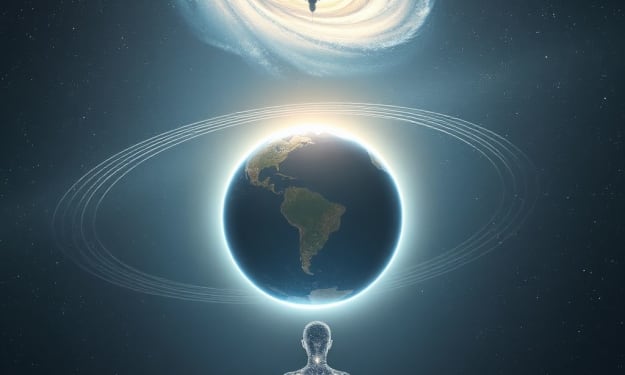
Exploring the Eternal Journey of Humanity The idea of a civilization achieving immortality is as fascinating as it is daunting. Philosophers, scientists, and futurists have long pondered whether humanity can outlive the fragility of individuals and rise to become an enduring presence in the universe. With our relentless drive for innovation building megacities, exploring the cosmos, creating artificial intelligence we seem determined to leave a legacy that outlasts the human lifespan. But can a civilization truly become immortal? Or is this just a beautiful illusion?
By Holianyk Ihorabout a year ago in Futurism
When Mathematics Loses Control
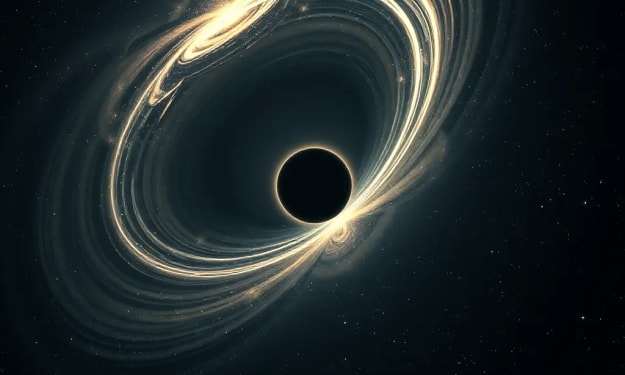
The word “singularity” sounds almost mystical, as if it hides a forbidden chapter in the grand cosmic story. And in some sense, it does. The singularity point is not just a dry term from math or physics textbooks. It’s a concept that challenges our very understanding of space, time, and the laws of nature. So, what exactly is a singularity point, and why is it considered one of the greatest mysteries of modern science?
By Holianyk Ihorabout a year ago in Futurism
How Space Influences Earth's Electricity: The Invisible Interaction
When you flip a light switch and the bulb lights up, few people stop to consider that at that very moment, somewhere on the outskirts of our Solar System, a powerful solar storm might be raging. At first glance, these two events seem completely unrelated. Yet space is far from empty; it’s a dynamic environment full of energetic processes that can significantly impact Earth’s electrical systems. Let’s explore how the cosmos influences electricity on our planet and why engineers around the world keep a vigilant eye on space weather.
By Holianyk Ihorabout a year ago in Futurism
What Happens to Earth's Atmosphere During Solar Flares: A Cosmic Shockwave Through Our Air
The Sun is far more than just a source of light and warmth—it’s an incredibly powerful energy generator that regularly unleashes colossal bursts of energy into space. One of the most dramatic forms of this solar activity is the solar flare—sudden and intense explosions on the Sun’s surface. These flares can be so powerful that their effects are felt 150 million kilometers away, right here on Earth. But what exactly happens to our atmosphere when these cosmic storms hit? Let’s dive into the fascinating chain of events that unfold in the skies above us during solar flares.
By Holianyk Ihorabout a year ago in Futurism
How Earth Looks from Different Points in the Solar System: A View from Afar
When we look up at the night sky from our own backyard, Earth feels like the center of the universe. It’s where we live, where our stories unfold, and where all known life thrives. But as soon as we travel even a little farther out into space, that perspective shifts dramatically. From other planets, moons, and spacecraft drifting through the Solar System, Earth transforms from a sprawling blue-and-green world into a tiny, shimmering dot — just one among countless stars scattered across the cosmic sea. Let’s take a journey and imagine how our home planet appears from different vantage points across the Solar System.
By Holianyk Ihorabout a year ago in Futurism
How Astronauts Survive Emergency Situations: Heroism, Technology, and Cold Calculation
Space is unforgiving—there are no second chances. Any mistake, from equipment failure to a tiny crack in a spacesuit, can be fatal. That’s why safety systems on spacecraft and space stations are engineered with extreme precision, and astronauts undergo years of rigorous training to prepare for emergencies until their responses become automatic. But what exactly happens when things go wrong in space? How do astronauts save themselves in life-threatening situations? Let’s take a behind-the-scenes look at the art and science of space survival.
By Holianyk Ihorabout a year ago in Futurism
Why Black Holes Don’t Suck in Everything: Debunking a Cosmic Myth
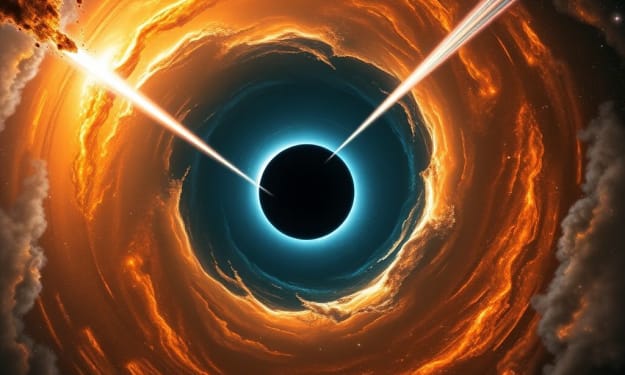
Black holes are, without exaggeration, some of the most mysterious and frightening objects in the universe. They are often imagined as insatiable monsters that devour everything nearby — stars, planets, even light itself. In popular culture, black holes are frequently portrayed as cosmic vacuum cleaners, sucking in anything that dares come close. But the truth is far more fascinating — and less catastrophic. In reality, black holes do not pull in everything indiscriminately. Let’s explore why.
By Holianyk Ihorabout a year ago in Futurism
Is Time Travel Possible Within the Framework of Space?
Time travel is one of the most thrilling ideas humanity has ever imagined. From ancient myths to 21st-century science fiction, the dream of peeking into the future or changing the past has fascinated scientists, writers, and philosophers alike. But does this fantasy have any real scientific foundation? Especially when considered within the vast and mysterious backdrop of space — the grandest stage for such journeys?
By Holianyk Ihorabout a year ago in Futurism
The Secret Projects of the Space Race: What Was Hidden Behind the Glory
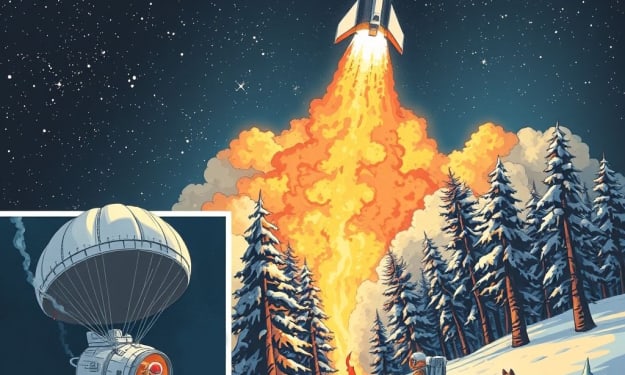
The space race was one of the most thrilling and dramatic rivalries of the 20th century. It wasn’t just about reaching orbit or planting a flag on the Moon—it was a geopolitical battle between the United States and the Soviet Union, a high-stakes contest for global dominance through science, technology, and ideology. While the world celebrated milestones like Sputnik, Apollo 11, Yuri Gagarin’s historic flight, and Neil Armstrong’s first steps on the Moon, much of the real story remained locked behind closed doors. Let’s take a deeper look into the secret side of the space race—the shadowy projects and covert missions that shaped this extraordinary era.
By Holianyk Ihorabout a year ago in Futurism
Benefits of Using Kafka for Real-Time Streaming Events
Why Kafka Became the Backbone of Real-Time Data In today’s event-driven world, data no longer arrives in scheduled batches. It moves continuously — from app interactions, payment systems, vehicle telemetry, sensors, APIs, user sessions, and infrastructure events. Responding to this data in real-time is now a requirement across various industries, including mobility, finance, healthcare, manufacturing, and media.
By Sachin Kamathabout a year ago in Futurism
What Really Happens During a Spacewalk: A Step Beyond the Edge of Earth
Floating above the Earth, with nothing but the stars ahead and the planet far below, astronauts stepping out of their spacecraft enter one of the most extreme and awe-inspiring environments imaginable — open space. Known officially as an EVA, or extravehicular activity, a spacewalk is a breathtaking feat of human engineering and courage. But what actually happens when someone leaves the safety of a spaceship and ventures into the cosmic void?
By Holianyk Ihorabout a year ago in Futurism