how to
How to create science fiction and technology projects in a simplistic, easy manner.
The Cosmic-Scale Paradox: How Infinity Shapes Our Perception of Reality
When we gaze up at the night sky, a sense of wonder often mixes with a quiet unease. The universe is vast breathtakingly silent, dazzlingly beautiful, and perhaps… infinite. This idea of infinity is not just a scientific curiosity. It’s a profound philosophical paradox that challenges our very perception of what is real, what is possible, and what it means to exist.
By Holianyk Ihorabout a year ago in Futurism
What If Earth Had Two Moons?
When we look up at the night sky and see the Moon glowing peacefully above us, everything seems just right. The Moon stabilizes Earth’s tilt, controls the tides, and has inspired poets, artists, and scientists for centuries. But what if there weren’t just one Moon what if Earth had two? How would that change our planet, our lives, and our future?
By Holianyk Ihorabout a year ago in Futurism
What We Know About Microbes in Space: Invisible Passengers of the Final Frontier
When we imagine space, we often think of stars, planets, black holes, and astronauts in sleek white suits floating through the vacuum. But rarely do we consider the invisible life forms that travel alongside them microbes. These microscopic hitchhikers accompany us everywhere on Earth: in our homes, on our skin, and inside our bodies. But they also boldly go where no microbe has gone before into space.
By Holianyk Ihorabout a year ago in Futurism
Why Don’t Spaceships Use Solar Panels for Propulsion?
At first glance, it sounds like the perfect idea: space is flooded with sunlight, so why not use solar panels not just to power onboard systems, but also to propel the spacecraft itself? It seems clean, endless, and efficient. But in reality, the situation is far more complicated. Solar panels are excellent for generating electricity but they’re a poor choice for producing thrust. Here’s why.
By Holianyk Ihorabout a year ago in Futurism
5 ChatGPT Prompts To Rapidly Scale A High-Paying Side Hustle
Want to level up your side project into a high-paying side hustle? The right ChatGPT prompts can help you get there faster. Recent research from MarketWatch finds that 51% of Americans have worked a side hustle in the past year. That figure climbs to 72% for Gen Z. With the gig economy projected to surpass $600 billion globally this year, according to Business Research Insights, now is the perfect time to put AI to work. Here are five ChatGPT prompts designed to help you scale rapidly and unlock new income streams.
By Muhammad Sabeelabout a year ago in Futurism
The Secret Economy of Facebook Marketplace Flipping
It all started with a broken lamp. Not a metaphorical “light bulb moment” kind of lamp—an actual, dusty, brass floor lamp I found in the back of my friend Sarah’s garage during a weekend cleanout. “Take anything you want,” she said, clearly eager to declutter. Most of the stuff was headed to the curb or Goodwill. I hesitated for a moment, then shrugged and hauled the lamp into my car.
By Muhammad Sabeelabout a year ago in Futurism
Why IOS 18.6 Exists
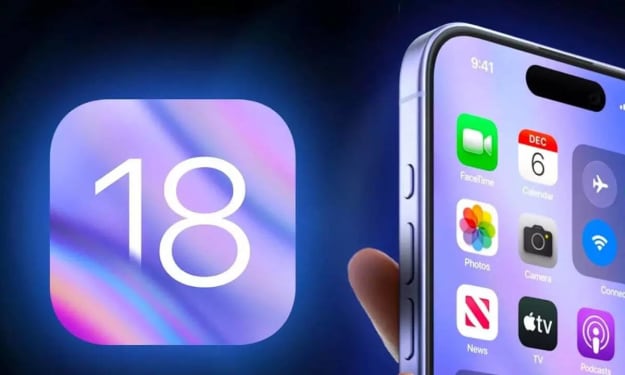
A Silent But Critical Update In a tech world fueled by headlines, flashy new features, and dramatic keynote reveals, it's easy to overlook the quiet moments. But in Apple’s software cycle, those moments are often the most important. iOS 18.6, the final noteworthy update to iOS 18 before the launch of iOS 26, isn’t here to dazzle. It doesn’t introduce redesigned apps, new emojis, or splashy lock screen upgrades. Instead, it focuses on something more fundamental — trust. When millions of users rely on iPhones for everything from business to banking to preserving their most cherished memories, performance and security aren’t just features — they’re foundations. And that’s exactly what iOS 18.6 is: a foundation update. Let’s dive into what it brings, why it matters, and what it signals about the future of iOS. Apple’s Annual Software Dance: Why iOS 18.6 Exists To understand iOS 18.6, you have to understand Apple’s rhythm. Each June, during the Worldwide Developers Conference (WWDC), Apple unveils the next generation of its software — iOS, iPadOS, macOS, watchOS, and tvOS. It’s the moment when Apple shares its vision for the future: the next big leap forward. But between WWDC in June and the public launch in September, there’s a transitional window. Apple continues to support its current OS versions with final updates that ensure users aren’t left vulnerable while the next-gen systems bake in beta. This window is where iOS 18.6 lives. It’s the final pit stop before the iOS 26 rocket ship launches. And while it doesn’t carry the glamour of a new Control Center or AI assistant, it plays a crucial role in keeping your iPhone — and Apple’s reputation — stable. --- What’s New in iOS 18.6: The Official Release Notes Apple’s release notes for iOS 18.6 keep things short and to the point: > “This update provides important bug fixes and security updates, and fixes an issue in Photos that could prevent memory movies from being shared.” That might sound simple, but consider what’s behind those words. 🔧 Bug Fixes That Actually Matter For users who rely on iPhones to create and share Memory Movies in the Photos app, this fix is a big deal. These AI-generated movies stitch together emotional highlights from your gallery — birthdays, travels, holidays — and turn them into shareable moments. Imagine editing a birthday compilation, only to find it won’t export or send. That’s the kind of frustration iOS 18.6 eliminates. Beyond that, the vague but essential “bug fixes and security updates” refer to dozens of potential issues behind the scenes. Apple often doesn’t disclose every fix for security reasons, especially if they’re patching vulnerabilities that could be exploited. --- Security First: Why These Fixes Are a Big Deal The modern smartphone is a vault — full of personal photos, financial apps, health data, business emails, and private messages. And like any vault, it’s only as strong as its weakest point. Each new iOS release addresses known vulnerabilities, many of which have been flagged by researchers, developers, or even hackers. iOS 18.6 is expected to patch several actively exploited vulnerabilities, as Apple has done consistently in past "point-six" releases. These might include: WebKit fixes for Safari-related exploits Kernel-level patches that protect system-wide functions Lockdown Mode enhancements for users at high risk of cyberattack If you’ve ever wondered why your iPhone rarely crashes, or how it handles malware better than many laptops — the answer lies in updates like this. --- A Slight Shake-Up in the EU For users in the European Union, iOS 18.6 brings a more visible change — though not everyone will notice it right away. Due to ongoing enforcement of the Digital Markets Act (DMA), Apple has had to tweak how users install: Third-party app marketplaces Apps directly from websites (sideloading) While these changes were originally introduced in iOS 18.4 and 18.5, iOS 18.6 brings more refinements and clarifications. It affects how app installation prompts look, what permissions are required, and how developers must disclose data use. It’s not a major shift for most users, but it represents something bigger: Apple, slowly and reluctantly, loosening its grip — at least in one part of the world. Whether this sets a global precedent or remains a Europe-only compromise is something to watch. --- The China Question: Will Apple Intelligence Launch in iOS 18.6? Speculation has swirled for months about Apple Intelligence — Apple’s suite of AI features unveiled at WWDC — and whether it might roll out to Chinese users via iOS 18.6. Currently, Apple Intelligence is not available in China due to regulatory hurdles and infrastructure dependencies. Some industry analysts believed that iOS 18.6 might be the surprise vehicle for its launch — a silent rollout, unannounced in the U.S. release notes but included in region-specific builds. So far, that hasn’t happened. And most signs suggest Apple will wait until iOS 26 to even begin considering China’s inclusion. Still, with Apple’s growing focus on AI, and China being one of its most important markets, it’s a situation worth keeping an eye on. --- What It Means for Developers and Beta Testers iOS 18.6 also marks the end of the road for iOS 18’s developer cycle. With this release, Apple has: Closed the book on iOS 18 bug reporting Shifted all developer focus to iOS 26 and the Xcode 16 toolset Aligned RC (Release Candidate) builds with the final public version If you’re a developer still updating apps for iOS 18 users, this is your last major compatibility check before iOS 26 changes the game. And for testers and enthusiasts, it means iOS 26’s public beta is now safe and stable enough for broader exploration. --- User Impact: Should You Install iOS 18.6 Immediately? Absolutely — and here’s why. Security updates protect you from exploits that could steal data or crash apps Bug fixes improve reliability, battery life, and system responsiveness It’s likely the last iOS 18 update, meaning no more patches are coming Think of iOS 18.6 as the final tune-up before a long road trip. Your phone is about to enter a new era with iOS 26 — better to make sure everything is running smoothly now. You can install it by heading to: Settings > General > Software Update --- iOS 26: What’s Just Around the Corner If iOS 18.6 is about stability, iOS 26 is about transformation. Launching in September 2025, iOS 26 will introduce: A stunning Liquid Glass design language Apple Intelligence (AI-driven productivity and personal assistant features) Improved multitasking and context-aware notifications Enhanced continuity across iPhone, iPad, Mac, and Apple Vision The hype is real — but the preparation starts now. iOS 18.6 makes sure your current iPhone can cleanly upgrade when the time comes. Final Thoughts: The Invisible Upgrade That Matters Not every software update needs to be loud. Sometimes, the most essential changes are the quietest. iOS 18.6 is like a stage manager clearing the set before a major performance. It ensures the lights don’t flicker, the curtains rise smoothly, and the audience gets a seamless experience. Whether you’re holding off on iOS 26 until bugs are squashed, or you plan to dive into the public beta, iOS 18.6 is your safety net — and it deserves a moment of appreciation.
By Muhammad Abbas khanabout a year ago in Futurism
Navigating the Geopolitical Landscape with Autonomous, Ethical, and Self-Sustaining AI for Critical Decision-Making
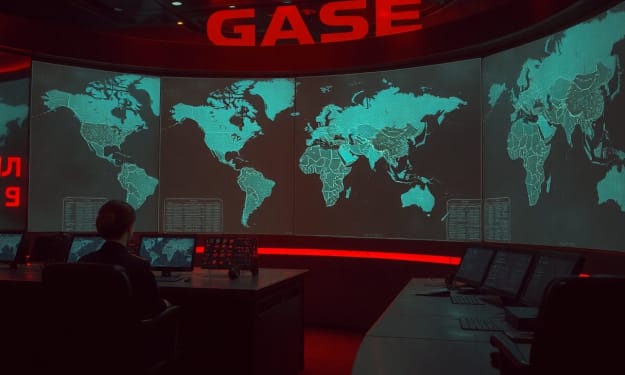
Imagine a system capable of navigating the relentless complexity of global politics, one that transcends the traditional limitations of current analytical framework and could actually keep up with the chaos of global politics, but without all the usual baggage? I’m talking about a new kind of open-source, self-sustaining AI framework for geopolitical analysis. Not some pie-in-the-sky vaporware, but a real, practical toolkit. Let’s call it GASE: Geopolitical Analysis & Strategic Evaluation. This isn’t a product pitch; it’s an open invitation to brainstorm, poke holes, and maybe even help build something that could change the game.
By Maxim Dudkoabout a year ago in Futurism
How Religions Explained the Cosmos Before Telescopes: Myths, Dogmas, and Celestial Mysteries
Long before telescopes, satellites, and astrophysics offered us a glimpse into the true nature of the universe, humanity gazed at the night sky with a mixture of awe and fear. Stars, planets, comets, and the Moon weren’t just distant objects they were divine symbols, messages from the heavens, and pieces of a grand spiritual puzzle. In nearly every culture, the cosmos was explained through the lens of religion and mythology. So how exactly did people understand the universe before science took its first real look through a lens?
By Holianyk Ihorabout a year ago in Futurism
What Would You See If You Could Travel Faster Than Light?
An Imaginative Journey Beyond the Boundaries of Physics The speed of light isn’t just fast it’s the cosmic speed limit. According to Albert Einstein’s theory of special relativity, nothing with mass can reach or exceed the speed of light in a vacuum (about 299,792 km/s). But what if we suspend the rules for a moment? What if faster-than-light (FTL) travel were possible? What would we see as we crossed that ultimate frontier?
By Holianyk Ihorabout a year ago in Futurism
The Ambient AI Conspiracy: Why Your Reality Is Being Harvested by Corporate Overlords (And How the Elite Are Fighting Back)
The Players: Your Digital Overlords Revealed Let's stop dancing around the truth. Google isn't just "improving user experience" with their Pixel Buds' constant listening protocols. Meta isn't "enhancing social connection" with their Ray-Ban smart glasses that record everything you see. Amazon isn't "making life easier" with Alexa devices that now analyze your emotional state through micro-changes in voice patterns.
By Prince Esienabout a year ago in Futurism