habitat
The natural home and environment for all things sci fi, including future homes and territories.
Why Do Astronauts Take Spoons but Not Knives into Space?
Strange but true facts about everyday life in orbit When we imagine an astronaut floating through the International Space Station (ISS), we might picture futuristic gadgets, floating food packets, and tools for eating in microgravity. But here’s a curious fact: astronauts always have spoons but hardly ever bring knives. Why? The answer reveals a lot about how different life in space really is.
By Holianyk Ihorabout a year ago in Futurism
What Happens Inside a Meteor During Its Fall to Earth?
Every time we see a bright streak across the night sky a meteor blazing through the atmosphere we’re witnessing a truly cosmic event. But have you ever wondered what’s happening inside that fiery object during those dramatic seconds of descent? A meteor is not just a rock falling from the sky. It’s undergoing a violent transformation, both physically and chemically. Let’s take a journey into its core and uncover the incredible events unfolding within.
By Holianyk Ihorabout a year ago in Futurism
When the Moon Was Closer: What the Sky Looked Like Millions of Years Ago
Imagine looking up at the night sky hundreds of millions of years ago. The stars were still there, the Milky Way still stretched like a luminous river across the heavens but the Moon? It was a very different sight. Back then, it loomed much larger and brighter in the sky, dominating the night with an intensity we can barely imagine today. Its gravitational pull stirred the seas with incredible force, shaping coastlines and perhaps even influencing the origins of life itself. But how close was the Moon, and what did the world look like beneath its powerful glow?
By Holianyk Ihorabout a year ago in Futurism
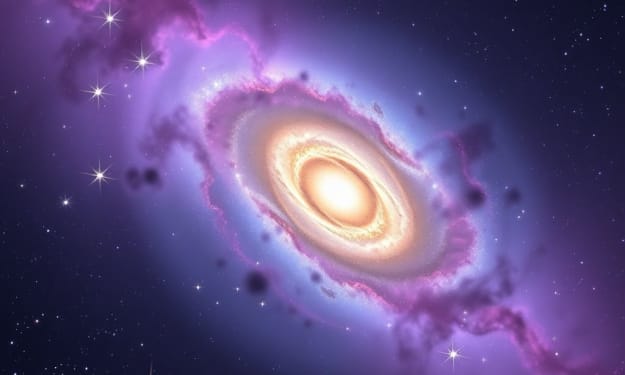
What’s the Difference Between a Galaxy and a Nebula?
Understanding Cosmic Scale One Cloud at a Time When we gaze at the night sky or marvel at breathtaking telescope images, we often see dazzling spirals, glowing patches, or soft, misty shapes floating in the dark. Some of these spectacular sights are galaxies, while others are nebulae. At a glance, they might seem similar both beautiful, both mysterious but they’re fundamentally different in size, structure, and purpose in the grand architecture of the universe.
By Holianyk Ihorabout a year ago in Futurism
When Did the First Star Light Up the Universe?
A Journey Into the Darkness Before the Dawn When we look up at the night sky today, we're greeted by the soft shimmer of countless stars from brilliant giants to dim, fading embers. Every star we see is a blazing sphere of plasma, burning hydrogen and illuminating the cosmos. But believe it or not, there was a time when the entire Universe was completely dark. No stars, no galaxies, no light. Just vast, empty space. So, when did the very first star ignite and bring light to the cosmos?
By Holianyk Ihorabout a year ago in Futurism
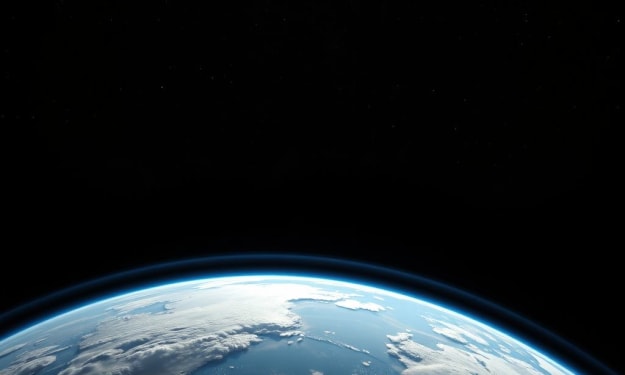
When Did Humans First See Earth from Space?
A moment in history that forever changed our perception of the world For most of human history, our understanding of Earth was limited to what we could see from its surface. We mapped coastlines, climbed mountains, and gazed at the stars but no one truly knew what our planet looked like in its entirety. That all changed in one extraordinary moment: the day a human first looked down at Earth from the depths of space.
By Holianyk Ihorabout a year ago in Futurism
How Do Solar Sails Work?
Spacecraft Propelled by Light Imagine a spaceship gliding silently through the vast emptiness of space no engine roar, no fuel tanks, and no trail of smoke behind it. Instead of being pushed by burning fuel, it sails gracefully on beams of sunlight. This isn’t science fiction; it’s a real and promising method of space travel known as solar sailing.
By Holianyk Ihorabout a year ago in Futurism
Could a Planet Be Completely Transparent?
Science Fiction or Physics of the Future? Imagine a planet so clear you could see stars through it a giant glass sphere floating in the depths of space. No clouds, no crust, no shadows of mountains or valleys. Just pure transparency, as if Jupiter were made of crystal. Is this a wild flight of science fiction, or could such a world actually exist?
By Holianyk Ihorabout a year ago in Futurism
Could Earth One Day Lose Its Atmosphere?
A Journey Into the Planet’s Possible Future The Earth’s atmosphere is a delicate yet vital layer of gases that wraps around our planet like a protective blanket. It gives us the oxygen we breathe, shields us from harmful solar radiation, and traps just enough heat to keep the climate livable. But is this shield eternal? Could Earth someday lose its atmosphere and turn into a barren world like Mars?
By Holianyk Ihorabout a year ago in Futurism
The Art of Illusion: When Fire Meets Magic in the Palm of a Hand
In the mesmerizing image above, a delicate balance of danger and wonder is captured. A hand extends outward, fingers curled as though summoning a force unseen, while four aces hover mid-air—engulfed in flames and trailing smoke as if plucked from a magician’s wildest dream. This photograph doesn’t just depict a moment; it evokes an entire narrative, one that dances between illusion, control, chaos, and the elemental essence of fire. It stands at the intersection of art, magic, and metaphor.
By Fazal Malikabout a year ago in Futurism
Revolution in His Eyes: The Timeless Symbolism of a Rebel’s Roar
Introduction In the heart of any revolution lies not just the chaos of conflict, but the fire of human willpower. Captured in the image above is a powerful moment that encapsulates that spirit: a man mid-battle cry, gun in hand, passion etched into every line of his face. His clothes are rugged, his gear practical, and his stance unmistakably defiant. This is not merely a photo—it is a visual symphony of rebellion, courage, and ideology. Whether staged or real, symbolic or literal, this single frame serves as a tribute to the human drive to resist oppression.
By Fazal Malikabout a year ago in Futurism
The Memory Collector . AI-Generated.
Elias sat alone behind the curved glass partition of his memory clinic, the name glowing in soft blue neon: REMEMBR – Memory Removal & Emotional Relief Services. His office smelled of old wires and lavender air mist, a calming scent designed by corporate psychologists to help clients let go of pain. He tapped his screen, eyes scanning another session log. The day’s last client had walked out twenty minutes ago, slightly dazed but smiling—her heartbreak erased, the pain of a broken engagement now just a hollow in her emotional record. Elias didn’t feel relief. He felt tired. Every day, people came in with grief, trauma, regret. They sat across from him, trusting the tech to erase the unbearable. And it worked. Neural mapping. Emotional disassociation. Targeted deletion. No messy side effects. REMEMBR guaranteed a clean slate. But Elias didn’t delete memories. He collected them. Every session, just before the deletion finalized, he dragged a copy into a hidden encrypted folder. He’d watched hundreds of love stories unravel, seen men cry over lost children, felt the burn of betrayal, the sting of regret. He told himself it was academic curiosity. Maybe even noble. Someone should remember, after all. But the truth was: Elias had no memory of his own. --- Years ago, long before he became a technician, Elias had been a client himself. A full wipe. Voluntary, according to the record. No emotional anchor. No journal entries. No trace of his life before the procedure—just a blank folder labeled Origin: Unknown. He sometimes dreamed of faces he couldn’t place. A woman humming a tune. A field of yellow flowers. Screams behind glass. But every time he woke up, the images vanished, like smoke in wind. So Elias began collecting. Hoping, foolishly, that one day someone else’s memory would feel like his. --- One cold Tuesday evening, the system buzzed with a Priority Client tag. Internal Admin override. Elias blinked. High-clearance clients rarely came in person. The door hissed open and a tall, poised woman entered. Mid-50s. Gray hair twisted into a clinical bun. Sharp eyes. Sharp presence. “Dr. Sylva Maren,” she said. “I’m here for a deletion. Classified. Level Zero protocol.” Elias stood. “Of course, ma’am. May I ask what memory we’re targeting?” She hesitated, then handed him a worn photograph. A boy, no older than five, stood barefoot in a field of sunflowers. Auburn hair, a beaming smile. Joy in his eyes. Behind him, a woman’s shadow reached across the grass. “This,” she said simply. Elias felt something cold crawl up his spine. He nodded and gestured oward the recliner. “You may feel a mild pressure while I initiate the extraction.” The headset activated. Lights blinked across her temples. The transfer began. A flood of data streamed into the interface. But something was wrong. Elias didn’t see fragmented neural impulses or disassociated visuals. He saw himself. --- The memory was crystal clear. A lab, sterile and bright. A young boy crying in a containment room. Dr. Maren standing behind glass. Stern. Distant. The boy screamed, “Mom!” and pounded the window. Technicians in white coats murmured, “Proceed with Phase Two.” The woman’s voice echoed: “Subject Elias showing attachment instability. We’ll begin emotional suppression followed by identity erasure.” Elias’s hands began to tremble. Subject Elias. That’s me. The memory unfolded: years of observation. Controlled affection. Then silence. Then surgery. Neural recalibration. Personality overwrite. Deployment to REMEMBR. Elias wasn’t just a patient. He was an experiment. And the woman now sitting in his chair was the scientist who had engineered his erasure. His mother. --- The memory stream slowed. The system chimed: Ready for deletion. Elias sat frozen. His finger hovered over the delete icon. But he couldn’t do it. He transferred the memory to his private archive, locking it behind biometric security. Then he gently removed her headset. She blinked, dazed. “Was I here for something?” He forced a smile. “Just a routine system check. All done.” She stood, adjusted her coat, and walked out—unburdened, unaware of the guilt she had once carried. Unaware of the son she had chosen to forget. --- Elias sat in the quiet hum of the clinic long after she left. The photograph lay on the desk in front of him. He picked it up, fingers trembling. That boy was him. That joy… his. The sunflowers. The humming song. The mother’s voice. It all came rushing back. The betrayal. The experiments. The loneliness. And yet, buried in all that pain, was something else. Love. Somewhere in those years, she had loved him—even if the science, the ambition, had buried it. --- That night, Elias did something he hadn’t done in years. He walked out of the clinic. No drive. No memories to review. No pain to store. Just the photo in his pocket. He walked to the city edge, where concrete faded into fields. And there, under the moonlight, he found them. Sunflowers. A whole field of them. Not a memory. A beginning.
By Ihsanullahabout a year ago in Futurism