future
Exploring the future of science today, while looking back on the achievements from yesterday. Science fiction is science future.
The Move Makes No Sense: Until You Ask This One Question
The Move Makes No Sense: Until You Ask This One Question: Weekly Winning Strategies You’re knee-deep in competitor analysis. You’ve got tabs open like a conspiracy theorist. SEC filings. Product changelogs. Archived pricing pages. CEO Twitter rants. You’re not here for inspiration—you’re hunting for asymmetry. And then it hits you:
By Octopus Competitive Intelligenceabout a year ago in Futurism
Del Monte Files For Chapter 11 Bankruptcy
Chapter 11 Bankruptcy-Del Monte Del Monte has filed for Chapter 11 bankrutcy protection. The company is seeking a buyer for its assets and has secured a nine hundred and twelve, point five million in financing to support operations during the bankruptcy process.
By Susan Paytonabout a year ago in Futurism
Asteroid Alert: Why Earth Must Prepare for the Next Surprise Hit
On Asteroid Day 2025, international attention turns toward the skies. While most space rocks harmlessly miss Earth, a few have struck with catastrophic consequences throughout history. This date reminds us: our planet is vulnerable to celestial threats—and it's time to treat asteroid preparedness as a global priority. --- 🌠 1. Lessons from Catastrophic Impacts Earth’s geological record is painted with the aftermath of asteroid collisions. From the Chicxulub event, which wiped out the dinosaurs 66 million years ago, to smaller impacts that reshaped ecosystems, it's evident that even modest asteroids can unleash immense destruction. Recent revelations highlight at least five major asteroid impacts that went undetected until after they struck—causing craters, ecological upheavals, and long-term climate effects. These incidents weren’t Hollywood blockbusters—they were real-world reminders that danger often arrives unannounced. --- 🔭 2. Detection: Are We Doing Enough? Today's early-warning systems are far more advanced than in past decades. Agencies like NASA and ESA employ networks of telescopes, satellites, and radar to track Near-Earth Objects (NEOs). Hundreds of scientists comb through vast fields of data daily. Yet, small but harmful asteroids—those under 140 meters in diameter—still evade detection until they’re nearly upon us. The recent “close call” of an 80-meter asteroid passing within half the distance to the Moon highlighted that we still lag in securing full planetary protection. --- 💥 3. The Human & Economic Stakes A mid-sized asteroid impact could devastate a city, disrupt global trade, spark mass migrations, and trigger economic collapse. Insurance models and disaster plans typically don't account for such an event—making asteroid preparedness both a humanitarian and financial imperative. Moreover, complacency can be costly. If an asteroid impact causes catastrophic damage, rebuilding could take years, costing trillions and destabilizing political systems. Investing now in detection and deflection technologies is a fraction of the cost compared to post-impact recovery. --- 🚀 4. Global Missions to Prepare Efforts like NASA’s DART (Double Asteroid Redirection Test) mission—where a spacecraft deliberately struck an asteroid to alter its orbit—are proof-of-concept steps toward planetary defense. ESA and other space agencies are working on follow-up missions to refine deflection strategies. These skills, once the stuff of science fiction, are fast becoming strategic necessities. Coordination between nations on technology, data sharing, and contingency planning is critical; it’s the clearest example of a truly global challenge. --- 🌌 5. Rising Awareness, Rising Hope In 2025, what’s most encouraging is the rise in public awareness. Across classrooms, science museums, and online platforms, more people than ever are learning about space threats—and solutions. Initiatives like Asteroid Day LIVE, supported by major space agencies, bring together astronauts, astronomers, and even filmmakers to help break down science for everyday audiences. When science becomes accessible, action becomes possible. The momentum for change is finally growing. --- 🧩 6. What You Can Do Today Whether you're a space enthusiast or just curious, there are steps everyone can take: Stay informed: Follow credible sources like NASA’s NEO Program. Engage locally: Host an Asteroid Day screening or a community talk. Support global funding: Advocate for space science budgets in political dialogue. STEM pathways: Encourage students to explore astronomy, physics, and engineering—fields vital to planetary defense. By collectively valuing science and foresight, we reduce both physical and psychological vulnerability. --- 🌍 Bonus Perspective: A Planet Worth Protecting Sometimes, we forget how rare and fragile Earth really is. From the silent void of space, our blue planet hangs alone—vibrant, living, and breathtakingly unique. An asteroid doesn’t just threaten a region or country—it threatens all life as we know it. That shared vulnerability is also our shared strength. It’s what unites scientists, students, and citizens under one mission: protecting Earth together. --- 🧭 Final Takeaways Theme Insight Real Threat Even small asteroids can cause regional devastation. Unfinished Work Detection still leaves gaps—especially under 140 m. Deflection Is Possible Technologies like DART show we can actively avoid impacts. Global Cooperation Asteroid defense demands a united international response. Public Engagement Awareness drives action—and preparation ensures survival. --- ✴️ Conclusion The chance of a catastrophic asteroid impact may be low at any given moment. But, as history and recent discoveries show, the impact of even one undetected asteroid could be devastating. Asteroid Day 2025 offers a moment to pivot—from passive observers to active guardians of our planet. In the grand cosmic ballet, we’re not just passengers—we’re caretakers. Embracing detection, innovation, collaboration, and public engagement isn’t optional; it’s essential. As we watch the skies, our future depends on preparing today.
By James World about a year ago in Futurism
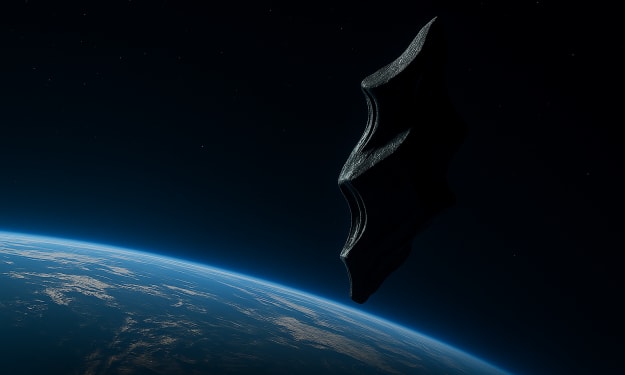
The Black Knight Satellite: 13,000-Year-Old Orbiter Watching Earth?
The Black Knight For decades, stories have circulated about a mysterious object orbiting Earth known as the Black Knight Satellite. The myth of the Black Knight Satellite has its roots in a variety of sources, including ancient texts, historical events, and modern scientific discoveries. Described as a dark, irregularly shaped object that defies explanation, it has been called a 13,000-year-old alien probe observing humanity from above. The concept of the Black Knight Satellite straddles the line between myth and reality, documented observation and esoteric speculation. Over the years, photographs, radio signals, and ancient stories have woven together into a narrative that continues to fascinate. Could this enigmatic object truly be an ancient observer? If so, who sent it and why?
By The Secret History Of The Worldabout a year ago in Futurism
The Dress That Changed Her Confidence
She walked into my store like a question mark. Shoulders hunched, eyes scanning the floor, hands fidgeting with the hem of her dupatta. I remember thinking, “She’s not just looking for a dress — she’s looking for something deeper.”
By Azam Tariqabout a year ago in Futurism
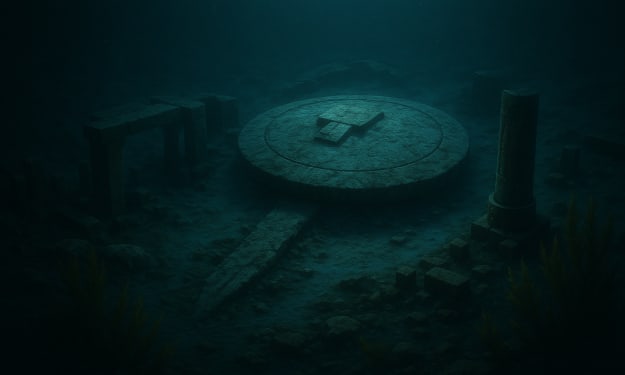
The Baltic Sea Anomaly: A Sunken UFO or a Forgotten Truth Beneath the Waves?
The Object That Shouldn't Exist Beneath the icy, dark waters of the northern Baltic Sea lies a mystery as deep and unfathomable as the ocean itself. Hidden about 300 feet below the surface, resting silently on the seabed between Sweden and Finland, is an object that defies explanation.
By The Secret History Of The Worldabout a year ago in Futurism
Why TikTok Is No Longer Just for Dances in 2025
Introduction: The TikTok Transformation Once known only for lip-syncs, viral dances, and teenage trends, TikTok in 2025 is an entirely different beast. What started as a short-form entertainment app has now become one of the most influential platforms in the digital world.
By Awais Qarni about a year ago in Futurism