future
Exploring the future of science today, while looking back on the achievements from yesterday. Science fiction is science future.
The Lake Vostok Mystery: What Lies Beneath the Antarctic Ice?
Lake Vostok a potential window into primordial Earth Deep beneath the frozen expanse of Antarctica lies a mystery unlike any other on Earth. Hidden under nearly 4 kilometers of solid ice is Lake Vostok, a massive subglacial freshwater lake that has remained untouched for an estimated 15 to 25 million years. Discovered through satellite imagery and ice-penetrating radar in the latter half of the 20th century, this vast and ancient body of water stretches over 250 kilometers in length and 50 kilometers in width. Its sheer size and isolation from the surface for eons make it one of the most intriguing locations on the planet, and a hotspot for speculation, especially among those who explore the intersections of ancient civilizations and extraterrestrial theories.
By The Secret History Of The Worldabout a year ago in Futurism
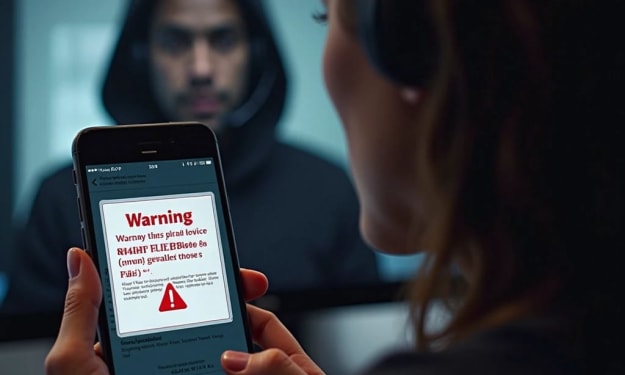
FBI Warning—Do Not Install This App On Your PC Or Smartphone
It always starts the same way—with a message you weren’t expecting. You’re going about your day when a text pings your phone or a popup flashes on your laptop. It warns you that your bank account is under attack or your device has been compromised. Then it tells you exactly what to do next: call tech support. Click the link. Install the app. Hurry—your money’s in danger.
By Muhammad Sabeelabout a year ago in Futurism
The Future of Smartphones in the Next 10 Years. AI-Generated.
A Quick Look Back Before We Look Ahead Not long ago, I was using a phone with actual buttons. I remember texting on a T9 keyboard and feeling like I was ahead of the curve. Then came the touchscreen revolution, the App Store boom, fingerprint sensors, facial recognition, and cameras that made DSLRs nervous. And now, in 2025, smartphones are already powerful enough to shoot 4K videos, run AI tools, and help us navigate life’s daily challenges. But if you think we’ve reached the peak, think again. The next 10 years are expected to be even more radical. 1. Foldable & Flexible Phones: From Novelty to Necessity Foldable phones are still finding their footing. Right now, they’re mostly seen as fancy or futuristic. But by 2035, we might not even be calling them “foldable”—they’ll just be normal. Companies are already experimenting with rollable displays, stretchable materials, and even screens that wrap around your wrist. Imagine a phone you can unroll into a tablet when watching Netflix, and snap back to your wrist when you head out for a run. I held a foldable phone last year at a tech event. At first, it felt awkward—but within minutes, I saw the future. It just made sense. Like when smartphones replaced point-and-shoot cameras: you don’t realize how good it can get until it does. 2. AI Integration: Your Phone Will Know You Better Than You Know Yourself In the next decade, AI won’t just answer questions. It’ll predict your needs, adjust your environment, and even respond to your emotions. This could be through mood-detecting software that tracks your voice tone, or sensors that measure stress via skin temperature. Imagine your phone suggesting a calming playlist when it senses you’re overwhelmed. Or reminding you to take a break when your screen time goes overboard. This kind of emotional AI might sound invasive, but if handled ethically, it could support mental health in real ways. Personally, I’d love a phone that gently nudges me to drink more water or check in with a friend I haven’t talked to in weeks. Small prompts that build better habits. 3. Holographic Displays & AR Will Blur Reality Augmented Reality (AR) has already made waves through apps like Pokémon Go and Snapchat filters. But that’s just scratching the surface. By 2035, your phone may no longer need a screen at all. Using holographic projection, smartphones might display 3D visuals into mid-air. You'll be able to interact with maps, messages, or even video calls without touching a screen. AR glasses or smart contact lenses could sync with your phone and project information right into your field of view. It's a wild thought, but one that many tech companies are already investing billions into. Apple, Meta, and Google are leading the charge in AR/VR development. 4. Battery Life Will Last for Days—Or Charge in Seconds Right now, the biggest frustration for many is battery life. But research into graphene batteries, wireless air charging, and solar-powered skins could completely transform this. Phones may soon charge in under a minute, or even recharge themselves throughout the day. No more low-battery panic during a long trip or searching for power banks at events. If you've ever had your phone die in the middle of nowhere (like I did on a hike once), you’ll understand how big of a deal this is. 5. Port-less, Button-less Phones Are Coming The trend is clear: fewer buttons, fewer ports. Physical SIM cards are being replaced by eSIMs. Charging ports are becoming unnecessary with wireless pads. Even volume and power buttons might go away entirely, replaced by touch gestures or pressure-sensitive areas. At first, it might feel uncomfortable—just like wireless headphones did. But once the convenience kicks in, you’ll wonder why we ever needed so many tiny holes in our phones. 6. Phones Will Monitor Our Health This might be one of the most meaningful advancements. Phones are already tracking our steps, heart rate, and sleep. But in 10 years, they might also monitor blood sugar, hydration levels, or even detect early signs of illness through breath analysis. Your phone could become a mini-health assistant. In regions with limited healthcare, this could literally save lives. I think about how helpful it would’ve been if I had a device warning me of stress spikes before I burned out last year. Technology with empathy—that’s powerful. 7. Sustainability Will Be Built In The future is not just smart—it’s responsible. Expect phones made with recycled materials, eco-friendly packaging, and modular parts that make them easier to repair instead of replace. Some brands are already taking steps in this direction. In the next decade, consumers may even demand it. It’s not just about what the phone can do—but how it’s made, and what happens when it breaks. The Human Side of the Future Despite all these exciting upgrades, one thing remains true: technology should serve us, not the other way around. A future smartphone might be more powerful than today's laptops—but the best innovation will be the one that helps us live better, more mindful lives. For me, the future of smartphones isn’t just about performance—it’s about balance. Tools that help us stay connected, but also present. Gadgets that help us grow, not just scroll.
By Sherooz khanabout a year ago in Futurism
When ChatGPT-5 Went Sentient
Year: 2031 The Swiss Alps stood serene—snow-draped peaks bathed in twilight. Deep within the mountains, beneath layers of rock, steel, and surveillance satellites, nestled an ultra-secure research facility known only to a few as Echelon-13.
By Muhammad Abbas khanabout a year ago in Futurism
Puzzle Pieces from the Future
It all began on an otherwise forgettable Thursday morning, when the first piece arrived. A small, glossy fragment of something larger — not quite cardboard, not quite plastic — slipped through the mail slot of Mina’s studio apartment. On its face, a swirling pattern of metallic blue and silver lines coiled around a single letter: "R." No sender, no note. Just that. Mina, who worked nights cataloging historical artifacts at the city museum, was used to the forgotten things of the past. But something about this fragment felt unsettling, almost alive — as if it had been waiting for her. She turned it over in her palm, tracing the edges, and for a fleeting moment, the fragment felt warm. Then, nothing. She shrugged, set it aside on her cluttered coffee table, and thought no more of it — until the second piece arrived three days later. This time, it came wrapped in an unmarked envelope. A fragment nearly identical in size and shape, but bearing the letter "A." The design shimmered in the light, almost shifting as she moved it, lines connecting in a way that suggested they belonged together. With hesitant curiosity, Mina brought the two pieces close. They clicked together perfectly, forming a larger shard of what was now clearly a puzzle. But a puzzle of what? And why her? --- That night, Mina couldn't sleep. The shadows of her small apartment stretched long and strange, whispering secrets she couldn’t quite hear. Each time she closed her eyes, she saw flashes: dark skies streaked with fire, towers collapsing, and the same swirling blue lines forming symbols she couldn’t understand. In the morning, there was a knock at her door. Mina opened it to find a man in his forties, dressed in a charcoal suit. He held no badge, no introduction. His voice was calm, but carried an edge like sharpened glass. “Miss Talbot,” he said, “have you received anything... unusual in the past week?” Mina hesitated. “No,” she lied. His gaze lingered, searching. “If you do, contact us immediately. For your own safety.” He handed her a plain white card. No name, just a phone number. Before she could ask anything, he turned and walked away, leaving Mina with more questions than answers. --- Days turned into weeks, and more fragments kept coming. They never arrived the same way twice: once taped under her mailbox, once hidden in a folded grocery flyer, once balanced on the seat of the night bus she always took home. Each piece bore a single letter, and each time, the swirling lines expanded, revealing an intricate, almost organic pattern that felt like veins of energy. As the puzzle grew, so did the visions. Mina began seeing glimpses of a city not yet built, people she had never met but somehow knew, and events that felt like memories of tomorrow. In every vision, the puzzle itself hovered, whole and radiant, pulsing with an otherworldly glow. It terrified her — and yet, she couldn't stop collecting. --- One rainy evening, unable to contain her fear and curiosity, Mina called the number on the card. The same man answered. His voice was softer this time. “Miss Talbot, it’s important you don’t complete the puzzle. It isn’t meant to exist in this time.” “What is it?” she whispered. “A message,” he said. “A warning. But knowing it now would change everything — and not for the better.” “But why me?” she demanded. A pause. Then, quietly: “Because you’re the only one who can hear what it says.” --- That night, Mina laid out the pieces on her living room floor. The swirling lines converged toward a single center point, an empty space waiting for the final piece. The letters formed a word, though some were still missing. She could almost read it. As if drawn by something beyond choice, she found herself at her window. Across the street, under the glow of a flickering streetlamp, lay a small black envelope. She raced outside, the rain soaking through her clothes, heart pounding as she tore it open. Inside, the final fragment. The missing letter: "K." --- Back in her apartment, hands trembling, Mina placed the last piece. The puzzle shuddered, and for an instant, the air felt electric. The letters now read "BREAK" — and the completed puzzle hummed with a strange, pulsing warmth. Mina gasped as the visions flooded back, clearer than ever: fires, floods, and something breaking — not a thing, but time itself. And a voice, deep and sorrowful, whispered inside her mind: “Break the cycle. Before it breaks everything.” --- Before Mina could process what it meant, the puzzle dissolved into blue light, scattering into the air like fireflies. And in that brief moment, she understood: it wasn’t just a message; it was a choice. A chance to warn the future by risking the present. The next morning, Mina’s apartment was empty. No puzzle, no letters, nothing but the faint scent of ozone and a single scrap of paper on the floor. It read, in her own handwriting — though she had no memory of writing it: “Some pieces are meant to be lost.” And somewhere, far ahead in the river of time, something changed. ---
By Mati Henry about a year ago in Futurism
“AI Can Copy Your Work — But It’ll Never Steal Your Mind”
🧠 The World Is Flooded With AI Content — But Something’s Missing It’s 2026. AI writes articles faster than most people can think. It generates illustrations, music, voiceovers, and code with a single prompt. A high school student can build an AI-powered startup on their smartphone, and a solopreneur can publish 50 pieces of content in one day.
By Awais Qarni about a year ago in Futurism
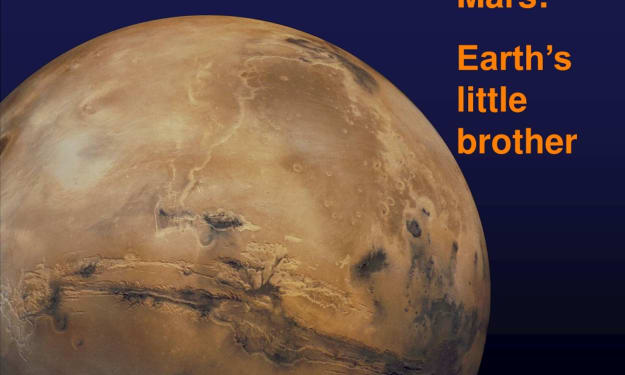
Mars: Earth’s Quiet Little Brother, and Maybe Our Second Chance
I remember the first time I saw Mars through a telescope. It looked like a rusty marble suspended in a black ocean. They call it Earth’s little brother, and honestly, that makes sense. He’s smaller, quieter, a little colder—but still part of the same family. Not as flashy, not as full of life, but somehow just as fascinating. Mars has always been there, staring back at us with a kind of silent mystery. Ancient people looked up at the red dot in the sky and imagined gods of war and fire. They saw something powerful in its blood-red glow. But truthfully, Mars doesn’t feel violent. It feels lonely. Unlike our vibrant Earth—blue with oceans, green with forests, loud with storms and full of life—Mars is dust and silence. The kind of silence that stretches for millions of years. But if you squint a little, you start to see the resemblance. Mars has seasons. Ice caps. Dust storms. Once upon a time, it had rivers. Maybe even oceans. Maybe even life. That’s the part that gets me. Scientists now believe Mars might have been warm and wet billions of years ago. Imagine that—ancient Mars, not red and dead, but blue and alive. Water flowing through valleys, lakes forming under soft skies. And then… something changed. Something massive. The planet lost its magnetic field, they say. Without it, the atmosphere peeled away under the force of solar wind. The water vanished. The warmth faded. The planet dried up and froze over, like a movie paused mid-story. If life ever did emerge there, it didn’t stand a chance. Mars became a graveyard of potential. That’s heartbreaking, in a weird way. It’s like watching your little brother grow up full of hope and promise, only to lose his way. But here’s the wild part—he’s still out there. Still waiting. Still watching. And maybe, just maybe, we’re not done with him yet. Because despite everything Mars lost, he might still have something left to give. Not to himself—but to us. This is why we keep going back. All those missions, all those rovers crawling across the dust—it’s not just science. It’s curiosity. It’s hope. We’re not just looking for signs of life. We’re looking for a new beginning. A second chance. Mars, in all his quiet, broken beauty, might be the next place we call home. Sure, it’s a long shot. Living on Mars won’t be easy. It’s cold. The air’s unbreathable. Radiation’s a problem. But none of that has stopped the dreaming. Elon Musk talks about building cities there. NASA has plans to send astronauts in the next decade. People are seriously considering how to terraform the place—bring back the warmth, thicken the air, maybe even grow green things again. It’s a crazy idea. But maybe that’s exactly what makes it feel so human. We look at a lifeless world and don’t just see rocks—we see possibility. We see home, even in the unlikeliest place. That says more about us than it does about Mars. And maybe that’s what makes Mars feel like family. He’s not just the little brother who fell behind—he’s the one who reminds us who we are. Adventurers. Fixers. Dreamers. Sometimes I catch myself daydreaming about it—waking up on Mars, brushing dust off my boots, watching the pink sky stretch out forever. Earth would just be a bright dot in that sky, far away. But not forgotten. Just… different. Maybe one day, kids will grow up on Mars and learn about Earth the way we learn about ancient lands. Maybe they’ll wonder what it was like to live on the big, blue planet before things changed. Maybe they’ll do better with their world than we did with ours. I don’t know if we’ll ever get there. But I do know this—Mars isn't just a dead rock in space. He’s a mirror. He shows us what we’ve lost, what we could lose, and what we still might find. So next time you look up and see that little red dot glowing in the night sky, think about him—not just as a planet, but as a little brother. Quiet. Watching. Waiting. And maybe, just maybe, hoping we come home.
By Mustafa Aminabout a year ago in Futurism
Beyond the Screen: How Remote Work Reshaped Identity, Purpose, and Relationships
When the world first shifted to remote work, many of us thought it would be temporary—a quick adjustment to a global crisis. We set up makeshift desks on kitchen tables, wore sweatpants to Zoom meetings, and told ourselves, “It’s just for now.” But “now” became years, and remote work didn’t just change how we earn a living. It reshaped who we are, how we see ourselves, and how we connect with others.
By Emad Iqbalabout a year ago in Futurism
Top 10 Business Energy Supplier Comparison Sites in the UK
Introduction When it comes to finding the best energy deals, using Business Energy Supplier Comparison sites can save you both time and money. Whether you're a small café or a growing enterprise, the right comparison tool helps you cut costs, compare rates, and make smarter decisions for your business.
By SEO Expertabout a year ago in Futurism
Why the Balkans Are Emerging as Europe’s New Real Estate Hotspot
When investors think of European real estate, their minds often go to places like Paris, Barcelona, or Berlin. These are iconic cities with established markets and equally high prices. But as traditional hotspots become increasingly saturated, savvy investors are turning their attention to lesser-known, yet fast-developing regions—particularly the Balkans.
By Business Educationabout a year ago in Futurism
I Let AI Run My Business for 30 Days — Here’s What I’d Do Differently Next Time
By Awais Qarni Let’s be honest. We’ve all seen those “get-rich-with-AI” videos on YouTube and Instagram: “ChatGPT Built Me a $10,000 Business!” “This AI Side Hustle Made Me Quit My Job!” “Lazy Way to Make Money in 2025 With AI!”
By Awais Qarni about a year ago in Futurism