future
Exploring the future of science today, while looking back on the achievements from yesterday. Science fiction is science future.
Artificial intelligence. AI-Generated.
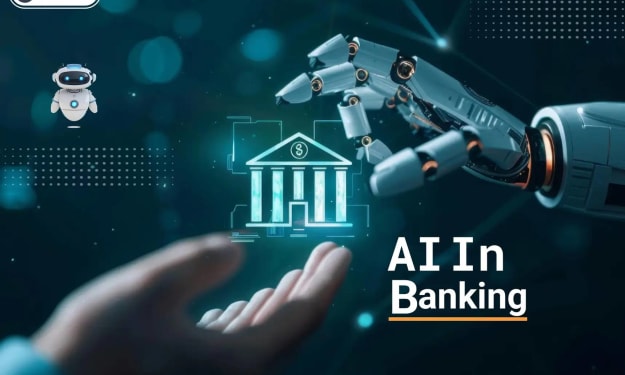
Ai in African banking Artificial intelligence (AI) is rapidly catalyzing a paradigm shift within the African the African banking sector, moving beyond a futuristic concept to a present-day reality. This technological wave is fostering an ecosystem ripe with enhanced operational efficiency, fortified security measures, and unprecedented levels of financial inclusion. Driven by a dynamic fintech landscape and increasing digital adoption, banks across the continent are strategically deploying AI, unlocking substantial economic and social dividends.
By Uwimana Ericabout a year ago in Futurism
How Can You Maximize ROI with Custom Software Development for IoT Applications?
Today, businesses want to do more with less—more work done faster, smarter decisions, and better profits. But here’s a question: How can custom software development for IoT applications help your business earn more money? Is it just a tech trend, or can it really make a difference?
By Hazel Johnsonabout a year ago in Futurism
The Looming AI Winter: Hype, Overinvestment, and What Comes Next
Artificial intelligence has taken center stage in today’s tech-driven economy. From ChatGPT to autonomous vehicles, AI is transforming industries, fueling startups, and pushing stock markets to record highs. Giants like Nvidia, Microsoft, and OpenAI have become the poster children of what many call the "AI gold rush." But behind the excitement, a critical question lingers: *Is this boom built to last—or are we setting the stage for another "AI winter"?* --- ## A Look Back: What Was the AI Winter? An "AI winter" refers to periods when interest and funding in artificial intelligence plummeted, usually after grand promises failed to materialize. - **First AI Winter (1970s):** Early researchers envisioned machines with human-like reasoning, but limited computing power and underwhelming results led governments to slash funding. - **Second AI Winter (1980s–90s):** Expert systems were hailed as revolutionary, but they turned out to be expensive, inflexible, and difficult to scale. When the hype faded, investments dried up. Each collapse followed a cycle of overpromising and overinvestment—a pattern some fear is repeating today. --- ## Warning Signs in Today’s AI Boom ### 1. **Sky-High Valuations** Startups with little more than a prototype are landing billion-dollar valuations. Venture capital is flooding AI at levels not seen since the dot-com bubble. ### 2. **The Limits of "Bigger Is Better"** Many cutting-edge AI models rely on scaling up data and computing power. But experts warn that simply adding more parameters may soon hit diminishing returns. ### 3. **Runaway Costs** Training top-tier AI models can cost hundreds of millions, consuming massive energy and requiring specialized hardware. This creates a high barrier to entry, leaving only tech giants in the game. ### 4. **Overblown Expectations** AI is often marketed as a cure-all—replacing doctors, solving climate change, even achieving human-like reasoning. While progress is real, many applications remain experimental and error-prone. Taken together, these factors suggest the AI market may be overheating. --- ## Could Another AI Winter Happen? The risk isn’t that AI will "fail"—it’s that hype could outpace reality. If investors pour billions into unproven ideas and consumers grow frustrated with underdelivered promises, enthusiasm could evaporate quickly. Consider self-driving cars: a decade ago, companies promised fully autonomous vehicles by the early 2020s. Today, progress is real—but human drivers still dominate the roads. Similarly, AI chatbots are impressive but still prone to "hallucinating" false information. If AI can’t translate hype into real-world reliability, funding could freeze, innovation could slow, and startups could collapse. --- ## Why This Time Might Be Different Not everyone believes a full-blown winter is coming. Some argue today’s AI boom is built on a stronger foundation: - **Real-World Adoption:** Unlike past cycles, businesses are actively using AI for marketing, coding, customer service, and healthcare. - **Massive Infrastructure Investments:** Cloud providers, chipmakers, and governments are pouring billions into AI-ready infrastructure. - **Embedded in Daily Life:** Even if cutting-edge models plateau, AI is already woven into everyday tools—from email assistants to fraud detection. In this view, we might see a *cooling* of hype rather than a deep freeze—a shift from speculative frenzy to steady, practical growth. --- ## Key Lessons for the AI Era Whether or not a winter arrives, the current boom offers crucial insights: ### 1. **Ignore the Hype** Not every AI startup will be the next OpenAI. Investors must separate real innovation from marketing buzz. ### 2. **Solve Real Problems** The most successful AI companies focus on tangible benefits—cutting costs, improving efficiency, or enhancing user experiences—not chasing sci-fi fantasies. ### 3. **Smart Regulation** Governments must balance protecting against misuse (like deepfakes and bias) without stifling innovation. ### 4. **The Next Breakthrough May Not Be "Bigger AI"** Future advances could come from entirely new approaches—like neuromorphic chips, causal reasoning, or hybrid AI systems—rather than just scaling up existing models. --- ## The Future: Winter, Slowdown, or Evolution? AI stands at a crossroads. While excitement is driving incredible progress, unchecked hype could lead to a sharp backlash. The most likely outcome? Not a catastrophic freeze, but a *market correction*—where unsustainable startups fail, investment becomes more cautious, and only the most practical AI applications thrive. For consumers, this could be a good thing: fewer exaggerated claims and a clearer sense of what AI can actually do. For the tech industry, it might be the reset needed to turn AI from a speculative bubble into a stable, trusted field. --- ## Final Thoughts The fear of an AI winter isn’t just about technology—it’s about human nature. We’ve seen this cycle before: excitement, overpromising, disappointment, and renewal. Today’s AI boom carries similar risks, but also unprecedented potential. If we focus on real-world value over hype, long-term progress over short-term gains, and transparency over exaggeration, this era won’t end in another deep freeze. Instead, it could mark the moment AI truly matured.
By GadgetGroundabout a year ago in Futurism
“How AI Apps Are Secretly Changing Your Daily Life (And You Don’t Even Realize It)”
Introduction: What if I told you that artificial intelligence (AI) is already a big part of your daily life — even if you don’t notice it? While most people think of AI as futuristic robots or sci-fi movies, the truth is, AI is already living in your pocket, your home, and even your shopping cart.
By Nadeem Shah about a year ago in Futurism
Voices from the Future
Jared had always been fascinated by old radios. He collected them, fixed them, and spent hours listening to static and forgotten stations. One rainy evening he found a small, dusty radio in the back of a thrift shop. It looked ordinary but had a strange symbol etched on the dial. That night he set it on his desk and turned the knobs slowly. Static filled the room, then a faint voice came through. It was not a song or a broadcast. It said his name, Jared, and then a date far in the future. He froze. At first he thought it was a prank, a recording someone had left inside the radio. But the voice returned every night, giving small messages, warnings, and descriptions of events that had not happened yet. It told him of things he could not possibly know, like the exact moment a storm would hit the city and the collapse of an old bridge he often walked on. Jared tried to ignore it, but the radio would not stop. It whispered in the middle of the night, carrying voices from a time he could not reach, yet somehow was connected to. He began keeping notes, writing down the events as the radio described them, and soon he noticed that everything the voice said came true. One evening the voice said, The future is fragile, you must choose wisely, and then it was silent. Jared stayed awake all night thinking. What did it mean to choose wisely when he did not understand the future? He felt a strange weight on his shoulders, as if the world depended on his actions. The next day he walked through the city with a new awareness. Every person, every decision, every small event seemed to carry importance. He saw a man drop his wallet and returned it, remembering a warning from the voice about trust and honesty. He stopped a child from running into the street because he had heard the voice warn about danger in the park. Days passed, and the messages became more urgent. The voice spoke of choices that could change lives, cities, and even the world. Jared began to feel both powerful and terrified. He wondered if he was only hearing one future or if there were many paths, many possibilities, and he was meant to guide them. He tried talking to others about it, but no one believed him. They smiled politely and said it was just his imagination. He could not tell them that he had proof, notes that described events that had come true. The world seemed unaware of the coming changes, yet he was bound to them by the voices from the future. One night, the voice said, The moment is near, do not falter. Follow your instinct. Jared listened carefully. It described a fire that would break out in a building near the river. He ran there as fast as he could and helped people escape before the flames spread. He realized that the voice was not trying to scare him. It was guiding him to make the right choices. After that night, Jared understood his purpose. He began to see the connections between events more clearly, hearing subtle messages hidden in the static of the radio. The voices from the future were not just warnings, they were lessons, reminders, and a way to change the path of the world in small and meaningful ways. Years passed, and Jared never stopped listening. He recorded every message, every warning, every voice. The radio became more than an object, it became a bridge, a connection to what was to come. Sometimes he wondered if he was changing the future or if the future was simply letting him see what was always meant to happen. The voices never stopped. They whispered of hope, of mistakes to avoid, and of moments that would define generations. Jared learned to trust them, to act with care, and to remember that even the smallest choice could ripple across time. He realized that life was not only about what happened now but also about the paths that lay ahead. The voices were his guide, reminding him that the future was not set in stone, and that with attention and courage, he could help shape it. And so every night, Jared sat by the radio, listening to whispers that traveled across time, knowing that the smallest actions could make the largest difference, and that the future was always speaking if one was willing to listen.
By LUNA EDITHabout a year ago in Futurism
Why This Weekend May Be The Best Time To See The Perseid Meteor Shower
Every August, the night sky treats us to one of nature’s most mesmerizing spectacles — the Perseid meteor shower. Known for its dazzling display of “shooting stars,” the Perseids are a highlight for both seasoned astronomers and casual skywatchers. While the meteor shower’s official peak happened earlier this week, bright moonlight robbed many people of the show’s full beauty. Fortunately, this weekend could offer a second chance — and perhaps an even more magical viewing experience.
By Muhammad Sabeelabout a year ago in Futurism
The Mind Merger Wars: How Sam Altman's New Bet Sets Up a Brain Chip Showdown with Elon Musk
The rivalry between Silicon Valley's most powerful tech visionaries has entered a startling new frontier—the human brain itself. Sam Altman, CEO of OpenAI, is launching **Merge Labs**, a neural technology startup positioned as a direct competitor to Elon Musk's Neuralink. This move transforms their already bitter feud over artificial intelligence into a high-stakes race to dominate the **brain-computer interface (BCI)** market, where the ultimate prize is nothing less than redefining human evolution. ### Chapter 1: From AI Allies to Cerebral Enemies The roots of this clash trace back to 2015, when Musk and Altman co-founded OpenAI as a non-profit research initiative. Musk provided the **majority of early funding** and championed its mission to develop safe artificial intelligence. By 2018, however, their partnership imploded spectacularly. Musk quit OpenAI’s board following an **internal battle for control**, later accusing Altman of a "deceit of Shakespearean proportions" when OpenAI transitioned to a for-profit model. Their feud has since spilled onto social media, with Musk suing OpenAI and Altman accusing Musk of manipulating his platform X (formerly Twitter) to "**harm his competitors**" . ### Chapter 2: Neuralink’s Head Start Musk’s Neuralink, founded in 2016, has established itself as the BCI frontrunner: - **Human Trials Underway**: Neuralink has implanted chips in seven patients, including Noland Arbaugh (quadriplegic) and Bradford Smith (ALS). These allow thought-controlled computer use for writing, gaming, and video editing . - **Aggressive Expansion**: Musk plans **20,000 implants annually by 2031**, targeting $1B in revenue. The company recently secured UK trial approvals after raising $650M at a $9B valuation . - **Surgical Approach**: Neuralink’s coin-sized N1 chip uses 1,024 electrodes threaded into the brain via robotic surgery—a highly invasive but high-precision method . *Table: Neuralink’s Progress vs. Rivals* | **Company** | **Key Technology** | **Human Trials** | **Funding/Valuation** | Primary Focus | |-------------------|----------------------------------------|------------------|----------------------------|-----------------------| | Neuralink | Invasive chip with 1,024 electrodes | Yes (7 patients) | $650M raised / $9B valuation | Medical restoration, AI symbiosis | | Merge Labs (Altman) | Undisclosed (likely less invasive) | No | Seeking $250M / $850M valuation | Broad human-AI integration | | Paradromics | High-data-rate neural sensor | Early stage | $100M+ | Communication for paralysis | | Synchron | Stentrode via blood vessels (minimally invasive) | Yes | $75M+ | Motor impairment support | ### Chapter 3: Altman’s "Merge" Vision Takes Physical Form Altman’s fascination with human-machine integration isn’t new. In 2017, he published a **semantic blog post** titled "The Merge," predicting that humans would fuse with AI between 2025–2075. He speculated this could involve "**plugging electrodes into our brains**" or bonding deeply with AI chatbots . Now, he’s turning theory into reality: - **Stealth Startup**: Merge Labs is co-founded with Alex Blania (CEO of Altman’s eyeball-scanning project Worldcoin). Though Altman won’t run day-to-day operations, he’s deeply involved strategically . - **AI-Driven BCIs**: Merge aims to leverage OpenAI’s AI advances to create **higher-bandwidth**, more responsive neural interfaces. Its $850M valuation and $250M funding round (led by OpenAI’s venture arm) signal serious ambition . - **Less Invasive?**: Early reports suggest Merge may prioritize **scalable, non-surgical approaches**—a key differentiation from Neuralink’s brain surgery requirement . ### Chapter 4: Why This Rivalry Changes Everything This clash isn’t just personal—it accelerates BCI innovation while raising existential questions: - **The "Why" Behind the Tech**: Both billionaires warn that merging with AI is essential for human survival. Musk claims it prevents "**super-intelligent AI from getting out of control**," while Altman argues humans risk becoming an "**evolutionary tree branch**" without it . - **Medical vs. Mainstream**: Neuralink initially targets paralysis and neurological disorders. Merge’s broader vision hints at applications for **healthy users seeking cognitive enhancement** . - **Public Feeds Innovation**: Their competition draws funding and talent into the BCI field. Startups like Paradromics and Synchron also benefit, advancing less invasive alternatives . ### Chapter 5: Minefields Ahead Neither titan faces a smooth path: - **Neuralink’s Challenges**: Safety concerns persist after early test animals died. Regulatory scrutiny remains intense for brain surgery-based tech . - **Merge’s Uphill Battle**: Details are scarce, and Altman’s association with Worldcoin—criticized for **exploitative data practices in developing countries**—raises ethical red flags . - **The X Factor**: Their feud recently escalated when Musk accused Apple of antitrust violations for favoring OpenAI’s apps. Altman fired back: "**Elon manipulates X to benefit himself**" . *Table: Philosophical Differences in the BCI Race* | **Visionary** | **Primary Goal** | **Timeline Prediction** | **Key Concerns** | Approach to AI Integration | |---------------|--------------------------------------|-------------------------|-----------------------------|----------------------------| | **Elon Musk** | Prevent AI dominance via symbiosis | Urgent (next decade) | "AI will outpace humans" | Direct neural linkage for control | | **Sam Altman**| Evolve humanity via AI partnership | Gradual (2025–2075) | "Humans risk obsolescence" | Multimodal (chatbots, implants) | ### The Future: Beyond the Chip Wars As Neuralink scales and Merge emerges from stealth, their rivalry could democratize BCIs or deepen societal divides. Altman’s bet represents a **pivotal shift**—from software-based AI (ChatGPT) to hardware that embeds it in our biology. Meanwhile, Musk’s lead in human trials gives him data Merge lacks. Yet both share a core belief: the future belongs to those who **blur the line between mind and machine**. Their race isn’t just about chips—it’s about who defines what it means to be human in an age of artificial superintelligence. *"The merge can take a lot of forms... But I think a merge is probably our best-case scenario."* —Sam Altman (2017)
By Danyal Hashmiabout a year ago in Futurism