future
Exploring the future of science today, while looking back on the achievements from yesterday. Science fiction is science future.
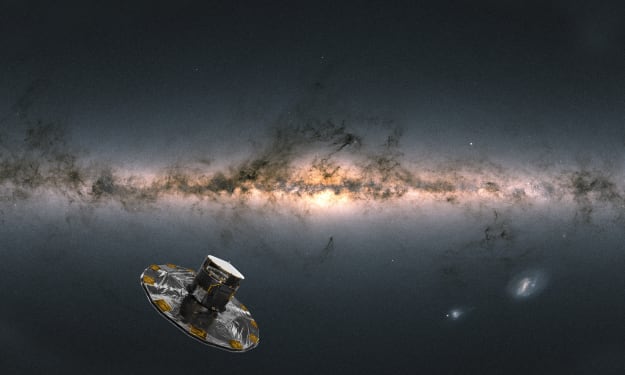
The End of an Era: Gaia’s Mission Comes to a Close — and Its Legacy Is Just Beginning
In early 2025, the European Space Agency’s Gaia spacecraft officially ended its operational life after more than a decade of mapping the Milky Way with breathtaking precision. It’s a bittersweet milestone for astronomers worldwide: while Gaia has stopped collecting new data, the treasure trove it leaves behind will keep fueling discoveries for decades.
By Holianyk Ihorabout a year ago in Futurism
Washing Moon Dust for Helium-3: The New Space Gold Rush
The Promise of a Lunar Treasure For decades, the Moon has been more than a symbol of human curiosity — it’s been a promise. A promise of knowledge, exploration, and now, perhaps, limitless clean energy. Among all the minerals and exotic materials believed to lie within its dusty surface, one element stands out as a true cosmic prize: helium-3.
By Holianyk Ihorabout a year ago in Futurism
he Final Days of King Charles: A Monarchy on the Edge of Change
The British monarchy, a symbol of endurance and continuity for over a thousand years, now finds itself standing on fragile ground. Behind the grand walls of Buckingham Palace, whispers have turned into solemn truths — King Charles’s health is deteriorating faster than anyone dared to admit. The man who waited his entire life to wear the crown now faces a battle he cannot win. When Charles ascended the throne, there was a sense of renewal. A king in his seventies, finally stepping into his destiny after seven decades of preparation. Yet destiny, it seems, had other plans. His diagnosis — once described as “manageable” and “treatable” — has grown far more severe. The palace’s carefully worded updates cannot disguise the truth anymore. The King is ill, gravely so, and Britain may soon face another royal farewell. Those who have seen him recently speak of a man transformed. His once full schedule of royal engagements has dwindled. Gone are the marathon days of handshakes, ribbon cuttings, and lengthy speeches. In their place are short, carefully managed appearances — each one shadowed by uncertainty. His posture is weaker, his smiles more forced, his words slower. The world can sense it: this reign is not destined to be long. For Prince William, the weight of the crown is already pressing on his shoulders. He is being briefed daily on matters of state — constitutional procedures, diplomatic relations, and national security. It is no longer training; it is transition. Insiders say every decision, every appearance, and every speech now has a dual purpose: to honor his father and to prepare Britain for its next monarch. It is a cruel paradox. William’s father is fading, and his own destiny is accelerating. A man who once imagined decades of quiet support must now prepare to lead a nation sooner than expected. Yet amid the sorrow, duty allows no pause. Advisors are in constant meetings, updating Operation Menai Bridge — the code name for the King’s passing — and finalizing Operation King William, the plan that will guide Britain through its next coronation. But this is not just a political transition; it’s a deeply human story. Queen Camilla, who endured decades of public criticism before finally earning acceptance, is now watching the man she loves slip away. The dream of finally sharing a peaceful reign together has turned into a nightmare of hospital visits and whispered consultations. No amount of titles or palaces can shield her from the cruelty of timing. And across the Atlantic, another prince watches with conflicted emotions. Prince Harry, once inseparable from his brother, now lives half a world away — a self-exiled royal in California. His relationship with his family remains fractured. Yet as news of his father’s health worsens, insiders say he is torn between pride and grief. Whatever disagreements divided them, Charles is still his father. Time is running out to make peace. For Harry, the realization must be painful. His brother, once an equal, is about to become “His Majesty.” The childhood laughter, the rivalry, the shared memories — all of it will be reshaped by the heavy protocols of the crown. Even addressing William will soon require a bow. Such is the weight of monarchy: it elevates one and isolates all others. Meanwhile, Britain itself stands on edge. The public, still adjusting to life after Queen Elizabeth’s 70-year reign, is now facing another seismic shift. The monarchy that once seemed eternal now feels fragile and uncertain. The question on everyone’s mind is no longer if the transition will happen, but when. Through all of this, one truth stands above the rest — behind the pomp and ceremony, the royal family is, at its core, a family. A father fighting for life. A son preparing to lead. A brother struggling with regret. And a nation, watching from afar, realizing that even kings are mortal. When history looks back on this chapter, it will not only remember the illness or the transition. It will remember the humanity — the quiet courage of a man facing his end, the dignity of a son stepping into destiny, and the painful beauty of a family bound by duty and loss. The crown will pass, as it always has. But this time, the cost feels heavier. The faces we see on the balcony are not just symbols of tradition — they are human beings enduring what no throne can protect them from: the heartbreak of saying goodbye. And so, as the United Kingdom braces for what comes next, one can only hope that within the sorrow, there will also be grace — a chance for healing, for forgiveness, and for the monarchy to prove that even in its most vulnerable hour, it
By Behind the Curtainabout a year ago in Futurism
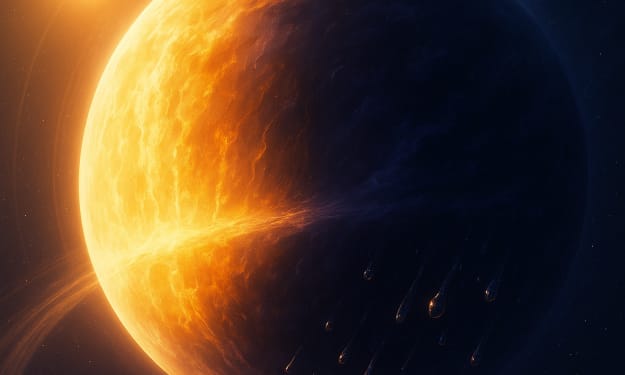
Rebel Worlds: Exoplanets with Reverse Rotation and Bizarre Atmospheres
When astronomers began discovering planets beyond our Solar System in the 1990s, most expected to find familiar worlds — something like a Hot Jupiter here, a cold Neptune there, maybe the occasional rocky Earth-twin. Instead, the universe responded with a cosmic smirk and delivered a catalog of planets so strange that even science fiction writers would hesitate to invent them. Among the most mind-bending of these discoveries are exoplanets with reverse (retrograde) rotation and wildly abnormal atmospheres — worlds that defy planetary logic and challenge our understanding of physics.
By Holianyk Ihorabout a year ago in Futurism
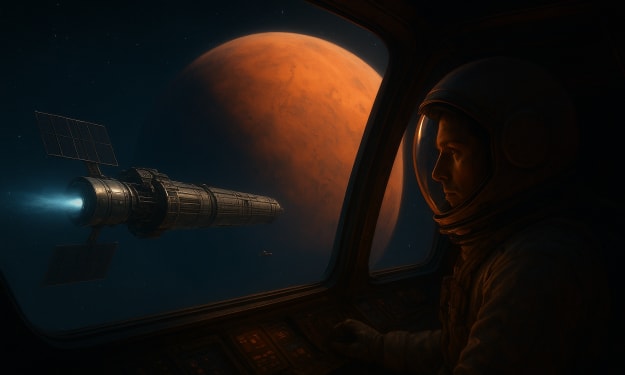
Nuclear Engines for the Journey to Mars: Why NTR and NEP May Change Everything
For decades, Mars has been the big red prize of human space exploration. We’ve landed rovers, taken selfies on its dusty plains, and mapped its canyons and craters in high resolution. And yet, no human has ever set foot there. The biggest obstacle isn’t distance itself — it’s time. With today’s chemical rockets, a crewed flight to Mars would take six to nine long months one way, and the entire mission could stretch to two or even three years. That means more radiation exposure, more psychological pressure, more supplies, and more risk.
By Holianyk Ihorabout a year ago in Futurism
7 AI Secrets Changing Our World Right Now
1. The Rise of Self-Learning AI A few years ago, artificial intelligence could only follow human commands. Today, systems like DeepMind’s Gato can perform more than 600 tasks — from translating languages to controlling robots — all with limited training.
By Rai Sohaib about a year ago in Futurism
The New Saudi Consumer: Changing Trends in a Rapidly Evolving Market
In recent years, Saudi Arabia’s consumer landscape has been undergoing a major shift. What used to be a relatively predictable market driven by status and tradition is now fast-evolving, fueled by digital adoption, shifting values, and a new generation of empowered buyers.
By Zeeshan Aliabout a year ago in Futurism
The Rise of AI Future Jobs: How to Prepare for the New World of Work
Artificial intelligence isn't coming - it's already here, quietly reshaping the workforce. Across every industry, algorithms are learning, automating, and optimizing. But far from stealing all our jobs, AI is creating new ones, demanding new skills, and redefining what "work" really means.
By ZoneTechAiabout a year ago in Futurism