future
Exploring the future of science today, while looking back on the achievements from yesterday. Science fiction is science future.
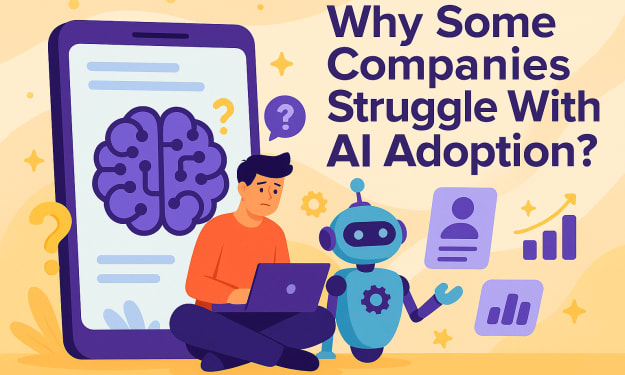
Why Some Companies Struggle With AI Adoption?
I clearly remember the first time a leadership team turned down integrating AI into their daily routines. It was one of those warm Los Angeles afternoons when sunshine strikes downtown skyscrapers at acute angles. In that unnecessarily cold meeting room, chilled by air conditioning and doubt, across from me sat a group of executives.
By Eira Wexford12 months ago in Futurism
A Dystopia of Our Own Design. Top Story - November 2025.
If you want a picture of the future, imagine a boot stamping on a human face—for ever. –George Orwell, 1984 More and more often, I look around and find that the themes of my favorite dystopian novels have come to life: separatism/division, erasure, controlling the past to control the future, the rich stamping on the poor while the poor take it out on each other, using technology to control and monitor our lives, etc. It is everything that we have been warned against, especially in literature—time and time again.
By Stephanie Hoogstad12 months ago in Futurism
Revenge Of The Words
I used to be a pilot. I flew missions in World War Two, dammit. Later, I flew for a major airline. Then I served in the police department in Los Angeles. That got me into my lifelong love for writing. Scripts, mostly. I was not too shabby. You might have seen some of my work. But that was so long ago. So very long ago. Now? Let's just say I'm not the man I used to be. Things have changed so much since those heady days of early television. Back then the best writing in my estimation had something important to say. We wrote morality plays disguised as space opera. It mattered then. Our takes on our world slipped past the network execs because we set it in the far future. My greatest achievement was almost derailed by the executives because they thought my script was too smart for the twelve year old mind. So, I rewrote it and kept the original pilot within. It got on the air, and the moral still stood. Things have changed so much. Even my own profession has seen such transformations that I hardly recognize what people are writing now.
By Joseph "Mark" Coughlin12 months ago in Futurism
59 Missions to Mars: Why Only Half Have Succeeded and What It Means for Humanity
Mars has long been humanity’s ultimate frontier. The Red Planet has captured our imagination for decades, promising answers to questions about the origins of life, the history of our solar system, and even the future of humanity itself. Yet despite decades of effort, reaching Mars has proven to be far more difficult than many expected.
By Holianyk Ihor12 months ago in Futurism
Salyut-1: The First Space Station That Changed Humanity’s Future
In April 1971, humanity crossed a threshold it had only imagined for decades. A massive cylindrical structure, covered in panels and antennas, rose into the sky atop a roaring launch vehicle. This structure—later known to the world as Salyut-1—became the first human-made space station ever placed into orbit. Until that moment, astronauts and cosmonauts could only leap into space briefly before quickly returning home. Salyut-1 changed everything. For the first time in history, humans could live and work in space for weeks at a time.
By Holianyk Ihor12 months ago in Futurism
Why Good Communication Builds Unbreakable Bonds
All healthy relations are based on good communication. It enables the partners to communicate their feelings, give each other their thoughts and make their relationship stronger. A relationship of trust and understanding is created when there is open and straightforward communication between couples. Such openness eliminates misunderstanding and will not allow one conflict to develop.
By Tiana Alexandra12 months ago in Futurism
Planning a Future Together: When Is the Right Time?
The decision of planning a future is one of the largest ones that a couple can make. It is an indication of trust, emotional maturity and willingness to commit on long-term basis. It is a sign of great intimacy when the partners start to envision together aspirations, visions, and duties. This is a sign that this relationship has not been in the early stages of romance but it has grown in a stable and meaningful manner.
By Olivia Smith12 months ago in Futurism
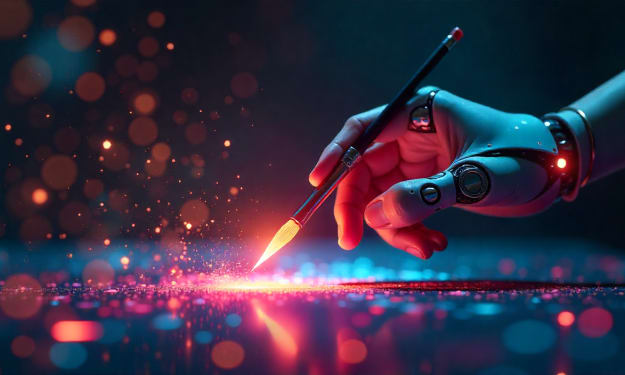
The Silent Partner: How AI is Rewriting the Rules of Creativity
We’ve long believed creativity was the last bastion of humanity, something that algorithms could never truly replicate. Yet quietly, almost imperceptibly, AI has moved from crunching numbers to holding a paintbrush, and it’s producing work that challenges our very definition of art. This isn't about machines replacing artists. It's about something far more interesting: AI as a collaborative partner that can amplify human creativity in ways we're only beginning to understand. The New Creative Toolkit: AI in Action Across creative fields, AI tools are becoming as fundamental as a painter's brush or a writer's notebook: · The Written Word: Tools like ChatGPT and Claude help writers overcome blocks, generate ideas, and even co-write entire chapters. Platforms like Sudowrite offer "brainstorming" functions that suggest metaphors and plot twists. · Visual Arts: Midjourney, DALL-E, and Stable Diffusion have democratized visual creation, allowing anyone with a vivid imagination to create stunning artwork in seconds. These aren't just filters—they're interpretation engines that can blend styles and concepts in novel ways. · Music Composition: AIVA (Artificial Intelligence Virtual Artist) composes emotional soundtrack music, while Google's Magenta project explores how machine learning can create compelling melodies and harmonies. · Game Development: AI now generates entire game worlds, creates dynamic dialogue for non-player characters, and even helps design balanced game mechanics. Beyond the Hype: What Does This Mean for Artists? The emergence of AI creativity raises profound questions: The Inspiration Machine For many creators,AI serves as an infinite source of inspiration. A writer can generate twenty possible opening paragraphs. A concept artist can explore fifty visual directions for a character in an hour. This acceleration of the ideation process is perhaps AI's greatest gift to creativity. The Skill Shift Technical proficiency matters differently now.The ability to craft the perfect prompt—to guide the AI toward a specific vision—is becoming as valuable as traditional technical skills. The artist's role is shifting from executor to curator and director. The Authenticity Question When an AI generates a beautiful poem,who is the artist? The person who wrote the prompt? The programmers who built the model? Or the AI itself? This dilemma strikes at the heart of what we value in art: technical mastery, emotional expression, or simply the final product? Case Study: The AI-Augmented Creative Process Consider a novelist working with AI: 1. Brainstorming: She uses AI to generate character backstories and world-building elements 2. Writing: When stuck on a scene, she asks the AI for dialogue options 3. Editing: AI tools help identify pacing issues and suggest structural improvements 4. Cover Design: She collaborates with an image generator to create the perfect book cover The human remains the visionary, the quality controller, the emotional core—but AI handles much of the heavy lifting. The Dark Side: Ethical Brushstrokes This creative revolution isn't without its shadows: · Training Data Dilemma: Most AI models were trained on copyrighted works without permission or compensation for the original creators · Style Imitation: AI can perfectly mimic living artists' styles, potentially devaluing their unique voice · The Homogenization Risk: If everyone uses the same AI tools, could we lose the quirky, imperfect, uniquely human aspects of art? Looking Ahead: The Future of Human Creativity The most exciting developments will likely be in human-AI collaboration rather than AI replacement. We might see: · Personalized AI creative partners that learn an individual artist's style and preferences · New art forms that could only exist through human-AI interaction · Democratization of creativity where people who lacked technical training can now express their visions The Bottom Line AI isn't making human creativity obsolete—it's making it more accessible and potentially more profound. The artists of tomorrow won't be those who shun these tools, but those who learn to dance with them, who understand how to guide AI to serve human vision. The question is no longer "Can AI be creative?" but "What new forms of creativity can humans and AI discover together?" The canvas is vast, and we've only just begun to paint.
By GadgetGround12 months ago in Futurism
Beyond Voice Assistants: Your Home is About to Get a Whole Lot Smarter
We’ve grown accustomed to asking our speakers for the weather or setting a timer with our phones. But the next wave of domestic AI isn’t about responding to commands; it’s about fading into the background. It’s the shift from interactive AI to ambient AI, and it’s poised to fundamentally change our relationship with our living spaces. Welcome to the era of the truly "smart" home, an environment that senses, learns, and acts on your behalf, often without you uttering a single word. The Invisible Butler: What is Ambient AI? Imagine walking into your kitchen on a chilly morning. The lights have already gently brightened to your preferred morning level, and the thermostat began warming the floor 15 minutes before your alarm went off. Your coffee machine, having learned your schedule, is just finishing a fresh brew. No buttons were pressed. No apps were opened. This is ambient AI. It uses a distributed network of sensors, cameras, and microphones—often embedded in everyday objects—to build a continuous, contextual understanding of a space and its inhabitants. Instead of waiting for a "Hey Google," it's always on, subtly optimizing your environment for comfort, efficiency, and even health. The Gadgets Building Your Intelligent Home This isn't science fiction. The hardware ecosystem is already being built: · Sensing Systems: Devices like the Google Nest Hub with its built-in radar (Project Soli) can sense your presence and gestures. Advanced mmWave sensors in products like the Eve Motion can detect not just motion, but breathing and precise location in a room, all while preserving privacy by not using cameras. · Context-Aware Displays: Imagine a digital photo frame that shows your calendar when you walk up to it in the morning, then switches to recipe instructions when you approach it in the kitchen, and finally displays your relaxation playlist in the evening. The screen itself becomes an ambient interface. · AI-Powered Appliances: Newer refrigerators with internal cameras can track inventory and suggest recipes based on what’s about to expire. Ovens can recognize the food you put inside and automatically set the correct temperature and time. The Double-Edged Sword: Convenience vs. Privacy The promise is undeniable: unparalleled convenience, energy savings, and even safety (e.g., detecting a fall or a water leak). But this intelligence comes with a profound question: How much of our personal data are we willing to exchange for this comfort? An always-listening, always-watching home generates a staggering amount of intimate data: · Your sleep patterns · Your eating habits · Your daily routines and when you are away · Your emotional state (inferred from voice tone or movement) This data is a goldmine, not just for tailoring your experience but also for advertisers and, potentially, malicious actors. The central challenge of the ambient AI home will be trust. Can we trust the companies that build these devices to handle our data ethically and secure it impeccably? The Future: A Home that Cares for You Looking ahead, the potential expands beyond convenience into care. For an aging population, an ambient AI home could be a guardian—noticing changes in gait that might predict a fall, detecting missed medications, and providing companionship. It could monitor air quality for asthmatics or adjust lighting to help regulate circadian rhythms.
By GadgetGround12 months ago in Futurism