future
Exploring the future of science today, while looking back on the achievements from yesterday. Science fiction is science future.
Who Are Your Competitors Really Trying to Help?
Who Are Your Competitors Really Trying to Help? Weekly Winning Strategies To improve your competitive intelligence, ask this key, often overlooked question. Who are your competitors really trying to help?
By Octopus Competitive Intelligence2 years ago in Futurism
Friend or foe, is AI in the workplace?
**From capture in science fiction to successful invasion in the industries and workplaces, artificial intelligence has changed the face of the work landscape. Artificial intelligence, once held captive in science fiction, has today successfully invaded different industries to change the way professionals and workers undertake their daily duties. This technological advancement has raised one question: Friend or foe, is AI in the workplace? Duality about AI needs to be placed against the undeniable benefits that for most professionals, AI tools help streamline mundane and repetitive tasks toward more strategic initiatives and creative value. AI can enable data entry or scheduling and may even permit the AI tool to automate customers' inquiries against human error saving precious time. For example, AI chatbots handle multiple customer interactions at the same time, taking away tedious inquires from employees and leaving their time to work on other more value-added projects. Deeper insights can be derived with AI by analyzing data. Wading through a large dataset with algorithms of AI now generates more actionable insights that assist in making decisions within the domains of marketing and finance. In doing this, it provides professionals with data trends on which human intuition might miss. Therefore, an era where data drives competitive advantage makes organizations better equipped with AI that can navigate through challenges and acquire growth opportunities. However, much concern about its role in the workplace cannot be shunned, despite its advantages. At the top of these is fear that AI will outdo man as far as employing people in this workplace is concerned. And as its system keeps advancing, several jobs may emerge useless in a company; much of it borders on routine engagements. This brings about the danger regarding the workers most likely to face unemployment to make the remainder members lose interest. The big question for an organization is finding a balance between automating it and its human workforce since the latter still is required. Matters of data privacy and consent are hardly news, but it is these concerns that are increasing in the very serious matter concerning algorithms and bias. Although AI systems feed on data that helps them learn and improve, the flaws or biases in the data end up reinforcing inequalities in outcomes. Such issues need to be proactively addressed by organizations and policies in ensuring that AI is used ethically for the protection of employees as well as customers. Creating a culture of collaboration between humans and AI in navigating this complex landscape is of essence. Instead, organizations can look at AI as an augmentor that enhances human capacities rather than competing with them. Organizations can invest in training and upskilling programs so that employees can learn how to work with AI and develop further capabilities in the job market that keeps evolving. This also removes the fear of job loss and, more importantly, ignites innovation and creativity in teams because employees can easily shift to jobs that require uniquely human skills, such as emotional intelligence and critical thinking. Conclusion The integration of AI into the workplace is a double-edged sword. While it offers amazing efficiencies and insights, it also brings concerns over job displacement and ethical implications. The requirement of a team working environment where there is never-ending learning makes AI to be effectively put into use. Business ascertains in this fashion of forward planning that AI is no enemy but instead a friend in making professional as well as employees' life a richer one in the workplace. Therefore, the future of work depends on how successfully we can introduce AI usage into our routine operations and also continue to uphold our principles of ethical working practices and employee care.
By Bella berren2 years ago in Futurism
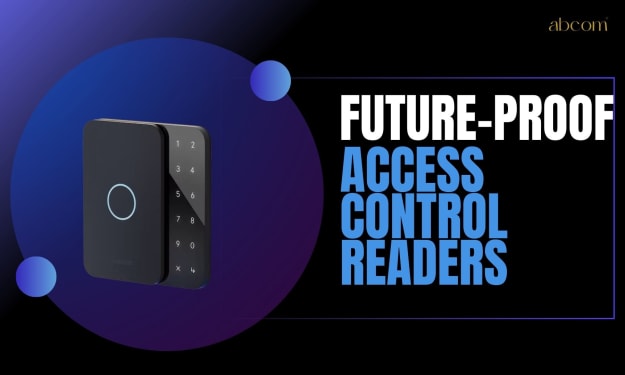
The Evolution of Access Control: Smart Card Readers and Next-Gen Door Equipment. AI-Generated.
Access control has changed a lot over the years. While we used to rely on simple keys to unlock doors, today, technology has given us smarter and safer ways to manage who can enter specific areas. One of the biggest changes has been the introduction of smart card readers and new door equipment. These modern systems are more secure, convenient, and efficient, making them ideal for homes, businesses, and public buildings.
By Abcom Distribution LLC2 years ago in Futurism
The Proliferation of AI Bots
Artificial Intelligence (AI) has emerged as one of the most transformative forces in the digital age, and AI bots are at the forefront of this revolution. These bots—ranging from virtual assistants to sophisticated data crawlers—are reshaping how content is created, consumed, and managed online. Their rapid adoption and evolving capabilities reflect the increasing role of automation in our digital interactions, but they also raise critical questions about ethics, control, and the future of work.
By Ahmed El-Shwehdi2 years ago in Futurism
Top Enterprise Software Trends to Watch in 2025
We now operate in a business world that is defined by rapid digital transformation. To manage the resulting complex operations and maintain a competitive advantage, businesses have come to rely heavily on enterprise software solutions. These solutions cover a wide range of applications, such as customer relationship management and human capital management systems. Anyway, the point is that businesses are constantly seeking ways to differentiate themselves. This competitive pressure is driving innovation, including new functionalities and capabilities for enterprise software solutions. Interestingly, tech such as ML and cloud computing have already had quite an impact on such software.
By Ryan Williamson2 years ago in Futurism
A Look at Spain’s Software Development Ecosystem: Startups, Innovation, and Tech Hubs
Spain has emerged as a powerhouse in the global tech scene, boasting a vibrant ecosystem of startups, innovation hubs, and a growing pool of talented software developers. From the bustling streets of Barcelona to the innovation-driven hubs in Madrid, the country is rapidly solidifying its place as a European tech leader. Let’s take a closer look at what makes Spain’s software development ecosystem so dynamic and why it’s an exciting time for both developers and businesses alike.
By NextGen Narratives2 years ago in Futurism