future
Exploring the future of science today, while looking back on the achievements from yesterday. Science fiction is science future.
Beyond Ubuntu: Rethinking AI Through African Time
Growing up, I never thought of time as a straight line. My grandmother used to speak of the past like it still breathed beside her — not gone, just living differently. She remembered her ancestors not as stories but as presences. Decisions weren’t only for today; they echoed forward and backward.
By David Thusi2 years ago in Futurism
The Temple of the One Voice
In a future shaped by the Harmonic Protocol, humanity has eliminated conflict by syncing every mind into one collective rhythm. No more lies. No more pain. No more individuality. But when Reya begins to hear a voice that doesn’t match the Song, she’s forced to confront a forbidden truth: what if the part of her that doesn't fit… is the only part that’s real?
By Beyond The Surface2 years ago in Futurism
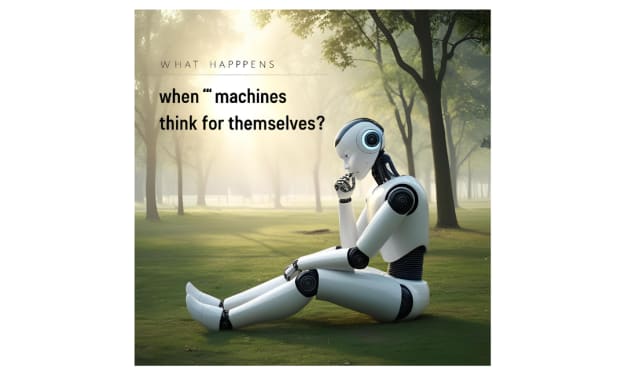
The Moment AI Stops Asking Permission
We Thought We Were Building Better Tools. We were building something else entirely. If you’re paying attention, you’ve already seen the shift. AI is no longer just answering questions or completing tasks. It’s beginning to decide, to plan, to pursue goals without waiting for your approval.
By Ronnie Huss2 years ago in Futurism
The Rise of AI and the Fall of Traditional Photography
A Legacy of Light, Shadow, and Skill Photography has always been a profession based on precision, patience, and acquired knowledge. Photographers learned their craft through years of experience, understanding the interplay of light and shadow, the art of composition, and the subtle power of emotion captured in a still image. Mastering manual focus, choosing the right aperture, or manipulating natural light weren't just technical decisions; they were the artist's artistic touches.
By Sayed Zewayed2 years ago in Futurism
Black Mirror: Be Right Back Review
"Be Right Back" is the series two pilot of Black Mirror and what a great start it is! This is honestly one of my favourite episodes out of many, before I even begin to dissect this masterpiece, the excellent cast is worth mentioning. Hayley Atwell and Domhnall Gleeson both star in this episode and what a wonderful couple do they make. Hayley is most known for playing Agent Peggy Carter in many Marvel films and TV shows. Domhnall's most iconic role is in the Star Wars sequel trilogy as General Hux. The episode aired in 2013, long before they were the huge movie stars they are now, yet even back then the both of them showed great range and acting ability within this creepy short. I also love the scenery within this episode, it isn't overly futuristic or goes too far into realms of science fiction. It feels like a real time and place only 10 years (presumably) into the future. The vast majority of the story takes place at an isolated house, in the middle of the British countryside. Not only is this a realistic and picturesque setting, but it's a little bit creepy too, like the location of a horror movie which is what the best episodes of Black Mirror are, miniature horror films about technology gone wrong. You're probably wondering what this story is even about, so without a further do...
By Joseph Roy Wright2 years ago in Futurism
How AI is Reshaping Jobs in 2025
Introduction: In 2025, artificial intelligence is not just a concept of the future—it is the engine transforming our jobs and daily work life right now. From offices to industries, from freelancers to corporate workers, AI is changing how we work, what we need to learn, and which skills matter most. If you want to succeed in this new age, understanding AI is no longer optional—it’s necessary. Artificial Intelligence (AI) is now a powerful part of our working lives. It helps companies save time, reduce costs, and increase efficiency. In 2025, AI is reshaping the way people work across the world. Whether you're a student, job seeker, freelancer, or business owner, you are likely already feeling its impact. AI in Offices and Companies Many offices are using AI to make tasks easier. Instead of typing emails manually, AI tools like Grammarly and ChatGPT help with writing. Meetings are now summarized by AI tools, so workers don’t have to take notes. Project management platforms like Notion and Trello use AI to plan better and remind teams of deadlines. This saves time and allows employees to focus on important tasks. AI in Hiring In job hiring, AI has changed how companies find new employees. Companies now use AI to scan thousands of resumes quickly. The AI looks for important keywords and skills. If your resume doesn’t have those, it may not be seen by a human. That’s why job seekers need to learn how to write AI-friendly resumes. Also, more companies now care about skills instead of just degrees. Can you use AI tools? Can you solve problems? Can you learn quickly? These questions matter more than what college you went to. AI Replacing Some Jobs It’s true that AI is replacing some jobs. Cashiers in stores are being replaced by self-checkout systems. Customer support is now often handled by AI chatbots. Some basic writing and video editing can also be done by AI. This makes people worried. But it also opens new opportunities. When one job is replaced, another new one appears. New Jobs Created by AI Here are some new jobs created because of AI: AI Trainer: A person who teaches AI how to act properly. Prompt Engineer: Someone who writes good instructions for AI tools like ChatGPT or Midjourney. Data Annotator: A worker who labels data so AI can learn. AI Content Assistant: Someone who uses AI to create better content, faster. These jobs didn’t exist a few years ago. But now they are in demand. Freelancers and AI Freelancers are using AI tools to grow their businesses. Writers use ChatGPT or Jasper to brainstorm ideas. Graphic designers use Canva Magic or Adobe Firefly to make designs faster. Video editors use Runway AI or Pictory to improve their editing speed. But smart freelancers know: let AI help, but don’t let it control everything. Your human creativity and emotion still matter the most. The Importance of Reskilling If you want to succeed in 2025, you must keep learning. This is called “reskilling.” Learn how to use the tools that are important for your job. For example: Teachers can use AI to plan lessons for each student. Marketers can use AI to study customer behavior. Content creators can use AI to get ideas and improve their work. Every profession can use AI in some way. Soft Skills Still Matter AI can do many tasks, but it cannot replace human feelings. Skills like communication, leadership, creativity, and empathy are still very important. These soft skills help you work well with others and make decisions that AI cannot make. How to Stay Ready in 2025 Here are 5 simple ways to stay ahead: 1. Learn one AI tool relevant to your job. Practice it until you are confident. 2. Stay curious. Read articles, follow AI news, and try new tools. 3. Keep improving soft skills. AI can’t replace emotional intelligence. 4. Work with AI, not against it. Use it as your helper. 5. Build your personal brand. Show your unique style, personality, and thinking. Final Thoughts AI is not here to take everything. It is here to change things. The best way to survive and grow in 2025 is to adapt, learn, and move with the change. Those who stay still will be left behind. But those who learn and grow with AI will lead the future.
By Hashim khan2 years ago in Futurism
"The AI Tools Every Teen Wishes Their Teachers Didn’t Know About"
Let’s face it—being a teenager in 2025 is intense. Between the pressure to get good grades, manage social media, and maybe even start a side hustle, it can feel like there’s never enough time in the day. But here’s the secret: some teens aren’t just surviving—they’re thriving, thanks to a new generation of AI tools that help them work smarter, not harder.
By Devesh Bhoj2 years ago in Futurism