future
Exploring the future of science today, while looking back on the achievements from yesterday. Science fiction is science future.
The AI Wave of 2025 Smarter, Faster, and Deeply Personal
The era of artificial intelligence has arrived—not as a distant, sci-fi fantasy but as a real, daily force shaping how we live, work, and create. As we step further into 2025, AI is no longer just powering tech labs or startups. It's embedded in our phones, our workflows, and even our social lives. What once felt experimental is now indispensable.
By DigitalWazirabout a year ago in Futurism
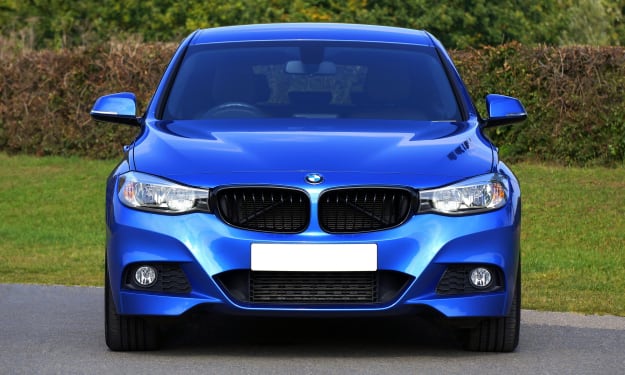
The Secret Rebel Inside Every BMW: What You Didn’t Know About the Ultimate Driving Machine
When most people think of BMW, they imagine sleek design, premium engineering, and a badge of status. It’s a brand that practically breathes confidence and class. But beneath the polished surface of "The Ultimate Driving Machine" lies a surprisingly rebellious spirit—a story of innovation, wartime secrets, defiance, and unexpected quirks that make BMW much more than just another luxury automaker. From Warplanes to the Autobahn BMW didn’t start by making cars. In fact, the company’s origin traces back to 1916, and it made aircraft engines during World War I. The famous blue-and-white logo? It’s not just a random design—it symbolizes a spinning airplane propeller against a blue sky, a tribute to its aviation roots. That sleek BMW badge you see on modern cars? It’s a legacy from a time when the company’s machines ruled the skies, not the roads. Ironically, it was the Treaty of Versailles that forced BMW out of the aviation business after World War I. Suddenly grounded, the company had to pivot. That pivot eventually led them to motorcycles, and later, automobiles—but not without setbacks. The Car That Saved BMW... Was Italian Fast-forward to the 1950s. BMW was teetering on the edge of bankruptcy. The German economy was recovering, but people didn’t want big luxury cars—they wanted something small and efficient. In an unexpected twist, BMW’s savior came from Italy. They licensed the design for a tiny bubble car called the Isetta—a strange, egg-shaped vehicle with a single front door that opened like a refrigerator. Weird? Absolutely. But the Isetta was a hit. It kept BMW alive when no one else was betting on them. It’s hard to believe, but the same company that now produces fire-breathing M-series monsters once relied on a 12-horsepower microcar to stay afloat. The “M” Stands for Madness (Kind Of) Today, BMW’s M Division is synonymous with high-performance vehicles that dominate racetracks and highways alike. But originally, "M" stood for "Motorsport"—and it wasn’t meant for public consumption. In the 1970s, BMW started producing race-ready cars under the M label, strictly for competition. Then came the BMW M1—a road-legal supercar that blurred the line between race and street. Only 453 were made, and it wasn’t a huge commercial success. But it lit a fire. That fire became the BMW M3, M5, and eventually the M2, M4, M8—cars that push limits and break rules. Here's something most people don’t know: when BMW was developing the E39 M5, the engineers deliberately underreported its horsepower to avoid triggering insurance red flags in some markets. The car was officially rated at 394 horsepower. Reality? Closer to 420. That’s BMW's quiet rebellion again—hiding performance in plain sight. When BMW Went Electric… in 1972 You might think BMW jumped on the EV trend recently with the i3, i4, and the iX series. But BMW’s electric ambitions go all the way back to the 1972 Munich Olympics. They built a prototype called the 1602e, an all-electric version of their compact sedan. It only had a range of about 37 miles and a top speed of 62 mph, but it stunned people. It was clean, silent, and unlike anything else on the road. Of course, the world wasn’t ready. Charging infrastructure didn’t exist, and battery technology was primitive. But the 1602e proved BMW wasn’t afraid to innovate way ahead of its time—even if it meant shelving the idea for decades. BMW’s Secret “Sound Engineers” Love the way a BMW growls when you step on the gas? That’s not just an accident—it’s been engineered, quite literally. BMW employs sound designers to create the ideal engine note for their vehicles. In fact, starting with the F10 M5, they even began piping artificial engine sounds into the cabin through the speakers—called "Active Sound Design." This revelation shocked some purists. “Fake engine noise?” they cried. But here’s the twist: BMW isn’t faking anything. They’re enhancing the real sound, tuning it like a musical instrument, just to give you that addictive, adrenaline-pumping feedback. It’s artistry, not trickery. They’ve Made Cars That Drive Without You While Tesla tends to dominate headlines about autonomous driving, BMW has quietly been testing self-driving cars for decades. As far back as the early 2000s, BMW demonstrated a 7 Series that could lap the Nürburgring without a human behind the wheel. In 2009, they introduced "Track Trainer," an autonomous M5 that could follow a perfect racing line. It was so good that even professional drivers used it to sharpen their skills. BMW doesn’t just follow trends—they prototype the future in secret, test it in the shadows, and then release it only when it meets their meticulous standards. The Quirky Side of Perfection BMW drivers are often stereotyped as a bit... intense. But here’s something charming: BMW engineers have always had a playful side. Take the E30 M3, for exampleWhile designing it, engineers intentionally made it difficult to drive at the limit—because they believed mastering the car should take skill and practice. It was their way of building a relationship between man and machine. Even today, BMW often embeds “Easter eggs” into their cars—like hidden compartments, subtle design references to past models, or secret codes in the vehicle identification numbers that reveal fun facts. Conclusion: BMW Is More Than a Brand. It’s a Statement. BMW is not just about luxury or speed. It’s about pushing boundaries without always shouting about it. It’s about sneaking performance into elegant packages and dropping microcars into luxury lineups when nobody expects it. It’s a brand that blends contradictions—precision with passion, history with futurism, rebellion with refinement. So next time you see a BMW roaring down the highway or silently gliding by in electric mode, remember: that car carries a legacy of warplanes, Italian microcars, motorsport madness, and engineering Easter eggs. BMW doesn’t just build machines. It builds myths—and invites you to drive one.
By Umair Khanabout a year ago in Futurism
The Global Economic Tightrope
The global economy in May 2025 finds itself at a precarious juncture, a complex tapestry woven with threads of persistent inflation, escalating geopolitical tensions, and a frustratingly uneven recovery from recent shocks. While some regions show signs of resilience, the overarching sentiment is one of caution and uncertainty. The United Nations' recent "World Economic Situation and Prospects as of mid-2025" report paints a sobering picture, revising global GDP growth forecasts downward to a mere 2.4% for the year, a significant drop from 2.9% in 2024. This downward revision is broad-based, affecting both developed and developing economies, underscoring the interconnectedness of the global financial system.
By Mahmud's Vinesabout a year ago in Futurism
"Bitcoin 2030: Boom, Bust, or Financial Revolution?"
Bitcoin, the pioneer of cryptocurrency, has experienced a journey marked by volatility, innovation, and intense public debate. From its modest beginnings in 2009 to reaching all-time highs of over $60,000 in the 2020s, Bitcoin has solidified its place as both a digital asset and a symbol of financial revolution. Now, as we look toward the next five years, the big question looms: where will Bitcoin be by 2030?
By Farhan Rafidabout a year ago in Futurism
Best AI Podcasts to listen in 2025
Whether you’re a developer hunting code-level tips or a manager seeking practical use cases, these podcasts offer expert voices, real-world insights, and inspiring stories to fuel your understanding—and your next project.
By Just AI News - Latest Artificial Intelligence News & Insightsabout a year ago in Futurism
🧠Quantum Breakthrough at Room Temperature: The Dawn of Practical Quantum Networks
In a discovery that may very well become one of the defining scientific achievements of the decade, researchers from the University of Tokyo and the Delft University of Technology in the Netherlands have successfully demonstrated quantum entanglement at room temperature using diamond-based qubits. This astonishing feat removes one of the largest barriers to real-world quantum computing and communication: the need for prohibitively cold environments. While the phrase "quantum entanglement" might conjure up images of science fiction or highly abstract theory, this new development has immediate and far-reaching consequences. It could mark the beginning of a new era in secure communication, global information transfer, and the development of powerful quantum computers that operate in everyday conditions.
By History Seekerabout a year ago in Futurism
Wheels of Fate
In the final days of the Moving Age, when cities no longer stood still and the world had forgotten what it meant to be rooted, the earth groaned beneath the weight of steel titans. The Traction Cities, once built to survive, had become predators — devouring the weak to fuel their survival.
By Muhammad Hashimabout a year ago in Futurism