feature
Featured articles from Futurism highlighting today's trending content.
Heritage Worn Proud: The Purpose Behind Veteran Apparel . AI-Generated.
Fashion speaks loudly, but some clothing speaks in a language forged in experience. Veteran apparel is not a fleeting trend—it is a living legacy sewn into fabric. It represents values that aren’t just stated, but lived. Through grit, sacrifice, discipline, and honor, the men and women who serve this country wear their experience with pride. Today’s veteran apparel doesn’t just honor that journey—it continues it.
By Faisal Abbas Sanghaabout a year ago in Futurism
Can human Ever Leave the milky way Galaxy The wormholes Explained By Shah saab
Can Humans Ever Leave the Milky Way? Wormholes Explained Humanity has always gazed at the stars with curiosity, dreaming of traveling across the universe. As our understanding of space has grown, so has our ambition. But while we’ve sent probes to the edges of our solar system, the idea of leaving our galaxy—the Milky Way—raises profound scientific, technological, and philosophical questions. Can humans ever truly leave the Milky Way? Could wormholes be the key to this escape? --- The Vastness of the Milky Way The Milky Way galaxy is a sprawling disk of stars, gas, and dark matter, approximately 100,000–200,000 light-years across. Our solar system orbits about 25,000 light-years from the galactic center. To escape the galaxy, humans would have to travel not just between stars, but across a gravitationally bound system of over 100 billion stars. To put that in perspective: the fastest spacecraft ever built, NASA’s Parker Solar Probe, travels at about 700,000 km/h. At that speed, it would take more than 2 billion years to reach the edge of the Milky Way. Clearly, with current propulsion technology, intergalactic travel is far beyond our reach. --- Galactic Escape Velocity Just as a spacecraft must reach escape velocity to break free from Earth’s gravity, it must do the same to leave the Milky Way. The galactic escape velocity near our solar system is estimated at roughly 525 km/s—more than 1,800,000 km/h. No human-made object has come close to this speed. Voyager 1, launched in 1977, is traveling at about 17 km/s and will never escape the galaxy. The enormous speeds required mean we need radical breakthroughs in propulsion—technologies that don’t yet exist or are purely theoretical. --- The Concept of Wormholes One of the most intriguing ideas in theoretical physics is the wormhole, a speculative tunnel through space-time that could connect distant points in the universe instantly. First proposed in 1935 by Albert Einstein and Nathan Rosen (thus also called Einstein-Rosen bridges), wormholes arise naturally from the equations of general relativity. If wormholes exist—and if they can be stabilized—they might allow instantaneous travel between galaxies or even across the universe. This would solve the problem of immense travel times and distances. However, there’s a catch: stabilizing a wormhole likely requires “exotic matter” with negative energy density, a substance we have never observed in nature. Some theories, such as those involving quantum entanglement and spacetime foam, suggest that wormholes could exist on quantum scales. But even if they do, scaling them up to a size usable by humans—or keeping them open long enough for travel—remains a massive scientific and engineering challenge. --- Scientific Research into Wormholes Physicists have explored several potential ways wormholes might exist or be detected. Some theories suggest that a wormhole might produce gravitational lensing—warping light from background stars in a unique way. Others suggest tiny wormholes could be remnants of the early universe, though we’ve never observed one directly. Recent work in quantum gravity and string theory suggests possible links between entangled particles and microscopic wormholes, but these connections are still speculative. In 2022, researchers at Caltech claimed to simulate a wormhole using quantum processors, although this was more of a mathematical analogy than an actual wormhole. Still, it shows growing interest in bringing this science-fiction idea closer to science fact. --- Alternative Propulsion Ideas Aside from wormholes, several advanced propulsion concepts have been proposed to one day enable galactic or intergalactic travel: Alcubierre Drive: A theoretical warp drive that contracts space in front of a spacecraft and expands it behind. It doesn’t move the ship faster than light locally, but space itself could move faster than light. Like wormholes, it requires exotic matter. Antimatter Engines: Antimatter reactions release enormous energy, much more efficient than chemical rockets. But creating and storing antimatter safely is a challenge. Laser Sailcraft: Tiny spacecraft pushed by high-powered lasers could potentially reach nearby stars in decades. Projects like Breakthrough Starshot aim to use this concept. Even the most optimistic timelines place these technologies far in the future. Human travel beyond the Milky Way would likely require generations of development—or entirely new physics. --- Could Nature Do It for Us? In rare events, stars can be ejected from galaxies at incredible speeds. These "hypervelocity stars" are flung out by interactions with supermassive black holes or galactic collisions. In theory, a spacecraft hitching a ride with such momentum could escape the galaxy, but directing and surviving such a journey is beyond our current capability. --- Conclusion Leaving the Milky Way is an awe-inspiring but extremely distant goal. The vast scale of space, the limitations of our current technology, and the speculative nature of wormholes and exotic physics mean that, for now, humanity is firmly rooted in our galaxy. However, as with so many once-impossible dreams—flight, the Moon landing, exploring Mars—our imagination often precedes our capabilities. Whether through wormholes, warp drives, or unknown breakthroughs, the dream of intergalactic travel continues to inspire science and science fiction alike.
By Shah saab ITabout a year ago in Futurism
Artificial Intelligence in 2025: The Invisible Force Reshaping Our World
Introduction: The Silent Revolution Imagine waking up in the morning, and before you even get out of bed, your smartphone has already analyzed your sleep patterns and adjusted your alarm accordingly. Your coffee machine knows the perfect time to brew your favorite drink. Your email is prioritized based on urgency. And all of this happens without you lifting a finger. This isn't a distant dream anymore – it's 2025, and Artificial Intelligence (AI) is no longer science fiction. It's the invisible force quietly reshaping our lives. In this article, we will explore how AI has evolved into a powerful presence in our personal and professional lives, the impact it's having on various sectors, the ethical concerns it raises, and what the future may hold. Whether you're a tech enthusiast or a curious onlooker, this comprehensive guide will help you understand the role of AI in our changing world. 1. AI at Home: The Smart Living Era AI has seamlessly integrated into our homes, making them smarter, safer, and more efficient. Devices like Amazon Echo, Google Nest, and Samsung SmartThings are now capable of learning from user behavior, creating customized environments tailored to each individual. From adjusting lighting and temperature to suggesting dinner recipes based on what’s in your fridge, AI personal assistants are becoming indispensable. Smart home security systems powered by AI can now differentiate between a family member and a potential intruder, reducing false alarms and enhancing safety. Additionally, AI-driven home robots are helping the elderly and disabled live more independently by providing companionship, medication reminders, and even mobility assistance. 2. AI in Healthcare: Saving Lives with Precision The healthcare sector has seen some of the most revolutionary AI implementations. In 2025, AI is being used to diagnose diseases with unprecedented accuracy. Tools like IBM Watson and Google's DeepMind are analyzing medical data, imaging, and patient history to detect conditions like cancer, Alzheimer’s, and heart disease early and more accurately than traditional methods. AI-powered wearable devices are continuously monitoring vital signs and alerting users and doctors about potential health risks. Personalized medicine, where AI tailors treatment plans based on genetic profiles and lifestyle, is improving patient outcomes and reducing side effects. Moreover, AI chatbots are transforming mental health care by offering 24/7 support and helping bridge the gap between therapists and patients. 3. AI in the Workplace: Automation and Augmentation From finance to manufacturing, AI is automating repetitive tasks and augmenting human capabilities. In 2025, companies are leveraging AI for data analysis, customer service, recruitment, and even decision-making. For example, chatbots handle thousands of customer queries daily with accuracy and consistency. AI is also transforming job roles. While some fear job losses, new opportunities are emerging that require a blend of human creativity and AI efficiency. Jobs in AI ethics, machine training, and algorithm auditing are now in demand. The key to thriving in this environment is adaptability and continuous learning. 4. AI in Education: Personalized Learning Paths Education has become more inclusive and adaptive thanks to AI. Platforms like Khan Academy, Duolingo, and Coursera use AI to track student progress and tailor lessons accordingly. In 2025, students receive real-time feedback, and teachers are empowered with tools to identify and address learning gaps. Virtual tutors, powered by AI, provide around-the-clock assistance, breaking geographical and time barriers. Special education is benefiting immensely as AI helps design personalized learning experiences for students with disabilities. 5. AI and Ethics: Navigating a Complex Terrain With great power comes great responsibility. As AI grows, so do ethical concerns. Who is accountable when an AI-driven car crashes? Can AI make unbiased decisions when trained on biased data? How much privacy are we sacrificing for convenience? In 2025, these questions are at the forefront of technological discourse. Governments and organizations are working to implement ethical frameworks and transparency protocols. AI transparency, fairness, and accountability are becoming non-negotiable principles. 6. AI in Entertainment: Revolutionizing Creativity AI isn't just analyzing data; it's creating art. From composing music and writing scripts to generating deepfake videos and designing video games, AI is revolutionizing the entertainment industry. Tools like OpenAI’s ChatGPT and DALL·E are allowing artists to collaborate with machines to push creative boundaries. In 2025, virtual influencers, AI-generated content, and immersive experiences powered by AI are redefining how we consume and create media. 7. AI in Transportation: From Self-Driving Cars to Smart Traffic Self-driving cars are no longer a novelty. Companies like Tesla, Waymo, and Cruise are deploying autonomous vehicles that navigate city streets safely. AI is optimizing traffic flow in smart cities, reducing congestion and emissions. Logistics and delivery services have embraced AI for route planning, fleet management, and even drone-based deliveries. This has not only improved efficiency but also minimized environmental impact. 8. The Dark Side of AI: Risks and Threats While AI offers countless benefits, it also poses significant risks. Deepfakes, misinformation, surveillance, and algorithmic bias are growing concerns. Cybersecurity threats are becoming more sophisticated, as AI is used both to protect and attack digital infrastructures. As AI becomes more autonomous, the need for regulation and ethical oversight is critical. Unchecked development can lead to unintended consequences with global implications. 9. The Human-AI Partnership: Moving Forward Together The future isn't about humans versus machines – it's about collaboration. AI can augment human potential, enabling us to solve complex problems and make better decisions. The real challenge is ensuring that this partnership is balanced, ethical, and inclusive. Education systems must adapt to teach AI literacy. Governments need to legislate responsibly. Individuals must remain curious, adaptable, and informed. Conclusion: Embracing the Inevitable Future Artificial Intelligence is not coming – it's already here, quietly transforming every aspect of our lives. As we step further into 2025, the question isn't whether AI will change our world, but how we choose to shape that change. Will we fear the unknown or harness AI's power to build a better, more equitable future? The choice is ours.
By Babar Azamabout a year ago in Futurism
Top 5 Micro Business Energy Comparison Sites in the UK
Introduction In 2025, finding reliable and cost effective micro business energy comparison sites is more important than ever for small enterprises in the UK. Whether you're a startup café, a local hairdresser, or a freelance design studio, keeping your energy bills under control is essential. Fortunately, several companies help compare energy prices for micro businesses so that you can get the best deal possible.
By Urooj Mallahabout a year ago in Futurism
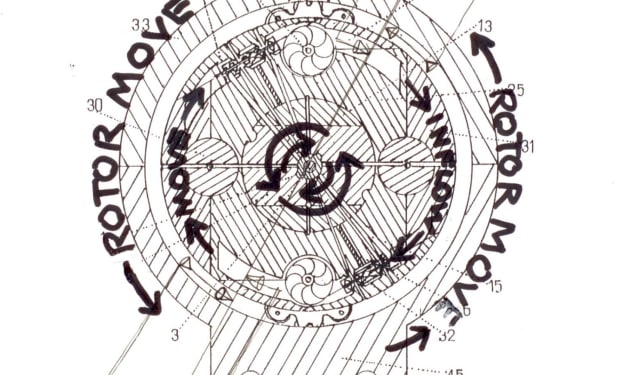
Is it possible to apply positive + in favor Newton III Motion Law as a dynamic system in a Motor Engine Device?
3rd Thermodynamic Law Applicate in a Power-Plant Device. The Reaction at From of the Action. New Torque Power. It’s a simple Plus Formula of the Interaction of the Two Powers: 1/Action, + 2/Reaction = Retrodynamic. / For every action there is an equal and opposite reaction. 2 Forces in 1 System.
By Carlos Barreraabout a year ago in Futurism
The Rise of AI and the Fall of Traditional Photography
A Legacy of Light, Shadow, and Skill Photography has always been a profession based on precision, patience, and acquired knowledge. Photographers learned their craft through years of experience, understanding the interplay of light and shadow, the art of composition, and the subtle power of emotion captured in a still image. Mastering manual focus, choosing the right aperture, or manipulating natural light weren't just technical decisions; they were the artist's artistic touches.
By Sayed Zewayedabout a year ago in Futurism