extraterrestrial
Speculation, theory, UFOs and Aliens. Are we alone in this universe or is there life outside Earth?
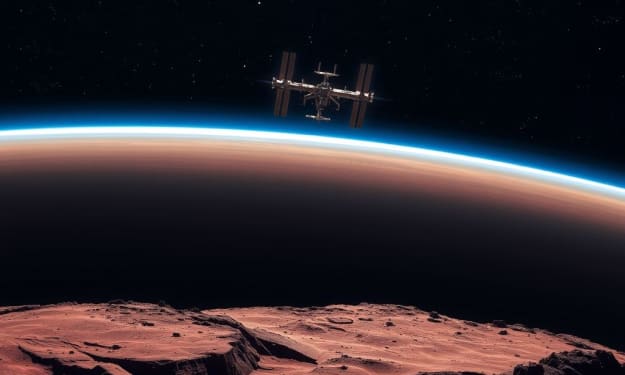
Space as a Sanctuary: Can Humanity Survive Without Earth Forever?
Earth is our cradle — but must it always be our only home? This profound question is no longer confined to science fiction or late-night philosophy. In the face of rising populations, climate change, resource depletion, and the looming threat of global catastrophes, scientists, futurists, and dreamers alike are turning their eyes toward the stars. Could humanity truly survive — and even thrive — away from Earth, permanently?
By Holianyk Ihorabout a year ago in Futurism
What's Next Your Highness
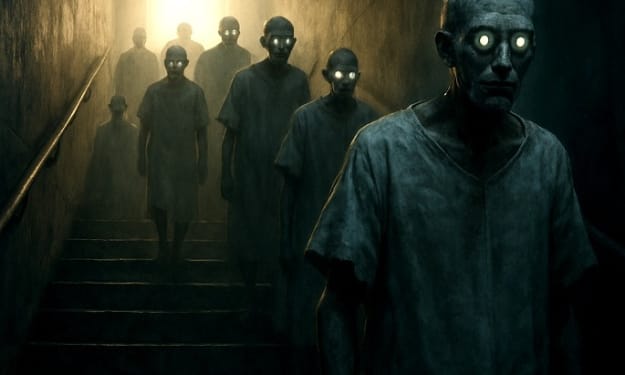
We were escorted down a long hallway that took many twists and turns almost like a maze. There was no way we could have found our way out of there had we escaped. Yet again, there was no place to escape to. We came to a small doorway at the end of a hallway. It was so narrow we had to turn sideways to slip through. The guards closed and secured the door behind us.
By Om Prakash John Gilmoreabout a year ago in Futurism
Researchers pinpoint the time and place where the first people used whale bones to make tools and harpoons.
In the distant past, whale populations thrived, but they are now significantly reduced. Whales were utilized by early humans who lived near the water as a source of resources and sustenance. To kill more whales, they also used whale bones to construct equipment like harpoons.
By Francis Damiabout a year ago in Futurism
Apogee and Perigee: Understanding the Cosmic Dance in Simple Terms
The night sky has always captivated humanity — a vast canvas of stars, planets, and mysteries waiting to be understood. Among the many fascinating concepts in astronomy, two terms often come up that sound almost magical: apogee and perigee. Though they may seem like complex jargon, they actually describe something quite simple — and pretty cool.
By Holianyk Ihorabout a year ago in Futurism
Mirror-like Exoplanets: Alien Worlds Reflecting Light Like Giant Cosmic Mirrors
In the infinite depths of space, astronomers are discovering more than just new planets—they’re uncovering worlds that defy expectations. One of the most fascinating recent discoveries is the existence of mirror-like exoplanets: distant planets whose surfaces are so reflective, they shine like cosmic beacons, bouncing their star’s light back into the void like giant interstellar mirrors.
By Holianyk Ihorabout a year ago in Futurism
Planets Covered in Liquid Metal: Science Fiction Becoming Reality
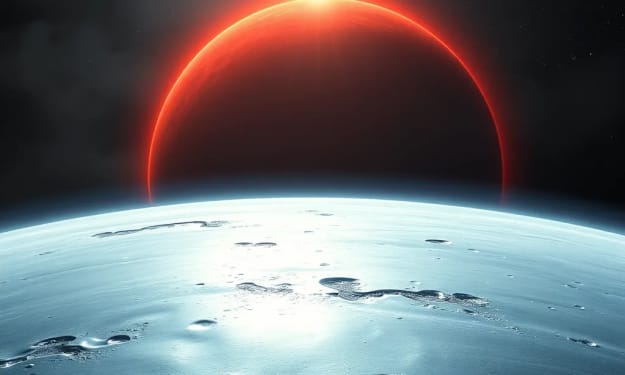
Imagine standing on the shore of a planet where oceans shimmer not with water, but with molten iron, zinc, or sodium. The air is thick with metallic vapors. A red, swollen star hangs overhead, casting eerie reflections across a glowing mercury sea. It sounds like a scene from a futuristic movie, but recent scientific discoveries suggest such planets might not only exist—they may already be within our reach.
By Holianyk Ihorabout a year ago in Futurism
The Cosmic Vacuum: How It Affects Matter
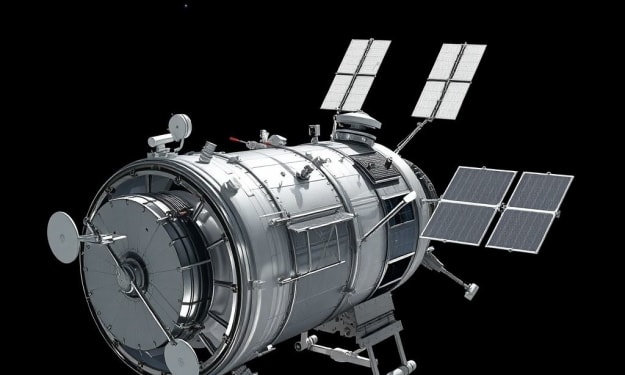
When we hear the word "vacuum," our minds often picture emptiness, absolute silence, and a complete absence of life. The cosmic vacuum truly fits this image — it’s almost a perfect void, where matter is nearly nonexistent, pressure drops to nearly zero, and temperatures can swing wildly from extreme cold to blistering heat. But what actually happens to matter when it encounters this harsh and alien environment? The answer is fascinating, complex, and full of surprising scientific insights.
By Holianyk Ihorabout a year ago in Futurism
Intergalactic Space: What’s Really Out There Beyond the Void?
When we picture outer space, most of us imagine dazzling stars, swirling galaxies, colorful nebulae, and the familiar planets of our solar system. But between those brilliant cosmic landmarks lies an immense stretch of emptiness — the intergalactic space. At first glance, it might seem like a vast, lifeless void, completely devoid of matter or meaning. Yet, this seemingly empty realm is far more intriguing and complex than it appears. So, what exactly exists in that dark gulf between galaxies?
By Holianyk Ihorabout a year ago in Futurism