evolution
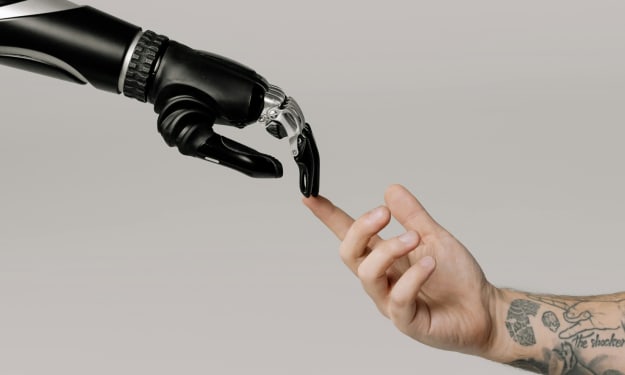
The evolution of science, science fiction, and mankind throughout the years.
the Immortal Jellyfish: . AI-Generated.
Byline: How Turritopsis dohrnii defies mortality—and what its secrets mean for humanity’s quest to conquer time. Prologue: The Benjamin Button of the Deep In the Mediterranean Sea, a translucent, coin-sized jellyfish pulses through the water, its tentacles trailing like lace. When injured, stressed, or simply old, it defies biology: its cells rewind, its body shrinks, and it transforms back into a polyp—a juvenile stage—to begin life anew. This is Turritopsis dohrnii, the “immortal jellyfish,” nature’s answer to the fountain of youth. For scientists, it’s a paradox. For philosophers, a riddle. For billionaires chasing longevity, a blueprint. But what can a brainless blob teach us about aging? The answer lies in a biological superpower called transdifferentiation—and the ethical quagmires it unveils. 1. Biology of Immortality: The Life Cycle That Loops Key Mechanism: Most jellyfish follow a two-stage life cycle: Polyp: A stationary, plant-like juvenile anchored to rocks. Medusa: The free-swimming adult form. Turritopsis adds a third act: When threatened, the medusa reabsorbs its tentacles, settles on the seafloor, and reverts to a polyp colony. Its cells transdifferentiate, changing identity (e.g., a skin cell becomes a nerve cell) without returning to stem-cell form. Quote: “It’s like a butterfly turning back into a caterpillar—repeatedly,” says Dr. Shin Kubota, a Japanese biologist who has cultured Turritopsis for decades. Challenges: Lab Frailty: The jellyfish rarely cycle more than 2–3 times in captivity. Predators: Immortality ≠ invincibility. Most get eaten or diseased. 2. The Genetic Toolkit: Decoding the Jellyfish’s “Reset Button” Genome Mapping: In 2022, a Spanish team sequenced Turritopsis’s genome, identifying key genes: FoxO: Linked to DNA repair and stress resistance in humans. Policistronic Messengers: Allow multiple proteins to be made from one gene, boosting cellular flexibility. Comparative Biology: Lobsters: Produce telomerase endlessly, slowing aging (but still die). Hydras: Regenerate fully but lack Turritopsis’s life-cycle reversal. Stem Cell Parallels: Human induced pluripotent stem cells (iPSCs) can reprogram adult cells into embryonic-like states—but with cancer risks. Turritopsis does this naturally, safely. 3. The Aging Arms Race: From Jellyfish to Jeff Bezos Silicon Valley’s Obsession: Longevity startups like Altos Labs (funded by Bezos and Yuri Milner) are reverse-engineering Turritopsis’s transdifferentiation to “reboot” human cells. Research Frontiers: Organ Regeneration: Scientists at Harvard used jellyfish-inspired genes to repair heart tissue in mice. Senolytics: Drugs that purge “zombie cells” (senescent cells) tied to aging. Early trials show promise in extending healthspan. The Catch: Aging is not a single disease but a mosaic of decay. Turritopsis resets its entire biology. Humans? We’re more complex. 4. Ethical Abyss: The Cost of Cheating Death Overpopulation Fears: If lifespan balloons, resource wars could erupt. UN models suggest even a 20-year extension would strain food and energy systems by 2100. Equity Issues: Will immortality tech be a luxury for the rich? Cryonics already costs $200,000 per “patient.” Existential Angst: Psychologists warn that endless lifespans could erode purpose. As Kafka wrote, “The meaning of life is that it ends.” Quote: “We’re playing God without wisdom,” warns Dr. Jane Goodall. “What happens when death becomes optional?” 5. The Jellyfish’s Whisper: Lessons Beyond Biology Ecological Humility: Turritopsis thrives in warming, polluted oceans. Its immortality is less a triumph than a survival hack in a damaged world. Acceptance vs. Defiance: Modern medicine often frames aging as a foe. But in Okinawa, where elders live longest, the mantra is “ikigai”—a reason to live, not just linger. A New Paradigm: Instead of chasing endless life, could we borrow Turritopsis’s resilience to enhance healthspan? Imagine 90-year-olds with the vitality of 50—then dying swiftly, like a finished book. Epilogue: The Immortal’s Curse In Kubota’s lab, a Turritopsis medusa reverts to a polyp for the third time. It will never grow old, but it will also never evolve. Meanwhile, outside, mortal jellyfish species adapt, diversify, and migrate—reminders that death drives progress. Perhaps immortality isn’t the goal. Perhaps the jellyfish’s true lesson is to live well, not endlessly. Food for Thought: If you could reset your biological clock like Turritopsis, would you? What would you lose—or gain—by never aging?Start writing...
By Pure Crown2 years ago in Futurism
A Planet Larger Than Jupiter with the Density of Cotton Candy
Incredible Discovery: A Planet Larger Than Jupiter with the Density of Cotton Candy The discovery of exoplanet WASP-193b has challenged existing theories of planetary formation. This gas giant, approximately 50% larger than Jupiter yet possessing a density 25 times lower, exhibits characteristics akin to the lightness of cotton candy. Located about 1,200 light-years from Earth, WASP-193b's unique properties provide insights into the diversity of planetary systems and the complexities of planet formation. This article explores its discovery, physical and orbital characteristics, theoretical challenges, and future research directions.
By JONATAN DAVID VEGA2 years ago in Futurism
Parallel Universes: Is There Another You in a Different Reality?
Imagine waking up tomorrow in a world almost identical to yours, except for one small detail—perhaps the color of your car is different, or you chose a different career path, or maybe, in that universe, you never met the people who define your life today. The idea that multiple realities exist, branching off into infinite possibilities, is one of the most fascinating concepts in both science and fiction.
By Ahmet Kıvanç Demirkıran2 years ago in Futurism
As Movie Viewing Changes, What Should We Hope for?
Last night I was happy that I obtained access to the viewing of the recent Oscar's awards ceremony. I have always enjoyed watching the fashions on the red carpet and seeing if the host is going to be funny or basic. Conan O'Brien hosted the 2025 Oscar's, and his sense of humor had me falling off my chair in roaring laughter so I was pleased. I didn't see in any of the glimpses of the audience the same laughter I was experiencing, (which must have been somewhat disappointing for Conan) but what can you do? Humor is subjective.
By Shanon Angermeyer Norman2 years ago in Futurism
NASA Has Made Its Decision Here Is the Most Realistic Sci-Fi Movie to Represent the Future
NASA Has Made Its Decision Here Is the Most Realistic Sci-Fi Movie to Represent the Future In 2011 NASA compiled a list of the most scientifically accurate science fiction films ever made. Among them Gattaca (1997) stood out as the most realistic portrayal of the future. More than a decade later its vision of a society dominated by genetic engineering remains hauntingly relevant. Science fiction has long been a genre that oscillates between pure fantasy and insightful predictions about the future. While some films rely heavily on visual spectacle and improbable scenarios others manage to balance scientific accuracy with compelling narratives. Recognizing this NASA brought together experts from its Jet Propulsion Laboratory to evaluate science fiction films based on their scientific plausibility. The results placed Gattaca at the top followed by Contact (1997) and Metropolis (1927). Meanwhile blockbusters like Armageddon (1998) and 2012 (2009) were dismissed as scientifically inaccurate. What sets Gattaca apart from other science fiction films is its eerily plausible vision of a world where genetic engineering dictates social hierarchy. Directed by Andrew Niccol the film presents a future in which children are no longer conceived naturally but designed in laboratories. Parents select desirable traits for their offspring ensuring that they are free from hereditary diseases and genetic imperfections. Those who are born naturally without genetic enhancements are considered inferior and are systematically denied opportunities. This dystopian world is not ruled by artificial intelligence or extraterrestrial forces but by the very science that humanity is actively developing today.
By Adnan Rasheed2 years ago in Futurism
The Forgotten Genius of Ada Lovelace:
Byline: The 19th-century visionary who saw beauty in numbers and machines in metaphors. Prologue: A Mind Between Two Worlds In 1833, a 17-year-old girl named Ada Byron attended a London salon where guests marveled at a clanking brass contraption: Charles Babbage’s Difference Engine, a mechanical calculator. While others saw gears and numbers, Ada saw something else entirely—a “thinking machine” that could compose music, paint art, and perhaps even dream. Her mother, Lady Byron, had raised her on strict math lessons to suppress the “dangerous imagination” Ada inherited from her father, the poet Lord Byron. But Ada defied categorization. She called herself a “poetical scientist”—a title that would define her legacy as the world’s first computer programmer. 1. The Enchantress of Numbers: Ada’s Education Mentored by Titans: Mary Somerville: The renowned mathematician and astronomer tutored Ada, introducing her to advanced calculus and celestial mechanics. Charles Babbage: The irascible inventor of the Analytical Engine (a proto-computer) became her collaborator. Their letters brimmed with equations and inside jokes. A Unique Mind: Ada blended rigor and romance. In her journals, differential calculus sat beside lines like, “I want to put inimitable life into my work—a fire, a soul.” 2. The Notes That Changed History 1843 Babbage asked Ada to translate an Italian article about his Analytical Engine. What began as a translation evolved into a manifesto. Her Notes (Three Times Longer Than the Original Article) Included: The First Algorithm: A step-by-step method to calculate Bernoulli numbers using the Engine—now considered the first computer program. A Vision Beyond Calculation: Ada argued the machine could manipulate any symbols, not just numbers. She envisioned it composing music, generating art, and solving equations “of arbitrary complexity.” The Concept of a Loop: She described how the Engine could repeat operations, a foundational principle in coding. Poetic Insight: Ada compared the Engine’s punch cards to Joseph-Marie Jacquard’s loom, which wove silk using encoded patterns. “The Analytical Engine weaves algebraic patterns,” she wrote, “just as the loom weaves flowers and leaves.” 3. The Poetical Science: Where Art Met Algebra Ada’s genius lay in her interdisciplinary lens: Metaphors as Code: She described the Engine’s “memory” (storage) and “mill” (processor) in terms a poet might use. Music and Machines: She theorized that musical notes could be converted into numbers for the Engine to manipulate, foreshadowing digital audio. The “Science of Operations”: She framed math as a language of processes, not just answers—a philosophy that underpins modern programming. Controversy: Male peers dismissed her ideas. Mathematician Augustus De Morgan claimed her flights of fancy proved “the female mind cannot sustain abstract thought.” Babbage, though impressed, called her “my fairy who has thrown her magic wand over the hardest of my materials.” 4. The Tragic Eclipse of a Visionary Ada’s later years were marred by illness, gambling debts, and opium addiction. She died of uterine cancer in 1852 at 36—the same age as her father. Lost to History: For a century, her contributions were erased. Historians credited Babbage alone, dismissing Ada as a “hysterical” sidekick. Even Alan Turing’s 1950 paper on AI cited Babbage but not Lovelace. Rediscovery: In the 1970s, feminist scholars resurrected her work. The U.S. Department of Defense named its programming language Ada in 1980, cementing her place in tech history. 5. Ada’s Legacy: Code as Art, Machines as Partners Modern Echoes: AI Creativity: Projects like OpenAI’s MuseNet, which composes music, fulfill Ada’s prophecy of machines as artists. Human-Centered Design: Tech innovators like Steve Jobs cited Ada’s fusion of creativity and engineering as inspiration. The Poetical Scientist’s Mantra: “Imagination is the Discovering Faculty… It seizes points in common, between subjects having no apparent connection.” Epilogue: The Ghost in the Machine In 2023, an AI trained on Ada’s writings generated a sonnet in her voice: “I dream of engines wrought from starlight’s loom, Where numbers dance and melodies take flight. The gears, they hum a universal tune— A poet’s calculus, a coder’s rite.” The poem is flawed, fand ragmented. But somewhere, perhaps, Ada smiled. Reflection: Ada Lovelace’s story challenges the binary of art vs. science. In a world obsessed with STEM vs. humanities, she reminds us that innovation lives at the intersection. Question for Readers: What “impossible” idea could you pursue if you embraced your inner poetical scientist
By Pure Crown2 years ago in Futurism
The Future of SEO & SEM: Navigating an Evolving Digital Landscape
The Future of SEO & SEM: How to Remain Ahead in an Evolving Digital Landscape The manner in which individuals go online to look for information is evolving constantly, and companies that depend on search engines for exposure are also required to adapt with it. SEO (Search Engine Optimization) and SEM (Search Engine Marketing) are not about keyword stuffing or ad-running anymore—its about building enriching experiences, knowing search intent, and leveraging intelligent technology to reach the right people.
By Malik Fahad2 years ago in Futurism
AI Tools for Success: Changing Work, But at What Cost?
Success Tools of AI: Transforming Work, But at What Price? Artificial Intelligence (AI) has transitioned from a science fiction idea to an everyday reality, transforming industries and redefining the way we work. AI-based tools are making operations simpler, more efficient, and are providing businesses with unprecedented insights. From customer service automation to deep data analytics, AI is changing the face of the modern workplace. But while organizations are looking to AI for efficiency, an important question remains—what's the price of this change?
By Malik Fahad2 years ago in Futurism
The Evolution of Transhumanism: . AI-Generated.
In the ever-evolving landscape of science and technology, few concepts are as provocative or polarizing as transhumanism. This movement, which seeks to enhance human capabilities through advanced technologies, has sparked debates about the future of humanity, ethics, and the very essence of what it means to be human. But as we stand on the brink of a new era, one question looms large: Are we redefining humanity, or are we losing it altogether? The Roots of Transhumanism
By Pure Crown2 years ago in Futurism