evolution
The evolution of science, science fiction, and mankind throughout the years.
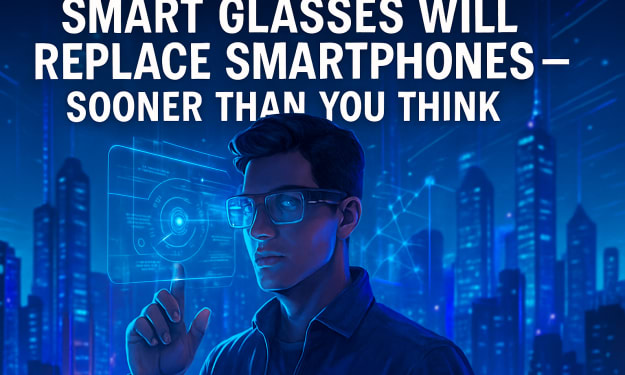
“Why Smart Glasses Will Replace Smartphones (Sooner Than You Think)”
Just a decade ago, the idea of walking around with computers on our faces felt absurd—clunky, geeky, dystopian. Google Glass flopped, and the public laughed it off. But now in 2025, that laughter is fading fast. Thanks to advancements in AI, displays, and wearability, smart glasses are making a comeback. And this time, they're cool, useful, and almost invisible. Companies like Meta, Apple, Ray-Ban, and Samsung are betting big on this shift. Why? Because your face—not your pocket—is becoming the next digital battleground. This blog will break down why smart glasses are no longer a gimmick… and how they might just kill the smartphone. --- 🕶️ From Nerdy to Necessary Let’s get one thing straight: today’s smart glasses aren’t trying to be your phone on your face. They’re smarter. Subtler. And in some ways, more powerful. Take the Meta Ray-Ban Smart Glasses. At first glance, they look like stylish eyewear. But behind those lenses is a voice-activated assistant, camera, microphone, speaker, and even an AI-powered object recognizer. Ask it what you're looking at. It answers. Want to take a photo without lifting a finger? Just say it. Need turn-by-turn directions while biking? It speaks in your ear. All of this, hands-free, screen-free, and no awkward wrist twist to check your watch or pull out your phone. --- 🔍 Why Glasses Make More Sense Than Phones Here’s why the industry believes glasses will eventually replace smartphones: Hands-Free Everything: Voice, eye-tracking, and gestures make control effortless. Augmented Reality (AR): Your surroundings become interactive—see overlays, directions, captions, translations, and more in real time. Contextual Intelligence: Built-in AI understands your environment—offering smarter suggestions and relevant info without distraction. Less Screen Time: Glasses free you from constant scrolling, while still delivering the info you need. Fashion Meets Function: Modern designs mean people actually want to wear them. It’s not about replacing the smartphone entirely—it’s about making the smartphone feel outdated. --- 🧠 AI Makes It Possible Here’s the real kicker: without AI, smart glasses were dead in the water. But thanks to ChatGPT-style models and on-device intelligence, glasses can now: Understand natural language Identify objects, landmarks, and people Translate speech in real time Summarize what you’re looking at Act as personal assistants, coaches, or tutors Smart glasses no longer need a massive screen because the AI becomes your interface. --- 🏁 Who’s Leading the Race? Some key players making waves: Meta x Ray-Ban Smart Glasses – Stylish, social, and AI-integrated. Apple Vision Pro (Light version coming soon) – Expensive now, but future versions aim to miniaturize. Xreal Air 2 Ultra – Bringing AR to the masses with spatial computing and cinema-sized virtual screens. Samsung & Google – Rumored to be working on “Pixel Glass.” It’s not a matter of if—it’s a matter of when. --- ✅ Pros of Smart Glasses No more staring at your phone every 3 minutes Real-time navigation, translation, and contextual help Private audio without headphones Stylish designs (finally) Safer multitasking (e.g., walking, biking, working) AI-enhanced productivity and creativity Great for people with disabilities or accessibility needs --- ❌ Cons to Consider Privacy concerns (camera and mic always on?) Still reliant on your phone for heavy lifting Battery life (most last a day or less) High price tag for early adopters Social awkwardness—still a stigma in some settings Requires strong voice AI, which can misfire in loud environments --- 🧨 The Real Disruption: Apps Will Die Here’s a wild prediction: as smart glasses take over, the app economy will shrink. Instead of tapping through icons, AI-powered glasses will fetch what you need without opening an app. Example: > “Hey Meta, what’s that building?” “That’s the Flatiron Building. It was built in 1902 and…” No app. Just knowledge. You don’t need Yelp, Google Maps, or Wikipedia—you just need one intelligent assistant. --- 👓 The End of the Phone Is Closer Than You Think Look around. In a world where we already wear headphones, rings, watches, and fitness bands, a natural extension is putting intelligence right in our line of sight. Smart glasses won’t just be gadgets—they’ll be lifestyle devices. Discreet. Useful. Invisible until you need them. Phones won’t disappear overnight, but they will fade into the background. And in their place, we'll get something more immersive, more helpful, and frankly—more human. --- 🎯 Final Thoughts 2025 is the turning point. As prices drop and AI gets smarter, smart glasses won’t be just for tech nerds. They’ll be for parents, students, travelers, workers, and yes—even your grandparents. We’re entering a world where your digital life doesn’t live in your pocket—but in your perspective. Get ready. The revolution won’t be in your hands—it’ll be on your face.
By GadgetGroundabout a year ago in Futurism
Tesla vs. BYD
In the high-voltage world of electric vehicles (EVs), two titans are currently sparring for global dominance: Tesla and BYD (Build Your Dreams). On one side is Elon Musk’s iconic brand, a pioneer that revolutionized the EV landscape with sleek, tech-savvy cars and futuristic visions. On the other is BYD, the Chinese powerhouse backed by Warren Buffett, carving out a massive slice of the market with affordability, innovation, and scale. This isn’t just a corporate competition—it's a clash of philosophies, strategies, and ambitions.
By Det. Marcusabout a year ago in Futurism
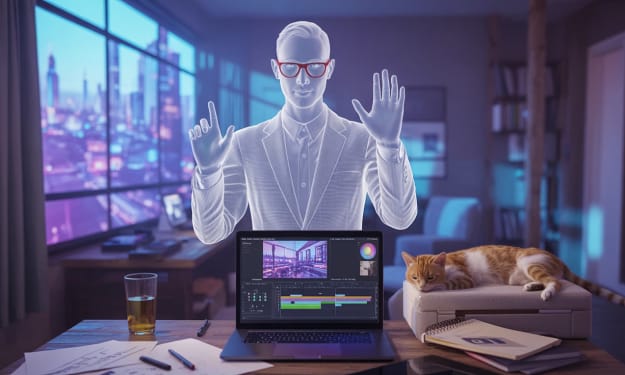
How AI Avatars Are Redefining Personal Branding in 2025
My Awkward Zoom Call and the Avatar Epiphany Last month, I totally tanked a Zoom pitch. My Wi-Fi was glitching, my cat decided to star in the background, and my “professional” energy screamed “panicked freelancer who forgot to brush their hair.” I wished I could’ve sent a suave, unflappable version of myself—one that doesn’t stutter or sweat buckets. That’s where AI avatars come in, the 2025 game-changer that’s got everyone from LinkedIn hustlers to TikTok creators rethinking how they show up online. These hyper-realistic digital twins, powered by some serious AI magic, can talk, smile, and sell your brand 24/7, no coffee spills or bad hair days needed. A 2025 Newsweek article called AI the “architect of our online personas,” and I’m sold—but also a bit weirded out. Are we crafting epic brands or creepy clones? I dove into the top AI avatar trends, from platforms like HeyGen to the ethical quicksand, to figure out how they’re reshaping who we are online. Spoiler: it’s wild, it’s weird, and it’s not all sunshine. Here’s the scoop, with hacks to make avatars work for you—without selling your soul.
By F. M. Rayaanabout a year ago in Futurism
“Beyond the Edge: A Journey Through Darkness to Find the Light”
“Was the Stellar Voyager really pulled into the unknown by an unseen force?” The moment it happened, silence devoured the ship. “Captain! We're off-course!” Lieutenant Sarah Chen’s voice cracked through the comm. Captain Ethan Reid bolted upright in his command chair, his eyes darting to the main screen. The familiar Milky Way constellations had vanished, swallowed by a strange glow pulsing across the void. “What the hell is that?” Ethan whispered. The Stellar Voyager was no rookie mission—it was humanity’s most advanced deep-space exploration vessel, equipped for mapping galaxies, not falling victim to them. “Navigation’s offline. External comms dead,” said Luis Ramirez, the ship’s chief engineer. “Sir… it’s like space itself just shifted around us.” A gravitational anomaly, perhaps? Or something more?
By Mian Nazir Shahabout a year ago in Futurism
The Council of Nine: Guardians of the Earth Experiment Part 3
The Council of Nine: Guardians of the Earth Experiment Atlantis, ancient DNA codes, and the awakening of forgotten power within us Let me ask you something: What if Earth was never just a random planet?
By The Secret History Of The Worldabout a year ago in Futurism
Gemini 2.5’s Deep Think Mode: Can Google’s AI Outsmart Humans Now?
A Brainier AI Steps Up Ever flunk a math test so bad you wanted to hide under your desk? Yeah, me too. Now imagine an AI that could not only ace that test but explain why you bombed it, then whip up a study guide faster than you can say “calculus is evil.” That’s the vibe with Google’s Gemini 2.5 Pro, especially its new Deep Think mode, unveiled at Google I/O 2025. This isn’t your average chatbot spitting out quick answers. It’s like a nerdy Sherlock on steroids, pausing to ponder multiple solutions before dropping a response that’s scarily spot-on. But can it really outsmart humans? Or is this just Google hyping up another tech toy? Let’s dig into what Deep Think does, how it’s flexing its brain, and whether it’s ready to dunk on our puny human minds—or if it’s got some growing pains.
By F. M. Rayaanabout a year ago in Futurism
The Death of Search as We Know It: How AI Mode Is Rewriting the Rules
Goodbye, Blue Links—Hello, AI Brain Remember the days of typing “best pizza near me” into Google and scrolling through a dozen blue links, hoping one wasn’t a dud? Yeah, those days are on life support. Google’s AI Mode, rolled out to all U.S. users in May 2025, is flipping search upside down, turning it from a list of links into a chatty, mind-reading assistant that knows you. It’s like swapping a library card catalog for a psychic librarian who’s read your diary. Unveiled at Google I/O 2025, AI Mode uses Gemini 2.5 to deliver conversational answers, personalized results, and deep-dive reports, all while pulling from your Gmail, Calendar, and past searches. But is this the future we want? Or are we trading convenience for privacy and a fractured web? Let’s unpack how AI Mode is rewriting search’s rules—and what it means for society, from our daily habits to the businesses fighting to be seen.
By F. M. Rayaanabout a year ago in Futurism