evolution
The evolution of science, science fiction, and mankind throughout the years.
Sahara's Solar Revolution
The Sahara is a place of extremes. Stretching across eleven countries in North Africa, it covers an area nearly the size of the United States. To many, it is a wasteland of scorching heat, endless sand dunes, and little else. But hidden in its golden vastness is something extraordinary: a potential energy treasure powerful enough to light up the entire world. Scientists have long marveled at the sheer abundance of sunlight that bathes the Sahara every single day. This is not just any sunshine—it is among the most intense on Earth, striking the desert with relentless consistency. What most people see as emptiness, visionaries see as opportunity. The Sahara could be the beating heart of a new era: a global solar revolution.
By Sahir E Shafqatabout a year ago in Futurism
Australia's Electric Revolution: The Road to a $171.6 Billion EV Market. AI-Generated.
The Numbers Don't Lie: Australia's EV Boom Picture this: a 30% annual growth rate that's turning heads across the global automotive industry. In 2024 alone, Australian EV sales surpassed 100,000 units for the first time—a milestone that seemed impossible just a few years ago when electric vehicles were considered expensive novelties for environmentally conscious early adopters.
By Amyra Singhabout a year ago in Futurism
Did Ancient Aliens Shape the Early Civilizations of Earth?
A Question Buried in Stone For thousands of years, human beings have looked up at the stars and wondered if we were alone. But what if the answer is not simply written in the sky, but carved into the stone of our own planet?
By The Secret History Of The Worldabout a year ago in Futurism
Hey, Want to Learn Python? Let’s Talk About What NOT to Do
So you’re thinking about learning Python? That’s awesome! I remember when I first started — Python seemed like this magical language that could do everything. And honestly, it kind of is. You can build websites, analyze data, create AI stuff, automate boring tasks… the list goes on.
By noor ul aminabout a year ago in Futurism
Elon Musk’s $7,000 Robot “Chefino” – A Culinary Revolution or the End of Human Chefs?
Elon Musk has once again captured the world’s attention with a bold innovation that could redefine how we cook. His newest creation, Chefino, is an AI-powered robotic chef developed by Tesla’s advanced food technology division. Promising to deliver restaurant-quality meals at the push of a button, Chefino is designed for both home kitchens and commercial establishments. But the question arises: is Chefino merely a kitchen assistant, or could it disrupt the restaurant industry, replacing skilled human chefs entirely? --- What is Chefino? Chefino is a fully autonomous cooking robot that combines artificial intelligence, robotics, and machine learning to prepare gourmet meals with precision and flair. Unlike traditional kitchen appliances, Chefino doesn’t just assist with cooking—it handles everything from ingredient preparation to plating with artistic presentation. Key capabilities include: Preparing thousands of recipes with exact accuracy Learning new cooking techniques via AI updates Adjusting flavors according to user preferences Operating autonomously, requiring minimal human input With a price tag of $7,000, Chefino is designed for ambitious home cooks and restaurant owners alike, making it a potential game-changer in the culinary world. --- How Chefino Works Equipped with multiple robotic arms, precision sensors, and AI-powered processors, Chefino can replicate complex cooking methods traditionally reserved for professional chefs. Its features include: AI Taste Adaptation: Adjusts seasoning and cooking style based on feedback and personal preferences. Machine Learning Algorithms: Continuously improves cooking techniques and recipe execution. Automated Ingredient Selection: Identifies the freshest and most suitable ingredients for each dish. Smart Plating Technology: Ensures visually stunning presentations worthy of Instagram. Additionally, Chefino integrates a voice-controlled interface, allowing users to give commands effortlessly. Whether it’s a quick breakfast, an elaborate five-course meal, or a delicate dessert, Chefino promises consistent results every time. --- Impact on the Culinary Industry While the innovation is impressive, Chefino raises concerns about job security in the food industry. With AI automation becoming more capable, some experts worry that robots like Chefino could replace human chefs, particularly in chain restaurants and high-volume kitchens. However, proponents argue that Chefino is designed to enhance human creativity, not eliminate it. By automating repetitive and labor-intensive tasks, chefs can focus on innovation, presentation, and flavor experimentation. Potential benefits include: Reduced labor costs for restaurants Consistent food quality without human error Faster meal preparation in busy kitchens Healthier options with precise control over ingredients Despite these advantages, many chefs insist that cooking is an art, requiring human intuition, emotion, and cultural context—qualities a robot cannot replicate. --- Chefino: The Future of Home and Restaurant Cooking AI-powered chefs like Chefino may soon transform the culinary landscape. Imagine home kitchens where anyone can cook gourmet meals effortlessly, or restaurants capable of delivering perfectly consistent dishes every day. Elon Musk emphasizes that Chefino is not intended to replace chefs, but to augment their abilities. By removing repetitive tasks, it allows humans to focus on creativity and refinement, ensuring that the culinary arts continue to evolve alongside technology. --- Potential Challenges Even with advanced AI, Chefino faces practical challenges: Adapting to unique ingredients or unpredictable kitchen conditions Handling complex multi-step dishes requiring manual dexterity and intuition Navigating regulatory requirements for food safety in restaurants Overcoming these hurdles will be crucial for Chefino’s success in professional kitchens. --- Final Thoughts Chefino represents a major leap in culinary technology, making gourmet cooking accessible to virtually anyone. Whether it becomes a household staple or a disruptive force in the restaurant industry, one thing is certain: Elon Musk’s robotic chef is a revolutionary innovation that bridges the gap between AI and human creativity. As AI continues to evolve, we must ask ourselves: how much of our daily lives should we entrust to machines? The answer will shape the future of food, technology, and human ingenuity. --- SEO Keywords: Elon Musk robot chef, AI cooking robot, Chefino robot, Tesla food technology, Smart kitchen robot, AI-powered chef, Automated cooking machine, Future of cooking, Robot replacing chefs, AI in restaurants, Tesla robot cooking, AI culinary assistant, Home robot chef, Robotic gourmet meals, Tesla kitchen innovation
By Muhammad Riazabout a year ago in Futurism
Elon Musk’s Bold Plan: Tesla’s Optimus Robots Could Build a Martian Colony by 2026
Elon Musk, the visionary entrepreneur behind Tesla and SpaceX, has unveiled one of his most ambitious projects yet: sending Tesla’s humanoid robots, Optimus, to Mars by the end of 2026. This mission could redefine the way humanity approaches interplanetary exploration, shifting the focus from human astronauts to AI-driven robotic pioneers. Optimus, also called the Tesla Bot, was first announced in 2021 as part of Tesla’s AI initiatives. Standing around 5 feet 8 inches tall and weighing approximately 125 pounds, Optimus is designed to handle repetitive, dangerous, and labor-intensive tasks, which humans would otherwise perform. Leveraging Tesla’s neural network and AI technology—the same system behind Tesla’s self-driving cars—Optimus can walk, lift, and manipulate objects with near-human dexterity. The second generation of Optimus, unveiled in December 2023, showcased significant upgrades in motion control, hand grip, and energy efficiency, making it more suitable for industrial applications—and now, interplanetary missions. --- Why Robots Are Key to Mars Colonization Sending humans to Mars without preparation is extremely risky due to harsh environmental conditions: extreme temperatures, high radiation, and a thin atmosphere. Optimus robots, however, can operate in these environments without life support, making them perfect for early exploration and habitat construction. If successful, Optimus robots could: Assemble habitats and research stations Set up solar panels and energy infrastructure Conduct geological and atmospheric surveys Prepare the groundwork for future human explorers By handling these tasks, Optimus robots could significantly reduce risk, cost, and preparation time, giving humans a better chance of surviving and thriving on the Red Planet. --- Starship: The Vehicle to Mars The mission relies on SpaceX’s Starship, the next-generation spacecraft designed for long-duration space travel. Starship is fully reusable and intended to be the most powerful rocket ever built. It is key to Musk’s vision of making humanity multi-planetary. Although Starship has undergone several test flights, it is still in development. For the 2026 Mars mission to succeed, Starship must demonstrate reliability in launch, landing, and cargo transport. SpaceX engineers are rapidly iterating on design improvements at their Texas facility, with each test flight bringing them closer to this unprecedented goal. --- Challenges for Optimus on Mars While the vision is thrilling, significant hurdles remain. Optimus must: Operate autonomously due to the communication delay between Earth and Mars Endure dust storms, extreme temperatures, and low gravity Adapt to unpredictable terrain and unexpected equipment failures Autonomy is especially critical. Optimus cannot rely on human instructions in real time, so its AI must make complex decisions independently. Its success will determine whether humanoid robots can handle the initial stages of Mars colonization. --- Why This Mission Matters Elon Musk’s plan goes beyond simple automation—it represents a new paradigm in space exploration. By using AI-powered robots to construct the first Martian infrastructure, Musk envisions a world where humans and machines collaborate across planets. If successful, this mission could: Open doors for robotic exploration of the Moon, asteroids, and outer planets Set a standard for AI-assisted colonization in the 21st century Inspire other nations and private companies to rethink space exploration strategies This approach also allows humans to focus on science, research, and innovation, while robots handle the dangerous groundwork—a concept that could transform the future of interplanetary travel. --- The Broader Impact The deployment of Optimus robots has implications beyond Mars: 1. Industrial robotics – Lessons learned in space can enhance automation on Earth, improving efficiency and safety in factories. 2. AI advancement – Optimus’ autonomous decision-making could accelerate AI development across industries. 3. Global competition – With China, the EU, and other countries advancing in robotics, Musk’s plan may set the tone for international space leadership. While ambitious, the project highlights a critical shift: AI and humanoid robots are becoming integral to human progress, not just on Earth, but across the cosmos. --- Final Thoughts Sending Optimus robots to Mars is not just a bold experiment—it is a statement about the future. Musk is redefining the relationship between humans and machines, showing that AI can extend our capabilities into environments too hostile for human life. If all goes according to plan, by 2026, the first humanoid robots could lay the foundation for a permanent human presence on Mars. This vision is no longer science fiction; it is the beginning of a new era where AI, robotics, and human ambition converge to push the boundaries of possibility. --- SEO Keywords: Elon Musk Mars mission, Optimus robot, Tesla Optimus Mars, SpaceX Starship 2026, Robots on Mars, AI robots by Tesla, SpaceX Mars 2026, Elon Musk robot plan, Tesla humanoid robot, Starship Mars launch, Elon Musk sends Optimus robots to Mars, Tesla AI robot mission to Mars, Mars colonization plan by Elon Musk, Optimus robot tasks on Mars
By Muhammad Riazabout a year ago in Futurism
Elon Musk’s $10,000 Robot "MediBot" – The Future of Healthcare or a Threat to Doctors?
Start writing... Elon Musk has a reputation for entering industries no one expects and then flipping them upside down. He did it with cars through Tesla, with rockets through SpaceX, and with AI through OpenAI. Now, Musk is setting his sights on healthcare, one of the most complex and human-centered industries in the world. His latest creation, MediBot, is being hailed as the “Doctor of the Future.” Priced at $10,000, MediBot is a humanoid robot powered by artificial intelligence, capable of performing tasks that range from simple health monitoring to advanced diagnostics. For millions struggling with access to affordable healthcare, it could be revolutionary. But critics warn that MediBot might also threaten the roles of doctors, nurses, and even hospitals as we know them. Is this robot a medical miracle—or a sign that human doctors could one day become obsolete? --- What is MediBot? MediBot is Tesla’s bold step into the world of medical technology. Unlike apps or wearable devices that simply track health data, MediBot is a physical, interactive robotic assistant designed to work directly with patients in their homes or clinics. Some of MediBot’s core abilities include: Diagnosing 5,000+ medical conditions with a reported 95% accuracy Monitoring patient vitals in real time (heart rate, blood pressure, oxygen levels, blood sugar, etc.) Performing basic medical procedures such as wound cleaning and administering injections Offering AI-driven consultations via natural voice interaction Connecting instantly with doctors and hospitals during emergencies Learning new treatments continuously through AI cloud updates At a price of $10,000, MediBot is aimed not just at wealthy households but also at small clinics in developing countries where doctors are often unavailable. In places where healthcare is stretched thin, this could make a real difference. --- How Does MediBot Work? MediBot combines robotics, AI, and advanced medical imaging to deliver a futuristic experience. It is equipped with robotic arms, precision scanners, and cloud-connected processors. Patients can interact with it through simple voice commands such as: “MediBot, check my blood pressure.” “MediBot, schedule a diabetes test.” “MediBot, analyze my cough.” It uses: AI-driven diagnostics – analyzing symptoms and comparing them to massive medical databases Predictive health algorithms – spotting early signs of diseases like cancer, diabetes, or heart disease before they worsen 24/7 health monitoring – continuously tracking patient data to prevent emergencies Emergency response systems – alerting nearby hospitals and ambulances when urgent care is needed For example, if MediBot detects irregular heart rhythms in a patient while they’re asleep, it can immediately alert emergency services and provide CPR until help arrives. --- The Impact on the Healthcare Industry The introduction of MediBot could shake the healthcare industry to its core. Benefits 1. Affordable Care: Millions of people without access to doctors could finally get reliable medical support. 2. Hospital Relief: Overcrowded hospitals could use MediBot to handle basic cases, freeing human doctors for critical surgeries. 3. Faster Diagnoses: AI-driven pattern recognition can sometimes detect illnesses faster than humans. 4. Consistent Quality: Unlike humans, robots don’t get tired, stressed, or distracted. 5. Global Reach: MediBot could bring healthcare to remote villages and rural communities worldwide. Risks and Concerns 1. Job Displacement: Doctors, nurses, and lab technicians worry their roles may shrink. 2. Data Privacy: Sensitive health records handled by AI could be hacked or misused. 3. Lack of Human Touch: Medicine isn’t just science—it’s also empathy, reassurance, and trust. Can a robot provide that? 4. Over-Reliance: Patients might depend too much on MediBot, ignoring the need for professional medical guidance. While some medical experts believe MediBot will act as a support system for doctors, others fear it will make many healthcare jobs redundant. --- Human Doctors vs. Robot Doctors A major debate now emerges: Can robots truly replace doctors? Proponents argue that AI is more accurate in data-driven diagnoses. For instance, studies already show AI can outperform doctors in detecting early-stage lung cancer from X-rays. MediBot could multiply this advantage by working tirelessly 24/7. On the other hand, doctors emphasize the human element. Medicine is about more than diagnosis—it’s about holding a patient’s hand, giving them hope, and understanding emotions. A robot may give facts, but it cannot give comfort. The future may not be about replacing doctors entirely, but rather creating a human-robot partnership. Doctors will focus on empathy, complex surgeries, and critical thinking, while robots handle repetitive tasks and routine monitoring. --- Ethical Questions With MediBot entering healthcare, a new set of ethical dilemmas arises: Should robots be allowed to make life-or-death decisions? Who is responsible if a robot gives the wrong diagnosis—Tesla, the doctor, or the patient? Will patients trust a robot more than a human doctor? Could MediBot widen the gap between rich and poor if only some can afford it? These questions highlight why MediBot is not just a technological invention but also a social challenge. --- Is This the Future of Medicine? Elon Musk insists that MediBot is not here to replace doctors, but to assist them. In his vision, MediBot will handle routine medical care, while human doctors push medical science forward with innovation. Imagine a future where every household has a MediBot that acts as a family doctor—checking daily vitals, preventing diseases before they start, and ensuring emergencies are caught early. Hospitals would be less crowded, healthcare would be more affordable, and millions of lives could be saved. But whether humanity is ready to let robots take charge of health decisions is another story. --- Final Thoughts MediBot may be the boldest attempt yet to merge artificial intelligence with human survival. If successful, it could democratize healthcare worldwide, making reliable medical care available to anyone, anywhere. Yet it also forces us to confront uncomfortable truths: Do we trust machines with our lives? Should empathy be sacrificed for efficiency? What happens to the millions of professionals whose jobs are at risk? Like all of Musk’s inventions, MediBot is disruptive, controversial, and visionary. Whether it becomes a lifesaving household staple or a symbol of misplaced trust in machines, one thing is certain—MediBot is a game-changer for the future of healthcare. --- SEO Keywords: Elon Musk medical robot, Tesla MediBot, AI in healthcare, robotic doctor, smart medical assistant, future of medicine, robot replacing doctors, healthcare AI, AI-powered diagnosis, medical technology 2025
By Muhammad Riazabout a year ago in Futurism
What the World Will Look Like in 2050 (If We Survive)
The year 2050 feels both distant and near. A mere twenty-five years away, it is close enough that many of us alive today will see it—but far enough that the world we know may be unrecognizable. Scientists, futurists, and storytellers paint radically different visions: one of dazzling innovation where disease, poverty, and hunger fade into history, and another of collapse, where climate, politics, and technology spiral beyond control.
By Hamza Habibabout a year ago in Futurism
Artistly.ai Review 2025: Is This AI Design Tool Worth the Hype (and Lifetime Deal)?
Have you ever stumbled upon a creative tool that makes you pause and think, “Why haven’t I tried this sooner?” That’s the kind of buzz surrounding Artistly.ai review conversations across design and content circles. In an industry where speed and originality often clash, platforms like Artistly.ai are stepping up with promises to transform the way creators work—whether you’re a designer, marketer, or entrepreneur looking to save time without sacrificing quality.
By Kamel Saidaniabout a year ago in Futurism
Canada’s First Dinosaur-Era Dragonfly Fossil Discovered in Alberta
In the heart of Alberta’s Badlands, researchers have uncovered a fossil that brings a surprising twist to Canada’s prehistoric story. For the first time, scientists have found a dragonfly fossil from the age of dinosaurs. At 75 million years old, this discovery not only reveals a new species but also fills a major gap in the evolutionary history of dragonflies in North America.
By Muzamil khanabout a year ago in Futurism
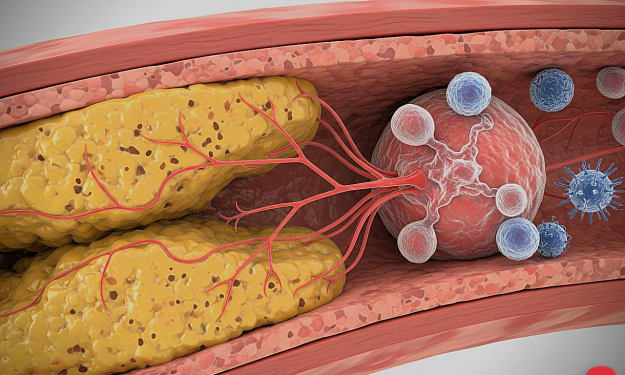
When Blocked Arteries Feed Cancer
In a major breakthrough, scientists have discovered that restricted blood flow, a common problem in diseases like peripheral artery disease (PAD), can speed up cancer growth by aging the immune system before its time. The research, published on August 19, 2025, in JACC: CardioOncology, connects two health concerns cardiovascular disease and cancer in ways that could change how patients with both conditions are treated.
By Muzamil khanabout a year ago in Futurism