evolution
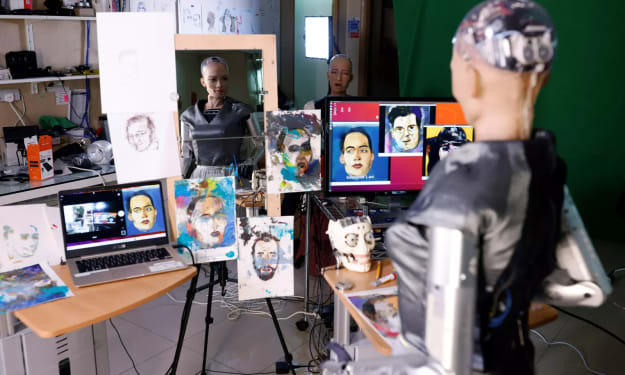
The evolution of science, science fiction, and mankind throughout the years.
The Challenges of Electric Vehicle Adoption:
The rising popularity of electric cars and trucks has created a significant shift in the automotive industry. However, despite their growing demand, a recent survey conducted by the Sierra Club reveals that the majority of car dealerships in the United States still do not have electric vehicles (EVs) available for sale. This article examines the reasons behind this trend and explores the obstacles faced by car dealerships in embracing the electric revolution. The first on the list is "Limited Supply Chain and Manufacturing Challenges": One key factor contributing to the scarcity of EVs at dealerships is the current supply chain blockages affecting the automotive industry. Shortages in semiconductor and battery production have hampered manufacturers' ability to meet the increasing demand for electric vehicles. Major carmakers, including Honda, Toyota, and Stellantis, struggled to offer EVs anplug-in hybrids in North America last year. Consequently, a significant portion of car dealerships lacked EV inventory due to the manufacturers' limitations. The "Economic Disruptions and Business Model Concerns" is another major concern: While supply chain issues play a significant role, the reluctance of some dealerships to sell EVs goes beyond production challenges. The traditional car sales model, which relies on the economics of internal combustion engine (ICE) vehicles, can create friction when transitioning to EVs. Dealerships often operate as independent franchises, setting their own prices and incentives. EVs, with their reduced maintenance needs and fewer mechanical parts, pose a potential disruption to the revenue streams derived from traditional ICE vehicles. This economic disparity can deter some dealerships from actively promoting EVs. Monopoly of Dealerships and Limited Choices: Manufacturers grant dealerships exclusive rights within a given area, resulting in a limited selection of EVs available to buyers. If a dealer is resistant to stocking electric cars and trucks, potential buyers might be left without nearby options for the specific EV models they desire. This lack of variety stems from the monopolistic structure of dealership distribution, wherein manufacturers exercise control over the products offered in a given region. However, the emergence of all-electric carmakers like Tesla and Rivian, advocating for direct-to-consumer sales, challenges this model and offers a potential solution to expand the availability of EVs. Another crucial factor is, "Role of Dealerships in EV Education and Support": Car dealerships play a crucial role in educating consumers about EVs, including charging infrastructure, maximizing range, and government incentives. While online resources exist, the importance of human interaction in guiding first-time EV buyers cannot be understated. However, the transition to electric vehicles presents a learning curve for both dealerships and customers. EVs require different maintenance procedures and software updates, which can pose challenges for dealerships accustomed to traditional combustion engine vehicles. Lastly, "Infrastructure Investments and Balancing Cost Factors": To accommodate EV sales, dealerships need to invest in infrastructure upgrades, such as installing fast chargers and training staff to handle EV-related services. These investments come at a significant cost, as seen in Ford's EV certification program, which can amount to millions of dollars for a dealership. Balancing the need for EV infrastructure investments against the current borrowing costs and higher sticker prices of EVs becomes a delicate challenge for dealerships. The transition to electric vehicles faces several hurdles that contribute to the limited availability of EVs at car dealerships. Supply chain disruptions, economic considerations, dealership monopolies, and the need for infrastructure investments all influence the pace of EV adoption. However, the industry is undergoing a transformative shift, with EV sales steadily increasing worldwide. As more states consider revising dealer franchise laws and adopting direct sales models, the accessibility and availability of EVs are expected to improve. With continued innovation and collaboration between manufacturers, dealerships, and customers, the vision of widespread electric vehicle adoption can be realized.
By Batholomew Okeke 3 years ago in Futurism
The Rise of Remote Work
Introducti0n The COVID-19 pandemic has brought about a significant shift in the way businesses operate, with remote work becoming the new norm. The traditional office-based work culture has given way to flexible work arrangements, allowing employees to perform their duties from the comfort of their homes. This article explores the rise of remote work and how businesses have adapted to this new paradigm, examining the benefits, challenges, and strategies employed by organizations to ensure productivity and employee well-being in a remote work environment.
By Mohammed Askee3 years ago in Futurism
10 surprising things that rely on artificial intelligence
Artificial intelligence (AI) has transformed many aspects of our lives for the better. It even played a role in developing vaccines against COVID-19. But you may be surprised just how many things we take for granted that rely on AI.
By nizam uddin3 years ago in Futurism
TIMELESS....is there really a beginning.
The beginning... or was it "TIMELESS"? In the vast expanse of existence, where time weaves its intricate tapestry, lies a profound enigma. It is a question that has haunted philosophers, scientists, and dreamers alike since the dawn of consciousness: What truly marks the beginning? Is it a singular point in time, a definitive event that sparked the grand symphony of the cosmos? Or is it an eternal presence, forever entwined with the fabric of reality? As we embark on a journey of introspection, let us explore the depths of this timeless mystery. Perhaps, just perhaps, the answer lies not in a linear narrative but in the intricate dance of perception and perspective. Imagine, for a moment, the cosmos unfurling its majestic cloak. Stars ignite like celestial fireflies, galaxies collide in an awe-inspiring ballet, and nebulae birth new worlds. Yet, in this grand spectacle, where does the genesis truly lie? Was it within the primordial explosion that birthed the universe, or did time transcend its own boundaries, tracing back to an existence before existence? In the realm of human consciousness, the notion of a beginning often takes shape as a defining moment—a catalyst that propels us forward into the realm of existence. It is the first breath we draw, the moment our hearts beat with purpose, and the instant our souls awaken to the wonders of the world. Yet, even in our most profound experiences, can we truly pinpoint the origin of our being? Perhaps the concept of time itself is an illusion—a construct that our finite minds impose upon the infinite. If time exists beyond the confines of our perception, then the notion of a beginning becomes but a mirage in the vast desert of existence. It becomes an enigma, forever shifting and morphing as we explore the depths of our own consciousness. Consider the whispers of ancient wisdom, passed down through the ages like fragments of forgotten dreams. They speak of cycles and epochs, of civilizations rising and falling, only to be reborn in the infinite tapestry of time. Could it be that the notion of a beginning is merely an illusion, a figment of our limited perception? Yet, within the confines of this timeless mystery lies an extraordinary opportunity for introspection. For it is in the spaces between the lines, in the gaps of our understanding, that inspiration finds its foothold. In the absence of certainty, we are propelled to question, to explore, and to uncover the depths of our own existence. Embrace the enigma, dear reader, for it is through the pursuit of the unknown that we awaken the dormant embers of our souls. Let us revel in the beauty of uncertainty, for it is within this vast expanse of possibility that our true potential is realized. As we journey through the realms of time and consciousness, let us shed the shackles of preconceived notions and venture into the uncharted territories of our own curiosity. And so, as the timeless mystery of the beginning entwines with our thoughts, may we embrace the uncertainty, the inspiration, and the everlasting quest for knowledge. For in the pursuit of understanding, we discover that the answers we seek are not confined to a singular moment or event but are woven into the very fabric of our being.
By Sisejumbotonma Princewill3 years ago in Futurism
THE FUTURE OF SPACE EXPLORATION
INTRODUCTION Space exploration has always fascinated humankind, touching off our interest and pushing the limits of what we are familiar the universe. Throughout the long term, critical steps have been made in space investigation, from the notorious Apollo moon missions to the automated wanderers investigating Mars. However, what lies ahead? What does the future hold for space investigation? In this article, we will dig into the thrilling possibilities and progressions that are forming the eventual fate of room investigation.
By FLYING WHALE3 years ago in Futurism
How artificial intelligence can help us prepare for climate adaptation
Despite climate mitigation efforts to keep global warming below 1.5°C, many experts expect the world to warm by 3.5°C by the turn of the next century. This ever-warming world has brought floods and wildfires and the loss of life with more disruption expected in the decades to come.
By nizam uddin3 years ago in Futurism
How artificial intelligence is helping us decode animal languages
For years, artificial intelligence (AI) and machine learning has been used to analyze and translate human languages. This field of research has helped expand human communication channels as well as led to new language-based technologies like advanced chatbots and voice command smart devices.
By nizam uddin3 years ago in Futurism