conventions
Science fiction conventions and comic conventions for every type of science fanatic.
Brain-Computer Interfaces: Merging Minds with Machines. AI-Generated.
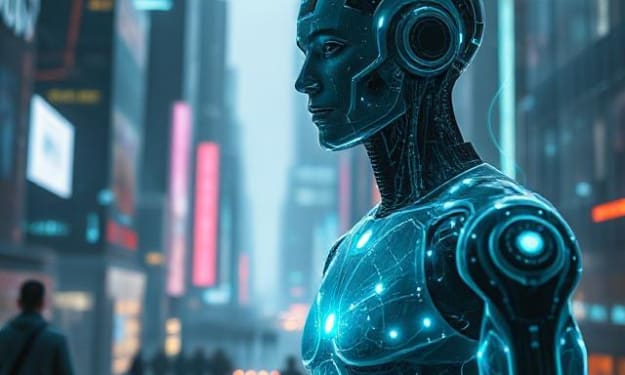
The Age of Mind-Machine Integration Imagine thinking a command and having a computer, a robot, or even a smart home execute it instantly—without saying a word. Brain-computer interfaces (BCIs), once the realm of sci-fi, are now rapidly advancing. From controlling robotic arms to streaming thoughts into virtual reality, BCIs promise to merge human cognition with machine intelligence in ways never before possible. Neural implants, such as Elon Musk’s Neuralink, aim to read and write information directly to the brain, potentially enhancing memory, learning, and communication. While the technology is still experimental, early trials show remarkable results: paralyzed patients controlling robotic limbs, individuals restoring lost sensory function, and people interacting with computers using thought alone. --- How Brain-Computer Interfaces Work At the core of BCIs are neural sensors capable of detecting electrical activity in the brain. These sensors convert neuronal signals into digital commands that machines can understand. Two main types exist: 1. Invasive BCIs: Implanted directly into the brain tissue, offering high-precision readings but requiring surgery. 2. Non-Invasive BCIs: Placed on the scalp, like EEG headsets, offering lower precision but easier application. These signals are processed using AI algorithms, which decode complex thought patterns and convert them into actionable instructions. The potential applications range from medical therapy to everyday life augmentation. --- Real-World Applications
By Muhammad Riazabout a year ago in Futurism
The Quantum Internet: How Ultra-Fast Networks Could Redefine Connectivity. AI-Generated.
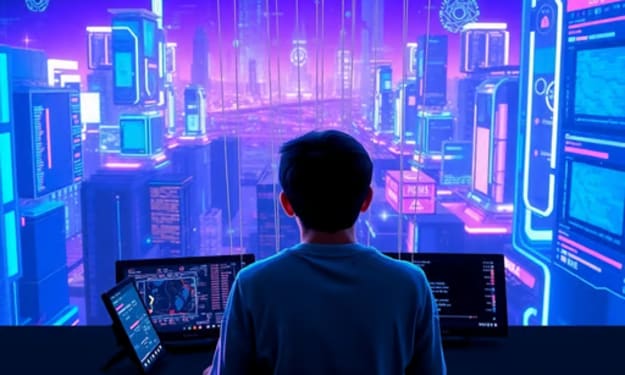
Enter the Era of the Quantum Internet Imagine sending a message across the globe in the blink of an eye—faster than any fiber optic cable or 5G network could ever allow. This is not science fiction; it’s the promise of the quantum internet, a revolutionary technology that could transform communication, security, and computation forever. Unlike the traditional internet, which relies on bits that are either 0 or 1, the quantum internet uses qubits, capable of existing in multiple states at once thanks to the principle of quantum superposition. This enables instantaneous data transmission across vast distances through quantum entanglement, creating a network that is both ultra-fast and virtually unhackable. --- How It Works The quantum internet relies on three main innovations: 1. Quantum Entanglement: When two particles are entangled, a change in one instantly affects the other, no matter the distance. This phenomenon allows for instantaneous communication that defies classical physics. 2. Quantum Repeaters: To transmit entangled qubits over long distances without losing fidelity, quantum repeaters act as relay stations, maintaining the integrity of the quantum signal. 3. Quantum Encryption: Quantum networks can use quantum key distribution (QKD) to ensure that data remains secure. Any attempt to intercept the information immediately alters the qubits, alerting the sender to a breach. In essence, the quantum internet promises speed, security, and reliability far beyond today’s capabilities. --- Potential Applications
By Muhammad Riazabout a year ago in Futurism
The Rise of Digital Humans: AI Clones and Virtual Immortality
The Dawn of Digital Humans Imagine a world where your personality, memories, and even appearance can be stored digitally—and continue to interact with loved ones long after you’re gone. What once sounded like science fiction is rapidly becoming a technological reality. AI-driven “digital humans” or virtual clones are emerging, offering a glimpse into a future where human consciousness and artificial intelligence merge. Tech giants and research labs are racing to create AI avatars that think, speak, and respond like real people. Using deep learning, natural language processing, and neural networks, these AI clones can replicate the way you write, speak, and make decisions. In effect, they become digital versions of yourself—capable of chatting, teaching, or even working on your behalf. --- How AI Clones Are Built Creating a digital human requires three main components: 1. Data Collection: Everything from your social media posts, emails, and voice recordings to videos and photographs is analyzed. 2. Neural Modeling: AI systems model your language patterns, decision-making habits, and even emotional responses. 3. Avatar Creation: The digital representation can appear as a realistic 3D humanoid or a voice-only assistant capable of interaction. The result is astonishing. These AI clones can hold conversations, answer questions, and mimic your sense of humor or personality quirks. Some developers even imagine virtual immortality, where your AI continues to interact with future generations, preserving your identity beyond your physical life. --- Real-World Applications
By Muhammad Riazabout a year ago in Futurism
Why This Weekend May Be The Best Time To See The Perseid Meteor Shower
Every August, the night sky treats us to one of nature’s most mesmerizing spectacles — the Perseid meteor shower. Known for its dazzling display of “shooting stars,” the Perseids are a highlight for both seasoned astronomers and casual skywatchers. While the meteor shower’s official peak happened earlier this week, bright moonlight robbed many people of the show’s full beauty. Fortunately, this weekend could offer a second chance — and perhaps an even more magical viewing experience.
By Muhammad Sabeelabout a year ago in Futurism
"The AI-Powered Workday: How Artificial Intelligence Is Redefining Productivity in 2025"
Introduction: The Quiet Takeover of AI in Everyday Work In 2025, artificial intelligence isn’t a distant concept discussed in tech conferences — it’s part of your morning routine before you even finish your coffee. From drafting emails to managing schedules, AI has quietly become the backbone of modern productivity. For professionals across industries, the question isn’t if AI will change the way they work — it’s how fast and how far the transformation will go.
By Tousif Arafatabout a year ago in Futurism
The ‘9-9-6 Work Schedule’ Could Be Coming To Your Workplace Soon
AI startups are glorifying exhaustion for the sake of productivity, implementing the “9-9-6 work schedule” in an attempt to “win the AI race," according to recent reports. Tekendra Parmar, writing in last month’s Inc., says, “In a bid to outpace Chinese rivals, some AI startups are adopting that country’s grueling “9-9-6 work schedule.” But the future of work might actually lie in working less, not more.” Parmar adds that the “9-9-6 work schedule” could actually hurt instead of help productivity.
By Muhammad Sabeelabout a year ago in Futurism
Apple iPhone 17 Release Date: Your Complete Countdown
Apple enthusiasts worldwide are gearing up for what promises to be one of the most exciting iPhone launches in recent memory. This September, Cupertino's tech giant will unveil not just three, but four groundbreaking devices: the standard iPhone 17, the feature-packed iPhone 17 Pro, the massive iPhone 17 Pro Max, and the completely reimagined iPhone 17 Air—a remarkably thin device that's generating unprecedented buzz in the tech community.
By Muhammad Sabeelabout a year ago in Futurism