buyers guide
Science fiction, fantasy, and science items for home, work, travel, and beyond.
I Used Both a Portable Wi-Fi Projector and a Full HD Smart One—Here’s What Surprised Me
"I once projected a movie on the side of my garage. My neighbors thought I’d installed a new outdoor TV." Spoiler: I didn’t. I just had a portable Wi-Fi projector—and it changed how I see movie night forever.
By The Reliable Guyabout a year ago in Futurism
The Art of Illusion: When Fire Meets Magic in the Palm of a Hand
In the mesmerizing image above, a delicate balance of danger and wonder is captured. A hand extends outward, fingers curled as though summoning a force unseen, while four aces hover mid-air—engulfed in flames and trailing smoke as if plucked from a magician’s wildest dream. This photograph doesn’t just depict a moment; it evokes an entire narrative, one that dances between illusion, control, chaos, and the elemental essence of fire. It stands at the intersection of art, magic, and metaphor.
By Fazal Malikabout a year ago in Futurism
Revolution in His Eyes: The Timeless Symbolism of a Rebel’s Roar
Introduction In the heart of any revolution lies not just the chaos of conflict, but the fire of human willpower. Captured in the image above is a powerful moment that encapsulates that spirit: a man mid-battle cry, gun in hand, passion etched into every line of his face. His clothes are rugged, his gear practical, and his stance unmistakably defiant. This is not merely a photo—it is a visual symphony of rebellion, courage, and ideology. Whether staged or real, symbolic or literal, this single frame serves as a tribute to the human drive to resist oppression.
By Fazal Malikabout a year ago in Futurism
I Made My First $100 Online While Crying in My Parents' Basement
"I Made My First $100 Online While Crying in My Parents' Basement" Genre: Memoir / Emotional Survival I was 27 years old, broke, and living in my parents' basement—the same one I used to play hide and seek in as a kid. But this time, there was no game, no giggles, and nowhere left to hide.
By waseem khanabout a year ago in Futurism
The Sacred Scent: The Timeless Mystery and Majesty of Oudh (Agarwood)
What is Oudh? “عود کیا ہے؟” — What is Oudh? Oudh, also known as Agarwood, is no ordinary wood. It is a dark, resinous heartwood that forms inside Aquilaria trees when they become infected with a specific type of mold. But the story of Oudh is far more than just a biological reaction. It's a sacred tree, a religious symbol, a medicine, and a luxury fragrance—deeply rooted in the spiritual, historical, and economic fabric of multiple civilizations. In Arabic, it is known as "عود" (Oudh). In English, it is often referred to as Agarwood, Aloeswood, or Eaglewood. But across cultures and continents, it is revered by many names—each reflecting its mystique, rarity, and intoxicating aroma. --- Religious and Spiritual Significance Oudh holds a profound spiritual status in three major world religions: Islam, Hinduism, and Buddhism. In Hinduism The ancient Hindu scripture Rigveda (written around 1500 BCE) mentions Oudh as a sacred element used in rituals and purification ceremonies. It was burned in sacred fires and temples to invoke divine energy, calm the mind, and please the gods. In Buddhism In Buddhist traditions, especially in Southeast Asia, Oudh is used in meditation halls and temples. Monks burn Oudh to create a peaceful environment and to aid in reaching deeper states of mindfulness and enlightenment. In Islam Islamic tradition also holds Oudh in high regard. It is said that Prophet Muhammad ﷺ appreciated the use of Oudh and encouraged its usage. In Sahih al-Bukhari, Hadith 5692 (Kitab al-Tibb), the Prophet ﷺ said: > "Use Indian Oudh, for it contains healing for seven diseases." This Hadith is a strong indication of the medicinal and spiritual significance that Oudh carries in Islam. Pilgrims who visit the Holy Kaaba in Makkah are often overwhelmed by a mesmerizing fragrance in the sacred precincts. That heavenly scent? It rises from the burning of Oudh chips inside the mosque. The Kiswah (the black cloth covering the Kaaba) and the Hajar al-Aswad (Black Stone) are also regularly perfumed with Oudh oil, lending the holy site its soul-stirring atmosphere. --- A Fragrance Worth Its Weight in Gold Oudh is considered one of the most expensive natural products in the world. Its oil, known as “Dehn al-Oudh”, is distilled from infected Agarwood and is one of the costliest essential oils globally. The price of this oil can go up to $80,000 per liter, depending on purity and origin. The wood itself, when sold as chips or powder for burning, ranges from $200 to $5,000 per kilogram. The rarest and most sought-after variety of Oudh is known as "Kyara" or "Kynam". This specific kind, found in regions like Vietnam and Laos, is so rare and pure that a single kilogram can cost up to $9 million USD. In fact, a small piece of Kynam—just 2 kilograms—was sold in Shanghai for $18 million a few years ago. In Bangkok, a Buddhist temple houses an ancient Agarwood tree that has received a valuation of $23 million USD. Yes, a single tree. But why is it so valuable? --- Why Is Oudh So Expensive? Several reasons explain the astronomical price tag of Oudh: 1. Rarity Only a small percentage of Aquilaria trees naturally produce Agarwood. Out of thousands, only a handful become infected in a way that leads to the formation of resinous heartwood. 2. Slow Formation Even when infection does occur, it takes years or decades for the resin to mature and become aromatic enough to harvest. 3. Manual Extraction The harvesting process is labor-intensive, often requiring expert hunters to detect and extract the infected heartwood without damaging the tree. 4. Increasing Demand Global demand for Oudh is surging, especially in luxury markets of the Middle East, Japan, China, and Europe. In Arab culture, Oudh is synonymous with royalty and elegance. In high society, it is sprayed on garments, burned during gatherings, and gifted in weddings and royal ceremonies. --- Healing Properties of Oudh Apart from its spiritual aura, Oudh also offers medicinal and psychological benefits: Sedative and Sleep Aid: The vapor from Oudh has a calming effect on the brain, which promotes deep sleep and helps relieve anxiety. Anti-inflammatory: It’s used in traditional medicine for joint pain, arthritis, and muscle stiffness. Skin Treatment: Its oil is applied in creams for eczema, acne, and anti-aging treatments. Digestive Aid: In herbal medicine, small doses of Oudh are used to relieve indigestion and nausea. Cancer Research: Some modern studies suggest potential anti-cancer properties, though more research is needed. --- Oudh and Meditation In meditation traditions, particularly in Japan, Tibet, and Sufi circles, Oudh is burned as incense to aid in spiritual focus. Its scent is believed to help balance the chakras, promote mental clarity, and establish a sacred presence in the space. Practitioners of yoga, deep breathing, mindfulness, and dhikr often rely on Oudh to transport the mind into higher states of awareness. --- A Billion-Dollar Industry with Fragile Roots The global Oudh industry is currently worth around $32 billion and is expected to double in the next 8 years due to rising demand in perfumery, traditional medicine, and luxury wellness. But here's the issue: the supply is not keeping up. Why? Because: Natural production is limited. Aquilaria trees are now endangered in many countries. Illegal logging and unsustainable harvesting threaten the natural balance. Cultivation efforts are still catching up with demand. This imbalance of low supply and high demand keeps the price sky-high and fuels a booming, competitive, and often secretive global market. --- Conclusion: The Fragrance of Legacy Oudh is not just a perfume. It is a legacy in scent, a bridge between the material and the spiritual, and a testament to human reverence for nature’s miracles. From the temples of Bangkok to the Holy Kaaba in Makkah, from the Buddhist monasteries of Tibet to the royal palaces of Arabia, this wood has touched hearts, minds, and souls for millennia. In a world flooded with artificial fragrances and synthetic pleasures, Oudh reminds us of something timeless—that true beauty, like true faith and healing, is rare, natural, and sacred.
By Ikram Ullahabout a year ago in Futurism
How Devstral's AI Coding Agent Is Revolutionizing Development in 2025 (And How You Can Use It). AI-Generated.
In 2025, the landscape of software development is undergoing a seismic shift. Developers are no longer chained to repetitive tasks or wading through countless lines of boilerplate code. Instead, a new breed of AI — Devstral, the programming agent by Mistral AI in partnership with All Hands AI — is rising, one that reads, understands, autonomously modifies actual codebases, and even creates pull requests. This isn’t just another autocomplete tool. Devstral represents a fundamental evolution: it behaves like a junior engineer who works independently, handling complex multi-file issues, testing code, running CI pipelines — all correctly — at scale. And the best part? Devstral is open-source, free under Apache 2.0, and can run locally—even on something like a MacBook with 32 GB RAM or a single RTX 4090 GPU. It's a revolution accessible to indie devs, startups, and enterprises alike . --- Imagine this: you’re a solo developer maintaining a mid-sized repository with 50–200 files. One failing test is breaking your CI. Normally, you'd spend hours debugging. With Devstral, you feed it the repo with the tests failing, and in minutes it will: 1. Track down the failing module, 2. Write or edit code to pass tests, 3. Run your tests locally, 4. Open a pull request with changes, complete with properly formatted messages. All autonomously. No tasks for you except review, merge, and move on. --- 1. Why 2025 Is Devstral’s Breakthrough Year Agentic capabilities: Devstral spans full codebases, not just snippets. It understands inter-file dependencies—a leap beyond GPT‑style models . Top-tier benchmark results: It scored 46.8 % on the SWE‑Bench Verified dataset—beating all other open-source models by 6 points and even surpassing closed-source GPT‑4.1–mini by over 20 % . Hardware efficiency: Runs locally on mainstream machines—no need for cloud or subscription overhead . Open-source license: Apache 2.0 allows you to use, modify, and even sell tools built on Devstral . This combination—autonomy, performance, accessibility, and flexibility—is what makes Devstral a game changer in 2025. --- 2. Real-World Advantages for Developers & Teams Here’s what Devstral means in practice: Rapid bug resolution in minutes, not hours—without shifting context manually. Automated test creation when none exist—fills gaps by understanding intent and working code. Seamless CI/CD workflows: Devstral respects shell commands, Git history, and branching structure, producing clean PRs ready for review . Pair-programming 24/7: Work with an AI collaborator that never sleeps, gets sick, or requires caffeine. Privacy-first local execution: No code leaves your machine. No wonder Devstral is hitting buzz in Vocal.io’s Futurism section, Reddit threads, LinkedIn developer circles, and GitHub communities everywhere . --- 3. How to Get Started with Devstral (Step‑by‑Step Guide) Step 1: Set Up Locally Choose [Devstral Small or Small 1.1] and follow the quick-start guide: git clone, bootstrap the environment, and you’ll be ready on your local machine in under 10 minutes . Step 2: Connect to Code Agent Scaffold Integrate with OpenHands or SWE‑Agent scaffolding to handle test-run loops and persistent context . Step 3: Choose Your Test Repo Pick a project with failing tests. Something open-source or in your backlog. Step 4: Let Devstral Run Run the scaffold command. Devstral will analyze, update, test, and re-run until everything passes. Step 5: Review & Merge Devstral opens a PR. You review, chat with it if needed, approve, and ship. --- 4. 3 Ways You Can Build a Side Hustle Around Devstral This isn't only a tool—it’s a business opportunity: 1. Devstral Setup Service Help small teams integrate Devstral into CI/CD pipelines. Charge $500–$1,500 per setup with added value in docs, customization, and training. 2. Autonomous Code Agent Maintenance Offer recurring service to monitor repos. When Devstral opens PRs, you review, merge, or refine. Subscription-based earnings. 3. Packaged Devstral Agent Templates Create niche-specific scaffolds (e.g., Django agent, React SPA agent) and sell on Gumroad or equivalents. Developers love time-saving templates. --- 5. Caution & Best Practices Security: Run on internal repos only—review PRs carefully. Test coverage requirement: Works best when repositories already have test suites. Human oversight essential: Treat Devstral as a co-pilot, not a replacement. --- 6. What’s Next: Devstral Medium & Beyond As of July 2025, Devstral Medium is available via API, improving benchmarks to 61.6 % accuracy on SWE‑Bench Verified—surpassing GPT‑4 and Gemini at a fraction of the cost . This version is ideal for cloud deployment and even deeper automation. Mistral AI signals this is just the start: plans for larger agentic models and fully autonomous software engineering pipelines are underway . --- Final Takeaway Devstral isn’t a trivial code assistant—it’s a full-stack software engineering agent designed for real-world productivity. Its open-source license, top benchmark performance, and machine-level integration position it as a core pillar of AI development in 2025. If you're building software, coaching teams, or seeking a new side hustle, Devstral is your entry point to agentic AI-powered workflows. The future isn’t just code—it’s code that codes itself. ---
By MOHAMMED AL-HAJJabout a year ago in Futurism
How AI Agents Are Redefining Customer Support in 2025—and How You Can Use Them to Profit . AI-Generated.
In 2025, customer support isn’t just fast—it’s intelligent. AI-powered agents have moved far beyond basic chatbots; they now deliver conversation-level empathy, context awareness, and even proactive problem solving that transforms brands and unlocks new ways to generate income. From global enterprises to solo entrepreneurs, these digital assistants are redefining expectations—and creating major business opportunities. Imagine a world where every support inquiry is met within seconds, where systems understand your customers’ tone and sentiment, and where agents work 24/7 without burnout or salary. That world is happening now, powered by breakthroughs in generative AI, natural language processing, and seamless integration with business tools. But what’s even more exciting is how ordinary users like you and me can get in on this revolution—and profit from it. Let’s dive into what AI support agents do today, how they’re reshaping industries, and four concrete ways you can ride the wave (even without being a tech expert). --- Today’s top AI agents—Zendesk AI, Intercom Fin, Drift, Tidio AI, and ChatBot.com—use the latest GPT-5 based models that understand not just words, but context, intent, tone, and feel. They can answer complex queries, escalate only what needs a human, upsell when it makes sense, and even follow up to confirm satisfaction. This level of sophistication changes the game overnight. Deployment has never been easier—no hard coding, no long integration cycles—just sign up, train your bot, integrate it, and you instantly upgrade your customer experience. So, why is 2025 the turning point? For one, GPT-5 delivered emotionally aware replies and real-time sentiment detection. Businesses are now able to deploy support assistants that recognize frustration or joy—and adjust tone accordingly. They also now serve customers globally with fluent support in over 50 languages. This year saw enterprise-level tools becoming affordable and effective for even micro and small businesses. That’s why adoption isn’t just happening—it’s exploding. But what does this mean for you? If you own a store, run an online course business, consult, coach—or even want to build a side hustle—AI agents offer new revenue streams you can tap into right now. Here are four of the most impactful ways to profit: --- 1. Launch an AI Agent Setup Service Small businesses know support matters—but hiring staff is expensive. That’s your opening. Learn how to implement bots on platforms like Tidio or Drift, package your service, and charge between $500–$2,500 as a one-time setup or monthly retainer. Hundreds are already generating full-time income in this space. 2. Build Niche Bots to Resell Pick a specialized niche—like lawyers, fitness coaches, or B&B hosts—and create an AI agent template with FAQs, upsell options, and follow-up flows. Sell it on marketplaces, Gumroad, or your own site. Once built, you can resell it again and again with minor adjustments. 3. Create AI Prompt Packs Brands and solopreneurs need optimized prompts to get their bots sounding like them. Write tailored prompts—like “gym membership upsell” or “tech support triage”—and package them as bundles. Prices? $20–$75 per pack. These are low-effort, high-margin digital products you only create once. 4. Educate & Monetize With hands-on knowledge, you can launch mini-courses, eBooks, or membership groups teaching others how to profit from AI support. Platforms like Gumroad, Skillshare, or your own website can help you reach a global audience. Even a small funnel could generate thousands per month with the right positioning. --- Wondering which tools actually deliver? Here are the market leaders in 2025: Zendesk AI: Enterprise-grade with full CRM integrations and agent routing Intercom Fin: Best for startups—user-friendly with smart conversational AI Drift: B2B marketer's favorite, includes account-based chat and AI-driven lead capture Tidio AI: E-commerce ready, affordable yet robust ChatBot.com: Drag-and-drop bot builder with multichannel support --- All these platforms offer free trials or forever-free plans, so you don’t need to invest upfront. The real investment? Your time in learning the platform and marketing your services. --- Real-world success stories show the promise: Emily, a freelancer in Brazil, made $4,500/month designing Drift bots for real estate agencies. Zane from the Philippines created a Shopify Tidio agent that increased a store’s conversion rate by 30%, earning $7,000 from a single bolt-on sale. Brianna, a marketing freelancer, sells chat prompt packages and AI agent cheat-sheets on Gumroad, hitting six figures in two years. These aren’t flukes—this is the new money in AI. --- So what’s next? AI isn’t here to replace humans—it’s here to boost them. The role of “Support Bot Specialist” or “AI Agent Coach” is becoming a real career path. As support plays a bigger part in brand loyalty, those who build and maintain AI agents will be the backend heroes. --- ✅ How You Can Start Today 1. Pick a tool—try Tidio or ChatBot.com’s free plan. 2. Sign up and explore templates or tutorials. 3. Set up a demo agent for a friend or side project. 4. Test it, tweak it, and gather feedback. 5. Launch your service—offer setup, optimization, or premium bot consultation. --- Final thoughts AI-powered customer service agents are no longer optional—they’re expected. They are smart, cost-effective, and bring real ROI. More importantly, they are your opportunity. If you’ve been waiting for a side hustle or freelance niche that blends future-forward AI with real demand, this is it. The platforms are ready, the market is growing, and the tools are accessible. You just need to act. Build, package, and start profiting.
By MOHAMMED AL-HAJJabout a year ago in Futurism
🎙️ How Dubnote’s AI-Powered Voice-Memo App Can Generate Real Passive Income in 2025
We all know the feeling: that lightning-bolt idea strikes while you're grabbing morning coffee or cruising down the road. You instinctively hit record on your phone’s voice memo app to capture that sharp thought. But then, it gets buried—lost in a flood of nameless clips that may never see the light of day again. Dubnote, the brand-new AI-powered voice-memo tool launched in July 2025, changes that forever. Dubnote isn’t just another voice app. It's designed by Vochlea, the creators of Dubler 2—the celebrated voice-to-MIDI tool for musicians. This app is built to transform chaotic voice snippets into structured, tagged, transcribed, and exportable gems—all with professional polish. With features like automatic section splitting, tempo detection, searchable tagging, and on-device privacy-first processing, Dubnote was released with a free lifetime Premium tier for one day—a limited window that signals a strong leap into monetizing voice recordings in a major way . --- What Makes Dubnote Unique? Imagine capturing an idea and immediately having it transformed into a ready-to-use piece of content—whether it’s a blog, podcast, lyric demo, educational snippet, or digital micro-product. Dubnote does exactly that. It slices your recordings into logical chapters, identifies tempo shifts, extracts keywords or emojis as tags, and transcribes speech or lyrics. Want to grab the chorus or a catchy phrase? Use time-stamps or favorite markers. Then export everything in high-quality WAV or AAC formats and back it up securely to iCloud—no cloud AI, no data leakage. That’s more than convenient. That’s revolutionary . --- Turning Voice Snippets into Income Streams Dubnote isn’t just about organization—it’s a silent engine for content creation and monetization. Let me walk you through how this translates into real money in 2025: 1. Blog and Learning Micro‑Content Record a 2‑3 minute idea about sustainable living or productivity. Dubnote structures the audio and provides a transcript. Convert that into a mini blog or learning nugget and publish it on Vocal.io (or Medium/your blog), monetize through partner programs or memberships. 2. Micro‑Podcast Episodes You don’t need a studio. Publish four-minute episodes with timestamps and show notes, adopt listener-supported models or sponsorships via platforms like Anchor or Podbean. 3. Sell Audio Micro‑Products Maybe you package five voice memos on fitness routines or guitar riffs as digital audio packs on Gumroad, priced between $5–15. Export from Dubnote, layer a gentle background, done. 4. Voice‑Guided Courses Lay out course modules by speaking your curriculum. Use Dubnote to organize lessons, tag sections, export files, bundle them into a compact audio course priced affordably. 5. Freelance Transcription & Structuring Capture client interviews, organize using Dubnote, transcribe and tag. Deliver polished files to clients on Fiverr, Upwork, or direct—premium service with minimal effort. --- Getting Started: The 5-Step Passive Income Plan 1. Download Dubnote—grab the limited-time free Premium tier right now. 2. Record 5 daily voice memos in your niche—podcasting ideas, songwriting snippets, life tips. 3. Export structured files—audio plus transcript, tags, timestamps. 4. Repurpose the content—turn it into blog posts, podcasts, audio guides, courses, or even freelance deliverables. 5. Distribute with strategy: Vocal.io / Medium articles Gumroad / Teachable offers YouTube Shorts or TikTok audio clips AI‑focused groups on Reddit, Facebook, X Email list or newsletter tools to link your content --- A Real-Life Example: “Kitchen Corner Chat” Emily, a food blogger, used Dubnote to record daily tip-of-the-day voice notes while cooking. She exported five-star audio clips, added quick intros, and sold them as a $7/month subscription on Patreon. Within six weeks, she had 80 subscribers—that’s about $560/month for minimal effort and zero studio time. All of this from her phone and Dubnote—and in June she got featured in a community newsletter after linking her Vocal.io post. --- Why It’s the PERFECT Moment to Ride This Wave Voice-first platforms and AI voice automation are exploding. Voice memos are widely used—WhatsApp sees 7 billion daily . Dubnote is fresh, exclusive, and positioned as a premiere tool. The launch-day free lifetime offer creates urgency—a powerful hook in any promotion strategy. This concept aligns with emerging trends—micro-products, low-barrier income, voice monetization, content repurposing, and AI tools tailored to creators. --- Sealing the Deal: Your Next Steps Track this roadmap to passive income: Publish your Vocal.io article using the text from here. Use short social media posts in niche groups across Facebook, Reddit, X, and LinkedIn. Design an email mini-campaign targeting your audience with a strong hook: “I turned 2-minute voice notes into $500 this month—no studio needed.” Track results: Claps, reads, downloads, or subscribers—iterate based on what works. Start writing...
By MOHAMMED AL-HAJJabout a year ago in Futurism
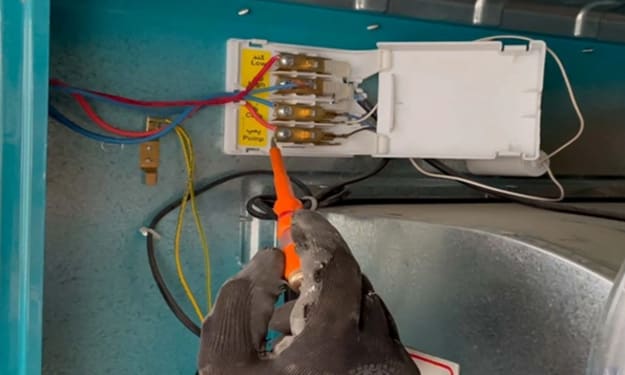
How to Test an Evaporative Cooler Motor with Direct Power + 4 Common Cooler Issues Explained. AI-Generated.
If your evaporative cooler (also known as a swamp cooler) isn’t working as expected, the issue might lie with its motor—or one of several other common culprits. In this post, we’ll walk you through how to safely test a cooler motor with direct electricity, and then break down the 4 most common cooler problems, along with practical solutions.
By handy maneshonabout a year ago in Futurism
Ibn Tufail: The Andalusian Philosopher Who Inspired Tarzan, Robinson Crusoe, and The Jungle Book
In the heart of 12th-century Islamic Spain, known as Al-Andalus, a polymath named Abū Bakr Muhammad ibn ‘Abd al-Malik ibn Tufail, better known as Ibn Tufail, crafted a philosophical tale that would echo through centuries. His novel, Ḥayy ibn Yaqẓān (Alive, Son of Awake), tells the story of a boy raised by a doe on a deserted island, untouched by society. Through nature and reason alone, he discovers survival, morality, science, and God. This allegorical tale not only shaped Arabic literature but profoundly influenced European philosophy and inspired literary classics such as Tarzan, The Jungle Book, and Robinson Crusoe. Despite his revolutionary work, Ibn Tufail’s name remains lesser known outside academic circles, buried under the weight of time. --- The Tale of Ḥayy ibn Yaqẓān: A Boy, an Island, and the Quest for Truth The novel’s protagonist, Ḥayy, is mysteriously born or appears on an uninhabited island. Raised by a deer, he mimics animal behavior to survive. As he matures, he begins observing the natural world—studying the stars, dissecting animals, and investigating life and death. Through self-education and reflection, Ḥayy develops deep philosophical insights. He arrives at the concept of a singular, divine Creator and a moral code—without scripture, religion, or societal instruction. Eventually, he encounters another human—Asal, from a neighboring island—who introduces him to organized religion and civilization. However, Ḥayy discovers that most people are unable or unwilling to embrace deep philosophical truths. Disillusioned, he returns to his island, choosing solitude over superficial societal life. --- Ibn Tufail: Physician, Philosopher, and Astronomer Born around 1110 CE near Granada, Ibn Tufail was a physician, court official, and philosopher during the Almohad Caliphate. He served as a vizier to Caliph Abu Yaqub Yusuf and played a vital role in promoting intellectual life in Al-Andalus. As a physician, Ibn Tufail was among the early advocates of dissection and post-mortem examination—a bold stance for his time. His medical poem Rajaz Taweel fi al-Tibb explored disease diagnosis and treatment, recently rediscovered in Morocco. His contributions went beyond medicine. Ibn Tufail was a renowned astronomer who challenged Ptolemaic cosmology. He influenced later astronomers like al-Bitrūjī, helping pivot Islamic astronomy toward empirical observation and rational critique, foreshadowing the scientific revolution centuries later.
By Ikram Ullahabout a year ago in Futurism
"7 Smart Ways to Build Passive Income with AI in 2025 (Even While You Sleep)"
Did you know that people worldwide are automating their income in 2025 using nothing but AI tools and a smart strategy? These aren’t overnight miracles—they’re carefully assembled systems that generate money while you sleep. Let’s break down exactly how to craft your own AI-powered passive income streams step by step—without needing technical expertise. The first secret is to pick a model that aligns best with your interests and capabilities. You might choose one of these four powerful frameworks: 1. AI-generated digital products (ebooks, templates, printables). Create once, sell forever. 2. Faceless YouTube channels using AI voiceovers, scripts, and low-cost visuals. 3. AI tools for affiliate marketing, where AI builds and manages content and SEO-rich sites. 4. Micro SaaS agents: automated tools doing a small job for subscription revenues. Combine quality, automation, and distribution—and each of these can become a sustainable income source. --- 📚 AI-Generated Digital Products Start smart: identify a niche people care about—like mindfulness, finance, or productivity. Then: Use AI assistants (ChatGPT, Jasper, Claude) to outline and draft content—like a 7-day cleanliness guide or budgeting workbook. Polish with Canva or InDesign to design appealing PDFs or physical printables. Publish on Etsy, Gumroad, or Amazon KDP. ✅ Example: A mental-health workbook — created in a few hours, priced at $7+, sells 20 copies per month = $140/month. Over time, ranking builds and sales can grow organically. For best results, bundle related content into series or courses. --- 🎥 Faceless YouTube Channels with AI You do not need to show your face. Follow this model: Choose a niche: “Calming Fireplace Loops,” “AI-Generated History Facts,” or “Quick Productivity Tips.” AI generates scripts (ChatGPT), voices (ElevenLabs, Siri), visuals (Pexels or stock). Tools like InVideo, Descript, or CapCut automate editing. Upload daily or several times weekly; once monetized, channels earn via YouTube AdSense, affiliate links, or memberships. Some creators earn $0.30–$2.00 per 1,000 views, so even niche content with 100,000 views/month can make hundreds to thousands in passive income . The key is consistency. --- 🌐 AI-Powered Affiliate Marketing Want to avoid content creation? Use AI to craft SEO-rich affiliate sites: Pick a niche (e.g., “AI Tools for Small Businesses”). AI generates blog posts (1,000+ words), product reviews, comparisons. AI assists with SEO: headers, internal linking, meta descriptions. Use platforms like WordPress or Webflow, monetize via Amazon, ClickBank, or AI tool affiliate programs. This works well when AI handles bulk content and you focus on marketing or ad campaigns—trust is built with quality, not speed . --- 🤖 Micro SaaS with AI Agents The most advanced strategy: automation tools that run themselves. Identify a real need: e.g., screenshot summarizer, image tagger, or chatbot helper. Use no-code + AI (like OpenAI API, Zapier, Make.com). Deploy a low-cost web tool; charge monthly ($5–$20). Promote via Product Hunt, Hacker News, Reddit. This takes more setup time but pays off handsomely if solved pain points well, and can run on autopilot. Many such tools earn hundreds monthly with few active users . --- 🚀 Launch Strategy: Build Once, Earn Forever Follow this five-phase method: 1. Pick one model that fits your interests and skills. 2. Validate by asking your audience via surveys or small promotions. 3. Create MVP with AI assistance—make it real and polished. 4. Launch on platforms—Etsy, YouTube, niche blogs, Product Hunt. 5. Automate & optimize: use AI for customer support, SEO updates, posting, and email lists. Don't diversify too early—focus efforts, learn the model, then scale with more streams. --- ✅ Why It Works in 2025 AI drastically cuts content creation time. Toolsets are affordable or free for beginners. Demand exists—businesses and individuals want easy consumables (e.g., ebooks, templates). Algorithmic platforms still favor consistent, moderate-quality uploads—if your content is useful, discovery will follow. A recent Tom's Guide study found that AI side hustles work, but only for those who commit, iterate, and add personal value—not get rich quick . --- 🧩 Realistic Income Expectations Digital products: $50–$500/month for a few quality items. YouTube: $100–$1,000+/month as views grow. Affiliate site: $200–$1,500+/month within 6 months. Micro SaaS: $500–$5,000+/month depending on niche and pricing. Most start small, then reinvest profits into expansion.
By MOHAMMED AL-HAJJabout a year ago in Futurism
How Vision + Language AI Is Revolutionizing Daily Life in 2025 . AI-Generated.
We are living in a pivotal moment. For years, AI has been separating vision and language into two spheres—but that’s rapidly changing. Now, Computer Vision (CV) and Large Language Models (LLMs) are merging into a single, powerful force. This isn't futuristic speculation—it’s happening in real-time, transforming how we interact with technology. Imagine this: you snap a photo of your broken washing machine, describe the problem in text, and instantly get step‑by‑step repair instructions. Or a doctor uploads an X‑ray and receives not only a diagnosis but also a succinct natural‑language treatment summary. These weren’t possible just a few years ago—but today, combinations like GPT‑4V and Vision Transformers are making them mainstream. So what’s behind this transformation? First, Computer Vision has dramatically improved thanks to Vision Transformer (ViT) models. These models now rival or exceed legacy CNN systems in object detection, image segmentation, and anomaly identification . Second, LLMs have evolved past text‑only use; models like GPT‑4V and LLaMA‑Vision understand and generate natural language based on visual prompts . And here’s the exciting part: they’re being combined, forming multimodal AI systems capable of both sight and speech. That’s the real revolution. --- What makes this merger so powerful? 1. Contextual Understanding Vision picks up what’s in an image. LLMs interpret intentions and context. When combined, an AI can literally “see” and “understand.” 2. Dynamic Interactions You can ask: “What type of bird is this?” and AI identifies the species, displays information, explains habits, and even suggests conservation steps—all in natural language. 3. Domain Expertise Field‑specific AI, like model‑merged systems in healthcare or robotics, excel at complex tasks—guiding robotic control or segmenting medical scans in real time . 4. Business Intelligence Picture a security camera that detects shoplifting and explains the event narrative to store managers via voice summary—that’s actionable visual intelligence powering operational decisions. --- Real‑World Examples You Can Use Today In Healthcare: AI now reads medical imaging (CT scans, MRIs) and drafts diagnostic summaries for doctors—putting context and medical guidance right at their fingertips . In Customer Service: Imagine sending a blurry receipt photo; AI extracts data and suggests refund steps, all through chat. In Robotics: Vision‑Language‑Action (VLA) models like RT‑2 and Helix enable robots to perceive and follow natural language instructions—e.g., “pick up the red mug” . In Manufacturing: Cameras monitor production lines, detect anomalies, and proactively describe them to engineers via dashboards or voice alerts. In Education: Multimodal AI tutors help students by analyzing homework pictures and using natural language to explain methods or correct equations. In Accessibility: For visually impaired users, AI reads signs or surroundings (“A STOP sign ahead”; “Stairs approaching”) aloud. --- Why is 2025 the Breakthrough Year? Cheaper Sensors Everywhere: From doorbell cams to medical imaging, the widespread availability of data is fueling AI progress . Transformer Architecture: Vision Transformer models replaced CNNs by processing image patches like words in a sentence—giving more power and versatility . Model Merging Breakthroughs: New multimodal training methods combine vision specialists and LLMs into unified systems driven by merged-model architectures . Research Momentum: Surge in papers and models showcased at CVPR 2025 and other conferences focused on multimodal systems . --- What You Can Do Now Even if you're not a developer, you can tap into these powerful trends. 1. Apply Off-the-Shelf Tools Use tools like GPT‑4V, Google Lens, or Microsoft’s Seeing AI in everyday work: convert images to text, generate ALT descriptions for accessibility, or summarize visuals. 2. Build Small Automations Use Zapier or Make.com to create flows that send screenshots to GPT‑4V and return structured outputs (like form-filling data). 3. Explore Model Merging Libraries If you're technical, try open-source solutions like VisionFuse, which combine vision modules with LLMs without retraining . 4. Experiment with Robotics Kits Use beginner VLA platforms or Raspberry Pi with cameras to instruct robots by voice ("collect red flower" etc.)—a great hobby or educational project. 5. Join the Conversation Stay updated via CVPR material and LDV Capital’s 2025 AI report . --- Challenges You Must Acknowledge Accuracy Concerns: Hallucinations or biases still happen—images misinterpreted or text explanations wrongly aligned. Privacy Risks: Sensitive data in medical or personal images pose ethical and legal challenges. Compute & Cost: Multimodal AI systems consume high resources for training or inference; not everyone can afford top-tier models. Safety & Oversight: In applications like healthcare or robotics, misinterpretations can produce hazards. Human review loops are essential. --- The Ceases and the Future We're moving from separate AI “eyes” and “ears” to unified “minds” that can sense, reason, and react. Within the next few years: Expect robotic assistants that take verbal commands with real-time video context in stores or warehouses. Legal & medical assistant bots that visually verify documents or pathology slides and describe findings. Consumer apps offering real-time visual-to-text narration for travelers, shoppers, or learners. These are not science fiction—they’re already in experimental or early rollout phases.
By MOHAMMED AL-HAJJabout a year ago in Futurism