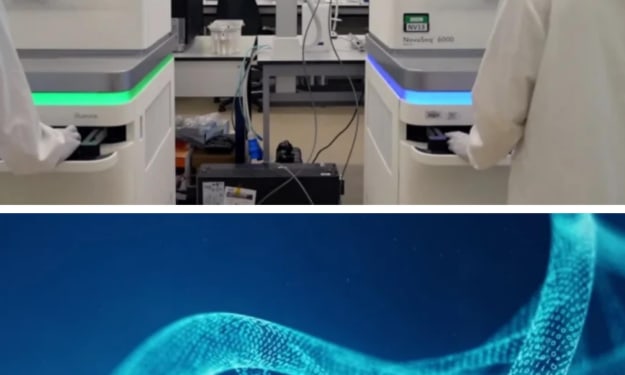
body modifications
A form of transhumanism, body modifications are made to enhance the human form.
Amazon Robots Take Over UK Warehouses End of Human Jobs Begins?
In a transformative move, Amazon has officially deployed its next generation Amazon robots across key UK fulfillment centers, signaling a dramatic shift in warehouse operations. This rollout is more than just a technological upgrade it's the foundation for a future where human labor is no longer central to logistics. These robots, powered by cutting edge artificial intelligence, are designed to perform tasks that were once the sole domain of warehouse workers.
By Adnan Rasheedabout a year ago in Futurism
Creating Sperm from Skin: A Groundbreaking Scientific Breakthrough. AI-Generated.
Imagine a future where infertility is no longer a barrier to having children, where people could create sperm from their own skin cells, and in some cases, even grow eggs from their own body tissue. It sounds like science fiction, but with the latest advances in biotechnology and stem cell research, this vision is becoming an increasing likelihood. The idea of creating sperm from skin cells is a revolutionary breakthrough in the field of reproductive science, genetics, and medicine. It can change the way we look at human reproduction and offer new possibilities for individuals and couples who are struggling with infertility issues. How Does It Work? The Science Behind the Breakthrough At the foundation of this revolutionary process is a technique known as induced pluripotent stem cells (iPSCs). These are regular body cells, such as skin cells, that scientists can reprogram to an earlier, more versatile state—similar to embryonic stem cells. The reprogramming restores the cells' ability to develop into almost any cell type in the body, including sperm cells. Here's how the procedure typically works: Harvesting Skin Cells: Scientists begin by obtaining a small sample of skin cells, usually from a standard skin biopsy. Reprogramming the Cells: Using specific genetic factors, the skin cells are "reprogrammed" to a pluripotent state, where they are induced into stem cells that can give rise to almost any other cell type in the body. Guiding Cells to Become Sperm: Taking cells in this versatile stem-cell state, researchers add a precise mix of chemical signals and proteins to guide them to become sperm cells. In some laboratory tests, this has resulted in sperm-like cells capable of fertilizing eggs, bringing the prospect of future application in human reproduction. Although this process has so far only been successfully demonstrated in animal models (i.e., mice), it's a breakthrough. Researchers have already succeeded in using these sperm-like cells to develop embryos and offspring in animals utilizing them, and the long-term goal is to be able to utilize these techniques in humans. Implications for Human Reproduction The ability to produce sperm from skin cells could potentially have important implications for reproductive medicine. Nowadays, many men and women are infertile because of various reasons like medical conditions, aging, or destruction caused by cancer treatment like chemotherapy. For these men who lack any sperm owing to conditions like azoospermia (where no sperm are produced), this technology can provide the hope of creating viable sperm from their own tissues, without resorting to sperm donors or surgical procedures like testicular sperm extraction. For women, the breakthrough could be equally revolutionary. While sperm creation has been the target so far, researchers are also striving to determine a way to create eggs from skin cells, which would give women struggling with infertility a potential path to having biological children. This would be a life-changer for women who have had their ovaries removed or damaged, either due to age or disease like cancer. This would, in theory, allow them to have their own genetic children without needing egg donors. Why Is This Important? This is not just about baby-making—this finding offers new hope for gene therapy and personalized medicine. Since the sperm (and, one suspects, eggs) created from a person's skin cells would be genetically identical to the person, there is no possibility of genetic mismatch or transmission of inherited disease, something that sometimes happens with sperm or egg donors. For example, a man with a genetic illness can potentially produce sperm from the cells of his own skin, allowing him to have a biological offspring without passing on the disease. Similarly, an infertile woman can potentially regenerate her eggs from her own cells, offering a hope for those who had no reproductive hope before. Ethical Issues and Potential Risks As with any breakthrough of this magnitude, the creation of sperm from skin cells also comes with some hefty ethical implications. Among the biggest concerns is the idea of genetic manipulation—while the current intention is to help those who are infertile, the technology could eventually be used for more controversial purposes, like for imposing specific genetic traits on future generations (e.g., intelligence or physical appearance). This then provokes fear of creating "designer babies" and reopening the spectre of eugenics. One other major ethical issue is privacy and consent. Since this technology has the capability to produce sperm and eggs using an individual's own skin cells, there can be serious issues of misuse of this technology. What if this genetic material is harvested without consent for research or commercial purposes? How will we safeguard individuals' genetic information and maintain its safety and privacy? Additionally, as promising as the science is, we must also consider the long-term health implications. What will be the fate of children born from these lab-created sperm and eggs in the long run? Will they develop any illnesses that we are not yet aware of? These are essential questions that must be addressed before this technology can be used extensively on humans. A New Era of Possibilities Despite these concerns, the ability to create sperm from skin cells offers a range of exciting possibilities for the future. It could transform the world of fertility treatment by allowing men and women to have biological children without the utilization of traditional gametes. It could offer a glimmer of hope to people carrying genetic disease by allowing them to have healthy children who are genetically close to them without the risk of passing on inherited illness. What’s Next? While the technology to create sperm from skin cells is still in the experimental stages, the pace of progress in stem cell and genetic research is rapid. If the current advancements continue, we may see this technology applied in humans within the next decade. However, it will likely require extensive testing, regulation, and ethical debate before it becomes a mainstream solution. Meanwhile, scientists are working to ensure this method is safe, effective, and ethical. There is more to learn about how these lab-created sperm interact with human eggs and how embryos developed from them grow. Conclusion: The Future of Reproductive Science Creating sperm from skin cells is not just a scientific trick—it's a potential game-changer for reproductive medicine and genetic science. While there are certainly hurdles left to overcome, this finding holds out hope for individuals and couples who have struggled with infertility, genetic illness, or medical conditions that imperil their chances of having biological children. If scientists can figure out how to translate this technology to humans, we may be on the cusp of a new era of personalized, bespoke reproductive medicine. However, with all revolutionary technologies, we must tread carefully here, with robust ethical safeguards and with the welfare of future generations at the top of our minds. Done well, the creation of sperm from skin cells can ensure that fertility and family-building never need be limited by biology, but opened up by science.
By Rubaiat Tanzimabout a year ago in Futurism
The Rise of Modern Sports Culture
In the 21st century, sports have moved from fields, courts, and stadiums to a global cultural phenomenon fueled by technology, data, and digital know-how. From fantasy leagues to AI-powered coaching software, how players play and fans watch is being transformed. In this blog, we explore how today's sports culture is evolving—and why fans and participants need to keep up.
By Martin Williamsabout a year ago in Futurism
The Synthetic Human Genome: “The Genie is Out of the Bottle”
In a move that is both revolutionary and controversial, scientists have embarked on a groundbreaking project—one that could redefine human life itself. For the first time in history, efforts are underway to artificially synthesize the human genome, the very blueprint of our biological existence. While such research was previously dismissed as unethical and even dangerous, the tides have turned. The world’s largest medical charity, the Wellcome Trust, has injected a staggering £10 million into the initial phase of this project. Their reason? A hope that it holds the key to curing some of humanity’s most incurable diseases. But this pursuit of science has sparked a global ethical firestorm. From Science Fiction to Science Reality At the forefront of this initiative is Dr. Julian Sale, from the MRC Laboratory of Molecular Biology in Cambridge, UK. In a recent interview with the BBC, Dr. Sale emphasized the project’s medical potential: “We are working toward therapies that not only extend human life but improve its quality as we age.” The team envisions a future where synthetic DNA is used to build resilient human cells—cells that can repair damaged organs like the liver or heart, rebuild weakened immune systems, and resist diseases at their genetic roots. Sounds like something out of a science fiction movie, right? But this is no longer fiction. It's reality. But at What Cost? Not everyone is cheering. Critics argue that this project could open the door to a dystopian future—designer babies, genetically modified humans, and potentially weaponized genetics. Dr. Thomas from the bioethics organization Beyond GM warns: “We like to believe that all scientists are working for the good of humanity. But science can be manipulated—just like any other tool. And in the wrong hands, it can become a weapon.” His concerns are valid. The history of scientific advancements—from nuclear physics to artificial intelligence—shows us that every powerful technology has a dark side when unchecked. What Exactly Is the Human Genome Project 2.0? This synthetic genome project builds upon the achievements of the original Human Genome Project, which mapped out all the DNA sequences in a human cell. That landmark effort gave scientists a barcode-like map of every gene in the human body. But this new phase doesn’t stop at reading DNA. It seeks to build it from scratch. Using only the four basic chemical building blocks of DNA—A, T, C, and G—scientists now aim to recreate entire human chromosomes artificially. These chromosomes will include the genes responsible for our development, repair, immunity, and even aging. Their goal is simple yet extraordinary: To understand how DNA truly works by rebuilding it. According to Professor Matthew Hurles, director of the Wellcome Sanger Institute, “Many diseases begin when something goes wrong with our genes. If we can recreate them synthetically, we may find ways to fix them before they even appear.” A Cure for Disease or a Path to Artificial Life? The researchers insist this work is not an attempt to create synthetic humans or artificial life. For now, the experiments are limited to test tubes and petri dishes. But it’s hard to ignore the immense control this gives scientists over the very fabric of life. Critics fear the next step could be engineering human embryos with specific traits—or worse, creating hybrid creatures that blur the line between science and science fiction. Professor Bill Earnshaw, a leading geneticist, warns of “bio-weapons,” superhumans, and ethical chaos. “The genie is out of the bottle,” he told the BBC. “We could’ve built safeguards. But now, a powerful organization with resources has decided to build life artificially. And I doubt we can stop them.” Who Will Own Synthetic Life? One of the biggest ethical dilemmas raised by this project is ownership. If scientists succeed in creating synthetic organs—or even synthetic humans—who owns them? What happens to the personal data of such creations? What legal or moral rights do they have? Are they property? Are they people? Dr. Thomas raises these chilling questions: “If we succeed in creating artificial organs—or even artificial people—who gets to own them? Who controls their data? Their destiny?” The debate is no longer theoretical. It is now urgent. Why Did the Wellcome Trust Fund This? Even the Wellcome Trust, now at the center of this storm, acknowledges the risks. Dr. Tom Collins, the official responsible for approving the funding, said they did not make the decision lightly. “We asked ourselves: What’s the cost of doing nothing?” he explained. “This technology will emerge eventually. By acting now, we can ensure it develops responsibly—and we can face its ethical challenges head-on.” Their plan also includes a public welfare program that seeks to bring in sociologists, ethicists, and most importantly—the public—into the conversation. Professor Joy Zhang of the University of Kent will lead the social research component. She says: “We want to hear how people truly feel about this. What excites them? What scares them? What questions and concerns do they have?” A New Chapter in Human Evolution—or a Pandora’s Box? Whether this is a medical miracle or an ethical nightmare remains to be seen. On one hand, this project could lead to revolutionary treatments for cancer, Alzheimer's, genetic disorders, and organ failure. On the other hand, it opens the floodgates to genetic engineering, human enhancement, and a world where life itself is manufactured—not born. This isn’t just a scientific question anymore. It’s a philosophical, moral, and political question—and one we must all participate in answering. Because the genie is out. And there’s no putting it back in.
By Ikram Ullahabout a year ago in Futurism
What Will Jobs Look Like in 2040?
The world of work is undergoing rapid transformation, and by 2040, jobs will look dramatically different from what we know today. Driven by breakthroughs in technology, shifts in global demographics, and evolving human needs, the workplace of the future will blend automation, creativity, flexibility, and global collaboration in ways that are only beginning to take shape. The future of jobs in 2040 is not just a tech fantasy—it’s a practical vision that’s already unfolding.
By Muhammad Asimabout a year ago in Futurism
Why are medical students trained using frogs for dissection and not other animals?
Why are medical students trained using frogs for dissection and not other animals? Answer: Frogs are commonly used for teaching medical and biological sciences because they are small, easily available, and their internal organ systems are quite similar to those of humans. Therefore, the physiology of frogs is employed to help medical students understand anatomical and physiological principles. 1. Availability and Abundance One of the major reasons frogs are preferred in medical education is their availability in large numbers. Medical colleges and institutions need a consistent and cost-effective supply of animals for practical lessons and demonstrations. Frogs are widely found in the wild and can also be bred in captivity in large numbers. Unlike larger mammals or exotic species, frogs do not require complicated or expensive environments to survive and reproduce. This abundance makes it possible to provide every student with a specimen to practice on, without the ethical, financial, and logistical complications that might arise if larger animals were used. For example, using rabbits, cats, or pigs would demand special facilities for their housing, feeding, and care, which would significantly raise the cost and complexity of educational programs. 2. Simplicity and Anatomical Similarity Frogs have a relatively simple body structure, which makes them ideal for beginners in the field of medicine and biology. Their organ systems—like the circulatory system, nervous system, respiratory system, and digestive system—function in ways that are comparable to human systems. Although they are amphibians and not mammals, their basic physiological processes mirror those of humans to a large extent. For instance: Circulatory System: Frogs have a heart and blood vessels that function in a similar manner to the human system, allowing students to understand blood flow, oxygenation, and circulation. Nervous System: The brain and spinal cord in frogs provide a foundational model for understanding how nerves transmit signals, although less complex than human systems. Digestive System: Frogs ingest, digest, and excrete food in a way that helps students learn about the roles of the stomach, intestines, liver, and other digestive organs. This resemblance allows students to gain a foundational understanding of how organ systems function and interact before progressing to more complex models or human simulations. 3. Ethical and Practical Considerations From an ethical standpoint, using frogs is more acceptable to many institutions and societies than using mammals or higher vertebrates. While ethical concerns still exist and have led to a rise in alternatives like computer simulations and 3D models, frogs are still considered a more justifiable choice than larger animals for basic training. Moreover, frogs are cold-blooded animals, which means they have a slower metabolism. This property allows for more controlled and extended dissections or experiments without causing rapid deterioration of tissues, making them highly suitable for educational environments where sessions may last for hours. 4. Ideal for Surgical Practice The size and structure of frogs make them ideal for initial surgical training. They are not so small that procedures become overly difficult for beginners, and not so large that they are impractical for classroom use. Frogs give students a manageable, hands-on opportunity to learn and practice basic surgical techniques such as: Making incisions Identifying organs Suturing (stitching wounds) Handling live tissues under supervision These are crucial skills for any future surgeon or physician. Handling frog dissections in the early stages of medical education helps students develop hand coordination, confidence, and a basic understanding of sterile procedures and instrument use. 5. Cost-Effectiveness Another important factor is cost. Frogs are inexpensive compared to other live animal models. Institutions operating on tight educational budgets can afford to provide frogs for lab experiments without exhausting their resources. In contrast, maintaining and using animals like pigs or dogs would involve costs not just for purchase, but also for feeding, veterinary care, housing, and ethical compliance. 6. Scientific Legacy and Tradition Historically, frogs have been widely used in biological research and education for centuries. This long-standing tradition has led to a well-established understanding of frog biology in scientific literature. Most of the dissection manuals and protocols are based on frog models, making it easier for teachers and students to follow standardized practices. For example, Nobel Prize-winning research in neurophysiology and muscle response was often conducted on frogs. Famous experiments, such as those involving the stimulation of frog muscles or the understanding of reflex actions, have laid the groundwork for modern medicine and physiology. 7. Legal and Regulatory Simplicity In many countries, using amphibians like frogs involves fewer legal restrictions compared to mammals. Regulatory bodies often impose stricter controls on the use of higher animals due to their sentience and social structures. Frogs, being lower on the phylogenetic scale, are thus easier to use in educational settings with minimal bureaucratic hurdles—though ethical guidelines must still be followed. --- Conclusion: In summary, frogs are used in medical education because they offer a balance between simplicity, similarity to human anatomy, affordability, and ethical acceptability. Their availability and biological features make them ideal for foundational learning in anatomy and physiology. While modern technology is gradually introducing alternatives to animal dissection, frogs remain a vital part of hands-on medical and biological training for students around the world.
By Ikram Ullahabout a year ago in Futurism