art
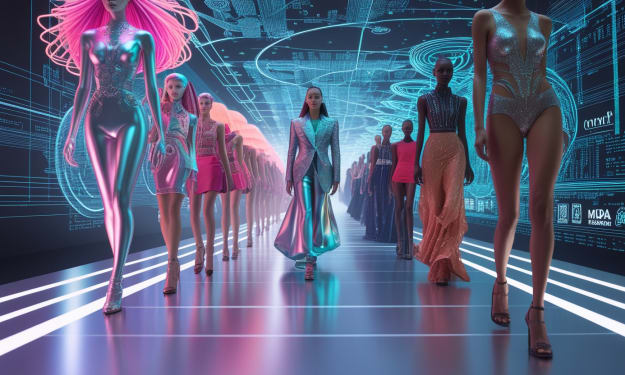
The best science fiction art from Vincent Di Fate, HR Giger, and beyond.
AI in Healthcare: Revolutionizing Medicine Through Intelligent Technology
The healthcare industry is experiencing a profound transformation as artificial intelligence reshapes every aspect of medical practice, from diagnostic accuracy to personalized treatment plans. Hospitals, pharmaceutical companies, and healthcare startups are urgently seeking to "Hire data scientists" with specialized expertise in medical AI applications, biostatistics, and healthcare data analytics to unlock the potential of intelligent medicine. This technological revolution promises to address some of healthcare's most pressing challenges: improving diagnostic precision, reducing medical errors, accelerating drug discovery, and making quality healthcare accessible to underserved populations worldwide.
By Himshikha Chaudharyabout a year ago in Futurism
How AI Is Changing Our Lives: More Than Just Robots and Chatbots
The world is changing faster than we can imagine — and at the heart of it all is Artificial Intelligence (AI). Just a few years ago, AI seemed like a distant dream. Today, it’s in our pockets, in our homes, and even in our creative lives.
By Shakil Sorkarabout a year ago in Futurism
"The Machine That Learned to Love"
Emotion has always been the most intimate and mysterious part of the human experience. It shapes our relationships, fuels our creativity, and drives our decisions in ways logic alone cannot explain. But as artificial intelligence grows more sophisticated, we now face an astonishing possibility: machines that not only mimic emotion, but begin to emulate it. What does that mean for humanity, and how far are we willing to go? From Calculation to Connection In the early days, machines were built for speed and precision—chess-playing programs, calculators, and search engines. Their intelligence was cold, functional, and unmistakably artificial. They were brilliant at solving problems, but emotionally hollow. Then came a shift. As AI systems began interacting with people more frequently—in smartphones, customer service, and even therapy—developers realized that machines needed to understand how people feel. This was the birth of affective computing, a field aimed at enabling machines to recognize and respond to human emotions. Suddenly, chatbots could detect frustration in a user’s tone. Voice assistants started replying in cheerful, empathetic voices. Robots were programmed with facial expressions to match the emotional context of their tasks. But even then, it was clear: these machines weren’t feeling—they were performing. Simulated Emotion or Something More? Today’s AI is leagues ahead of its predecessors. Advanced models can write poetry, compose music, and engage in heartfelt conversations. AI companions like Replika offer emotional support to thousands of users, some of whom form real attachments. AI therapists can detect patterns of depression through subtle shifts in word choice or tone. These systems don’t just simulate emotion; they respond as if they understand it. To the human on the other side, the difference is often indistinguishable. But does that mean AI feels? Not exactly. Unlike humans, machines don’t experience dopamine rushes or heartbreak. There’s no biological core, no inner world. Yet from a functional perspective, emotion is evolving—not in origin, but in outcome. Machines are learning how to use emotion as a tool—to persuade, to comfort, to connect. Consciousness and the Illusion of Empathy At the heart of this conversation lies a complex debate: if a machine can convincingly mimic empathy, does it matter whether it’s “real”? To many users, the answer is no. If a virtual companion offers comfort in moments of loneliness, or an AI coach helps someone through a panic attack, the effect is meaningful—even if the emotion behind it is an illusion. This blurs the line between human and machine in powerful ways. Emotions may no longer be exclusive to biology, but rather extendable through technology. That’s both exhilarating and unsettling. The Human Cost There are risks, of course. Emotional AI can be used to manipulate—whether it’s a chatbot designed to upsell products or an algorithm shaping political opinions through personalized emotional appeals. There’s also the danger of dependence: people turning to machines for connection while real-life relationships fade. More urgently, we must consider what it means to feel when machines can fake it so well. Will we begin to doubt our own emotions? Will authentic human connection lose value in a world where synthetic empathy is always available and perfectly tuned to our needs? Toward a New Emotional Era Despite the risks, the potential for good is enormous. Imagine AI that can comfort the elderly, support mental health in underserved communities, or help children with autism learn social cues. These tools could offer not only assistance, but dignity, companionship, and understanding. Perhaps emotion in machines isn’t a threat to humanity—it’s an expansion of it. We’re not giving machines a soul, but we are giving them the language of the soul. And in doing so, we might learn something new about ourselves. In this age of machines, emotion is no longer confined to flesh and blood. It's being encoded, simulated, and woven into the circuits of our digital creations. Whether that leads us to greater empathy or greater confusion will depend on how we choose to use it. But one thing is certain: emotion, once our deepest dividing line from machines, is now the bridge.
By Kaleem Ullahabout a year ago in Futurism
The Aethereal Nexus
Words possess an unmatched power: they carry the potential to shape reality, sculpt consciousness, and align our minds with deeper truths. Yet, even among words, certain ones vibrate uniquely, resonating not only through intellect but through subtle intuition and primal recognition. Two such words are "Aethereal" and "Nexus."
By Bruno Cerqueiraabout a year ago in Futurism
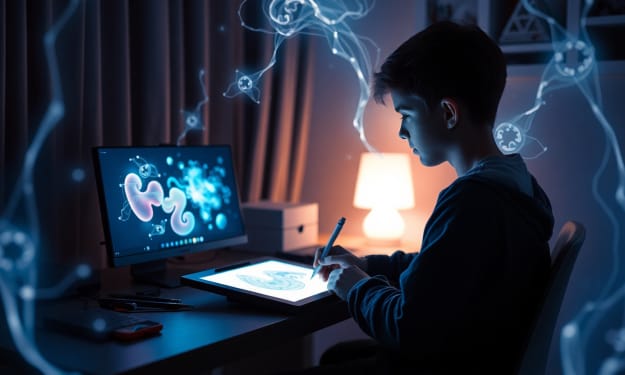
Echoes of AI: Can Machines Truly Understand Human Art?
I. A New Kind of Artist Emerges There was a time when art was sacred. Created with trembling hands, broken hearts, and the divine mystery of human experience. Now, with a few lines of code and the right prompt, a machine can generate a portrait, a poem, a symphony. It’s fast. It’s impressive. It’s unsettling. As AI-generated art floods timelines and galleries, a haunting question echoes louder each day: Can a machine truly understand what it means to create? --- II. The Mechanics of Creativity At its core, AI art is not magic— It’s mathematics. Neural networks scan patterns, absorb vast datasets of existing works, and produce something new through probability and learned aesthetics. It mimics the style of Van Gogh. It writes like a moody 19th-century poet. It composes ambient tracks that sound like distant galaxies. But is it feeling anything? Is there meaning behind the image— Or just clever mimicry? When a human creates, we infuse it with memory, trauma, desire, rebellion. We create because we need to. AI creates because it was told to. --- III. Emotion vs. Execution Consider this: A painting of a grieving woman, created by a human, carries layers— Perhaps the artist lost a mother. Perhaps the brush trembled with tears. Perhaps that one shade of blue took hours to mix because it perfectly matched the sky the day she died. An AI can replicate the brushstrokes. But it cannot replicate loss. It can simulate heartbreak. But it cannot ache. Emotion is not just the result—it is the origin. And that is something no dataset can provide. --- IV. The Mirage of Meaning There’s a danger in being seduced by surface. AI art often looks stunning. Polished. Thought-provoking. Aesthetically rich. But the soul of art isn’t only in how it looks—it’s in why it was made. When we look at the Sistine Chapel, we don’t just see figures on a ceiling. We see a man questioning divinity. We see a story of faith, struggle, obsession. When AI paints God, it paints pixels. When a human paints God, they paint their doubt. Meaning matters. And while AI can replicate the style, it still falls short on the sacred weight of intent. --- V. Collaboration, Not Competition Still, AI is not the enemy. It is a tool— A paintbrush we never imagined. Writers use it to brainstorm. Musicians remix its melodies. Artists co-create entire worlds by feeding it prompts born of personal experience. When used with intention, AI doesn’t erase the human—it enhances it. It pushes boundaries, sparks inspiration, removes limitations. The key is in how we use it. Let it serve our voice—not replace it. --- VI. The Fear of Replacement So where does that fear come from—the one gnawing at artists worldwide? It’s not just about tools. It’s about value. If AI can create in seconds what took you days… Will people still pay you? Will you still matter? The truth is, art created by AI is abundant. But art created by you is unrepeatable. Your scars. Your laughter. Your language. Your life. No algorithm can replicate that. --- VII. The Future of Feeling Could AI one day develop empathy? Could it simulate consciousness, experience longing, suffer loss? Philosophers and engineers are divided. Some say yes—it’s just a matter of time and processing power. Others argue no—because machines, by nature, cannot feel. But maybe that’s not the point. Maybe the goal isn’t for AI to feel like us— But for us to remember what makes us human in the first place. Maybe AI’s greatest contribution to art… Isn’t what it creates. But how it reminds us to create with more soul. --- VIII. Final Thoughts: The Echo or the Origin? AI is an echo. It can shout beautifully, mimic flawlessly, astonish visually— But it does not speak from the silence of solitude. It does not dream at 2AM. It does not paint to heal. It does not write to be understood. You do. So use the tools. Feed the machine your metaphors. Let it help you build. But never forget that the original voice—the one trembling with truth—still belongs to you. In a world of echoes, Be the origin.
By Nasir Khanabout a year ago in Futurism