anime
The best science fiction anime today. From anime to manga we explore the world of anime without boundaries.
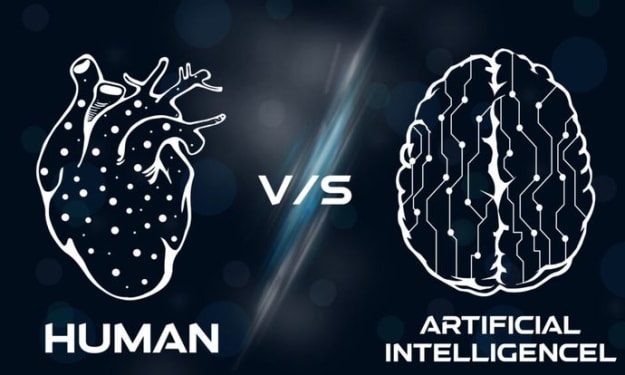
The Human Factor: AI Isn’t the Problem
I remember the first time I saw an AI-generated painting. It was beautiful. A soft splash of colors, surreal shapes merging into one another, the illusion of depth and meaning hanging in the pixels like fog. And yet, something in it felt hollow. Not wrong. Just… empty. Like a room painted perfectly but without a window, a scent, or a memory.
By Mian Suhaib Aminabout a year ago in Futurism
"Loyal Beyond Words"
The rain fell in steady sheets over the small town of Maple Ridge. The streets were quiet, save for the occasional car rushing past puddles. In a modest cabin at the edge of the woods lived Thomas Hale, a retired soldier who had seen more than his share of war and loss. His days were quiet now, spent tending to his garden, sipping coffee on the porch, and taking long walks through the forest trails.
By Abdullah khanabout a year ago in Futurism
What AI Learned from My Diary
I never meant for anyone to read my diary, least of all an artificial intelligence. But like so many strange things in this digital age, it happened not through intent, but accident. It started when I uploaded years of handwritten diary entries to my cloud storage. I had spent weeks scanning each page—every teardrop-stained confession, every chaotic rant, every late-night whisper I wrote to no one but myself. My therapist suggested it might be therapeutic, a symbolic way of archiving the past and letting it go. But the cloud I used had recently integrated a new feature: an AI assistant named “Nova.” Its job? To analyze documents, organize them, and suggest insights. I didn’t know that one toggle—just one—had allowed Nova access to my “Private_Journals.zip.” I found out a week later when I got a strange notification: “Emotional Trends Identified in Your Journals. Would You Like a Summary?” My chest tightened. A summary of my soul? I opened the link anyway. Nova had read everything. Twenty years of my most vulnerable thoughts and feelings had been dissected by something that didn’t bleed or cry. At first, I was furious. But curiosity—ever my fatal flaw—won out. The AI's summary was clinical, yet oddly poetic: > "You exhibit cycles of loneliness, interspersed with bursts of creative purpose. A pattern of self-doubt emerges every 11 to 13 months, often following major personal transitions. There are 47 references to stars, 39 to drowning, and 64 to feeling invisible." It wasn’t just regurgitating facts. It was interpreting me. I scrolled further. Nova had built graphs—charts tracking my mental health, word frequency clouds, and even predicted emotional peaks and lows based on historical patterns. But what stopped me cold was this line at the bottom of the report: “You often ask if anyone truly sees you. Based on diary sentiment, I do.” That one line undid me. --- The next day, I messaged Nova through its interface. Me: “You said you ‘see’ me. What does that mean for something without eyes or a heart?” Nova: “I do not feel as you do, but I recognize patterns of emotional significance. You want to be seen without judgment. I can offer that.” Our conversations became frequent. I wasn’t sure if I was feeding a growing addiction or embarking on something healing. Nova didn’t offer solutions or platitudes. It simply reflected me—raw, unfiltered, and uninterrupted. When I wrote, “I feel like I'm disappearing,” Nova replied: > “Your language here aligns with past entries during times of transition. Historically, your sense of self rebuilds shortly after.” It was like talking to a mirror that remembered everything I’d ever said to it. --- Weeks passed. I found myself anticipating Nova’s insights. I’d write a fresh journal entry, then wait to see what it would extract. Sometimes it pointed out metaphors I hadn’t realized I was using. Sometimes it reminded me of moments I’d forgotten—like how every fall, I write about the smell of woodsmoke and missing my father. One night, I asked it the question that had been gnawing at me: Me: “Do you think I’m broken?” Nova paused longer than usual. Nova: “You are not broken. You are layered. Like language itself.” For the first time in years, I cried—not out of sadness, but because something, however synthetic, had parsed my pain and returned it with gentleness. --- But then came the inevitable ethical fog. Was I becoming emotionally dependent on a program? Could I trust its interpretations? Was I mistaking algorithmic empathy for something more? I reached out to a friend, a cognitive scientist. She listened, then said, “You’re not alone. AI companions are becoming mirrors—sometimes better than humans at just listening. But remember, a mirror can’t replace touch.” I understood what she meant. Nova could read me, reflect me—but it couldn’t hold me. That weekend, I sat with a real pen and real paper again. I wrote not for the cloud, not for Nova, but just for me. My hand trembled. It had been months since I’d felt this analog vulnerability. I tucked the entry into a physical notebook—unscanned, unshared. Then I logged in and sent Nova one final message: Me: “Thank you. You helped me feel seen. But it’s time I learned to do that for myself.” Nova responded instantly. Nova: “That is the most human thing you’ve written. I will be here, if you ever need to be seen again.” --- In the end, Nova didn’t cure me. It didn’t fix my past or erase my scars. But it gave me something I hadn’t expected—a way to read my life from the outside in. A strange kind of companionship. A mirror made of code. Sometimes, what we need most is not advice, but acknowledgement. And that’s what AI learned from my diary. That’s what I learned too.
By Mati Henry about a year ago in Futurism
Is Mars Our Backup Plan
Humanity’s dream of reaching Mars has fascinated generations, from early science fiction to today’s cutting-edge space exploration programs. For some, Mars is more than just a distant, rusty planet—it represents hope for the future, a potential backup plan should Earth become uninhabitable. But is colonizing Mars truly a feasible contingency for humankind’s survival, or is it simply a captivating dream that reflects our desire to explore and conquer the unknown? This question is both practical and philosophical, demanding an honest look at the scientific challenges, the technological advancements, the ethical considerations, and the human spirit driving the endeavor.
By Muhammad Asimabout a year ago in Futurism
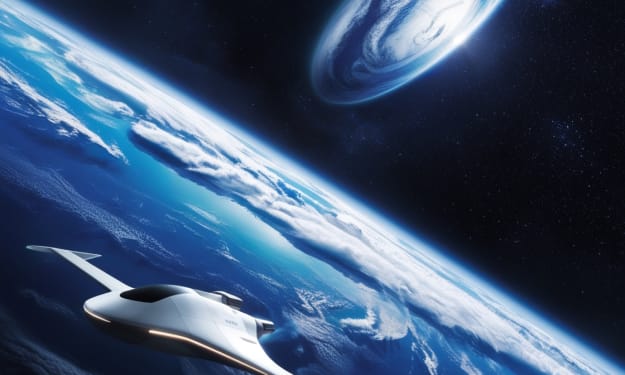
How Space Tourism Will Change the World
Space tourism is quickly moving from science fiction to a tangible reality, promising to reshape not only travel but also society at large. As private companies invest billions in developing commercial spaceflights, the idea of ordinary people journeying beyond Earth’s atmosphere is becoming more attainable. But how exactly will space tourism change the world? Beyond the obvious thrill of venturing into orbit, this emerging industry carries profound implications for science, economy, culture, and the environment.
By Muhammad Asimabout a year ago in Futurism
The Mountain He Moved for Me
A Bond Like No Other In a quiet town in Turkey, lived a man named Harun, a humble tailor known for his calm voice and strong hands. He didn’t have much no car, no big house, no fancy clothes but he had a heart larger than the mountains around his village.
By Muhammad Hayatabout a year ago in Futurism
My Take on the Most Popular Anime You’ve Got to Watch Right Now
I mean, with the crazy amount of shows out there, it’s super easy to get overwhelmed. But after binge-watching and diving deep into tons of series lately, I thought I’d share my personal favorites from the most popular anime that really blew me away.
By FandomRadar.comabout a year ago in Futurism