
Synthetic Rope Market: Mining Sector Demand, Wear Resistance & Future Outlook
How mining expansion, heavy lifting operations, and demand for safer load-handling solutions are influencing innovation and adoption in synthetic rope manufacturing

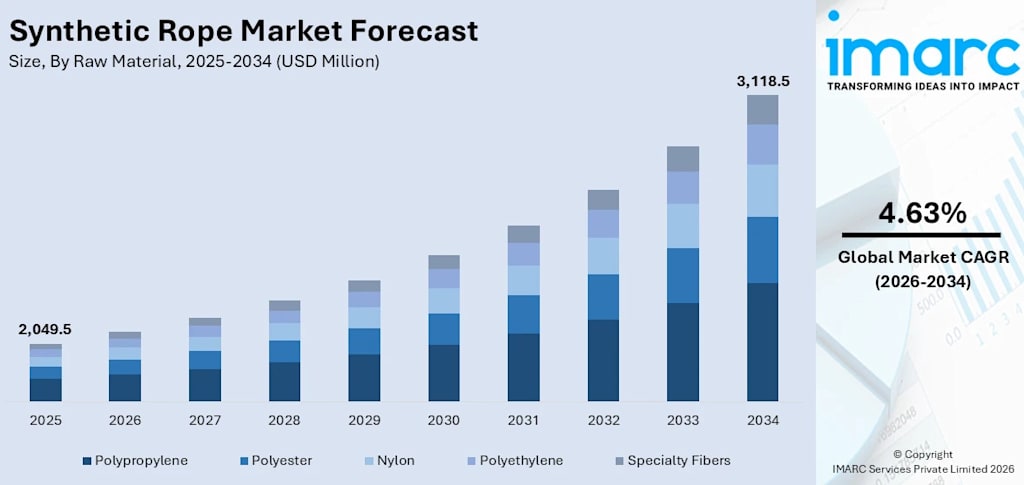
Rapid industrialization, expanding maritime commerce, and the increasing modernization of heavy industries are driving the demand for high-performance synthetic ropes. These advanced solutions are heavily favored over traditional steel wires due to their low weight, high chemical resistance, and ease of handling across challenging operational environments. According to IMARC Group’s latest data, the global synthetic rope market size reached USD 2,049.5 Million in 2025. Looking forward, IMARC Group estimates the market to reach USD 3,118.5 Million by 2034, exhibiting a CAGR of 4.63% during 2026-2034.
Synthetic ropes now represent a vital multi-billion-dollar global industry, replacing heavy wire setups across major commercial sectors. The ongoing transition is accelerated by structural shifting in maritime logistics, deepwater oil extraction, and commercial fishing operations that prioritize safety, longevity, and lower fuel consumption. Industry innovation remains concentrated on processing raw materials like polypropylene, polyester, polyamides, and specialized ultra-high-molecular-weight polyethylene (UHMWPE) into braided or twisted configurations.
Synthetic Rope Market Growth Drivers:
- Deepwater Exploration and Offshore Energy Expansion
The shift toward deeper and more volatile offshore areas for energy extraction forces companies to venture beyond shallow platforms, where conventional steel lines fail due to heavy self-weight and extreme water pressure. Utilizing high-performance fibers like High Modulus Polyethylene (HMPE) reduces structural load on marine equipment while ensuring optimal handling and minimal deployment downtime. This technological upgrade provides critical resistance against subsea corrosion and chemical degradation in harsh deep-sea territories. Ongoing investments in high-depth fields across regions like the Gulf of Mexico accelerate the adoption of these specialized light-weight mooring materials.
- Rapid Commercial Shipbuilding and Maritime Logistics
Expanding global trade routes and escalating container ship sizes necessitate high-efficiency mooring, towing, and docking accessories to optimize port turnaround intervals. Synthetic ropes weigh roughly one-seventh of comparable steel wire alternatives, directly lowering manual labor strains during vessel securing and accelerating overall port logistics. Maritime operators utilize these advanced flexible lines to minimize abrasion wear on deck winches and prevent critical structural snaps that cause expensive facility delays. Widespread installation across commercial shipping hubs remains heavily supported by strict safety mandates that discourage the use of heavy, dangerous steel wires.
- Renewable Energy Infrastructure Construction
The worldwide acceleration of massive clean energy projects, particularly floating offshore wind installations, relies heavily on high-tensile anchor solutions to stabilize turbines in turbulent coastal environments. Engineers prioritize specialty synthetic fibers because they simplify long-distance transport, reduce heavy-crane dependence, and deliver superior fatigue resistance under consistent wave forces. These materials securely anchor floating foundations to the seabed floor, maintaining structural balance and ensuring consistent power generation without risking deepwater mooring line snaps.
Synthetic Rope Market Trends:
- Technological Integration and Smart Fiber Analytics
Rope manufacturers embed specialized tracking sensors and electronic status monitors directly within braided synthetic lines to identify real-time internal wear, strain levels, and core damage. This digital transformation allows industrial operators to move away from arbitrary scheduled replacements and transition toward highly predictable, data-driven preventive maintenance models. Crane and maritime crews use these integrated telemetry readings to prevent catastrophic snapping incidents during heavy lifting routines or volatile open-water towing operations.
- Material Shift Toward Polypropylene and Specialty Fibers
Industrial operations increasingly prioritize advanced polypropylene and composite polymer blends to achieve optimal buoyancy, strong material elasticity, and reliable defense against harsh industrial solvents. Three-strand and multi-braid designs optimize structural strength and torque resistance, ensuring the lines remain easy to coil and handle even after prolonged water submersion. Maritime fleets rely on these floatable polymers to keep lines away from active vessel propellers, significantly reducing the risk of costly marine accidents.
- Upgrades in Heavy-Duty Crane and Construction Systems
Industrial construction sites and mining facilities are actively replacing traditional steel wire spools with high-strength synthetic options for mobile and tower crane applications. These lightweight upgrades eliminate the need for heavy lubrication maintenance, prevent dangerous birdcaging deformation, and dramatically reduce the overall deadweight on the crane boom. Field operators report smoother winding around drums and reduced component friction, which extends the operating lifespan of adjacent pulley blocks and internal mechanisms. These functional enhancements support safer urban infrastructure deployment, underground mineral extraction, and specialized high-altitude assembly projects.
Recent News and Developments in Synthetic Rope Market
- August 2025: WireCo advanced its high-performance product capabilities by implementing a targeted USD 30 Million investment strategy aimed specifically at upgrading its specialized premium synthetic rope production facilities to meet growing global demand.
- September 2025: Samson Rope Technologies rolled out an updated series of heavy-duty mooring lines featuring an eco-conscious raw material formulation designed to reduce carbon footprints without sacrificing maximum tensile capabilities.
- November 2025: Cortland Limited secured a major multi-year supply contract with an international offshore wind consortium to deliver advanced custom-engineered anchoring solutions for floating turbine installations across the North Sea region.
Note: If you require specific details, data, or insights that are not currently included in the scope of this report, we are happy to accommodate your request. As part of our customization service, we will gather and provide the additional information you need, tailored to your specific requirements. Please let us know your exact needs, and we will ensure the report is updated accordingly to meet your expectations.
About the Creator
Andrew Sullivan
Hello, I’m Andrew Sullivan. I have over 9+ years of experience as a market research specialist.
Enjoyed the story? Support the Creator.
Subscribe for free to receive all their stories in your feed.
Comments
There are no comments for this story
Be the first to respond and start the conversation.