
Synthetic Leather Market Advances Through Innovation and Automation
How digital manufacturing, automation, and smart production technologies are enhancing operational efficiency and supporting long-term expansion in the synthetic leather market

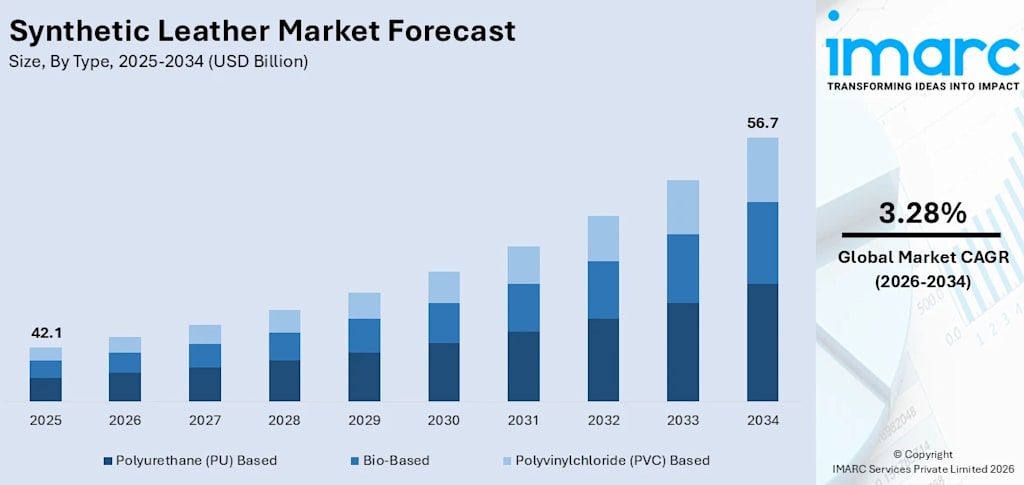
Rising health awareness, busy lifestyles, and preference for convenient, nutritious foods are driving healthy snack demand, supported by clean-label trends, product innovation, and expanding retail and online distribution channels. According to IMARC Group’s latest data, The global synthetic leather market size was valued at USD 42.1 Billion in 2025. Looking forward, IMARC Group estimates the market to reach USD 56.7 Billion by 2034, exhibiting a CAGR of 3.28% from 2026-2034.
Synthetic leather now represents a multi-billion-dollar global market exceeding several tens of billions and exhibiting steady year-on-year expansion. Demand is driven by rising health consciousness, busy lifestyles that favour on-the-go nutrition, and increased interest in plant-based, low-sugar and clean-label products. Retail innovation and e-commerce, private-label launches, and product reformulation for protein, fiber and functional ingredients are further accelerating uptake. Major segments include polyurethane, polyvinyl chloride, and bio-based raw materials, utilized across footwear, automotive, furnishing, and clothing industries, with consumers prioritizing portability, transparent labeling and specific dietary claims.
Synthetic Leather Market Growth Drivers:
- Rising Consumer Demand for Cruelty-Free and Animal-Free Alternatives
The surge in consumer awareness regarding animal welfare has fundamentally shifted purchasing patterns away from genuine hides. Modern buyers look for ethical, cruelty-free alternatives that deliver the exact texture, appearance, and durability of traditional options without animal involvement. Industry data reflects this shift, highlighted by massive spikes in digital engagement where online searches for vegan alternatives exceed 20 million queries monthly. This societal move toward ethical consumerism encourages prominent fashion, footwear, and apparel brands to aggressively swap out animal-derived components for advanced synthetic textiles in their core collections.
- Expanding Applications within the Global Footwear and Apparel Sectors
Footwear manufacturing serves as the single largest volume consumer of synthetic materials, driving steady commercial orders worldwide. Footwear leads the market with around 32.9% of market share, supported by intense manufacturing requirements that demand lightweight, weather-resistant, and predictable fabrics. For instance, international shipments out of major fabrication hubs reach over 800 million pairs of synthetic shoes every single quarter to keep pace with global retail needs. This scalability allows mass-market shoe lines and high-performance athletic brands to cut material waste significantly during automated cutting and digital printing processes.
Discover Growth Opportunities in the "Synthetic Leather Market" Today!
- Surging Utilization in Modern Automotive Interiors and Upholstery
Automotive manufacturers rely heavily on high-performance synthetic materials to achieve a premium cabin aesthetic while controlling assembly costs. The global automotive sector uses about 400 million square meters of synthetic material annually for seat covers, armrests, dashboards, and internal trim components. This material selection is particularly critical for electric vehicle rollouts, where lightweight profiles and ethical interior options appeal to modern drivers. Advanced polymer coatings ensure these materials withstand extreme sunlight exposure, heavy friction, and spills, matching the physical performance criteria of luxury traditional materials.
Synthetic Leather Market Trends:
- Escalating Commercial Investments in Innovative Bio-Based and Plant-Based Materials
Manufacturers are prioritizing alternative feedstocks derived from renewable agricultural streams like pineapple leaves, apple waste, and mushroom mycelium. Brands capitalize on these breakthroughs to deliver entirely biodegradable options that minimize carbon footprints and reduce historical dependencies on traditional petrochemical resins. This trend is heavily reinforced by foreign direct investment strategies, such as India allowing 100% FDI through automated routes for leather product manufacturing, which accelerates factory updates. These investments enable facilities to scale up chemical processing lines focused entirely on organic, non-hazardous, and plant-derived material alternatives.
- Technical Transition Toward Sustainable Water-Based and Solvent-Free Polyurethane
The manufacturing landscape is undergoing an aggressive technical migration toward water-based polyurethane systems to reduce harmful volatile organic compound emissions. Industrial chemistry leaders are unveiling advanced chemical solutions, such as specialized technologies showcased at global polymer expositions that achieve over 50% lower greenhouse gas emissions compared to older processes. These water-borne formulations entirely eliminate harsh chemical solvents from the coating phase while maintaining the softness and breathability buyers expect. This technological refinement allows industrial factories to meet strict international environmental compliance baselines without sacrificing premium material aesthetics.
- Strategic Corporate Partnerships Between Material Developers and Lifestyle Brands
Major chemical producers and synthetic textile manufacturers are aggressively partnering with global lifestyle, sportswear, and consumer goods corporations. These alliances focus on developing closed-loop manufacturing cycles and embedding recycled polyester blends into mainstream consumer retail offerings. For example, prominent consumer tech and luxury accessory brands regularly launch dedicated product lines utilizing recycled and synthetic content to appeal to eco-conscious buyers. These collaborative commercial networks ensure steady supply chains for premium-grade, durable synthetic variants that seamlessly fit into upscale retail environments and premium consumer branding campaigns.
Recent News and Developments in Synthetic Leather Market
- July 2022: Sage Automotive Interiors, a prominent tier-one synthetic material supplier based in China, officially initiated the volume production of an innovative silicone-based synthetic leather in Shanghai, specifically tailored for extreme-durability automotive cabin environments.
- April 2023: General Silicones Co., Ltd., an expert silicone products manufacturer based in Taiwan, officially unveiled its advanced Compo-SiL SL series, introducing a high-spec vegan synthetic leather targeted at makers of bags, wallets, backpacks, and professional footwear.
- March 2025: Material science innovators showcased advanced water-based polyurethane applications at the international PU TECH exhibition, highlighting modern formulations that yield substantial reductions in overall energy consumption and localized air pollutants during processing.
Note: If you require specific details, data, or insights that are not currently included in the scope of this report, we are happy to accommodate your request. As part of our customization service, we will gather and provide the additional information you need, tailored to your specific requirements. Please let us know your exact needs, and we will ensure the report is updated accordingly to meet your expectations.
About the Creator
Andrew Sullivan
Hello, I’m Andrew Sullivan. I have over 9+ years of experience as a market research specialist.
Enjoyed the story? Support the Creator.
Subscribe for free to receive all their stories in your feed.
Comments
There are no comments for this story
Be the first to respond and start the conversation.