
Surveying Gets a Robotic Upgrade Worth Watching
Construction sites are quietly swapping manual instruments for self-tracking precision tools.

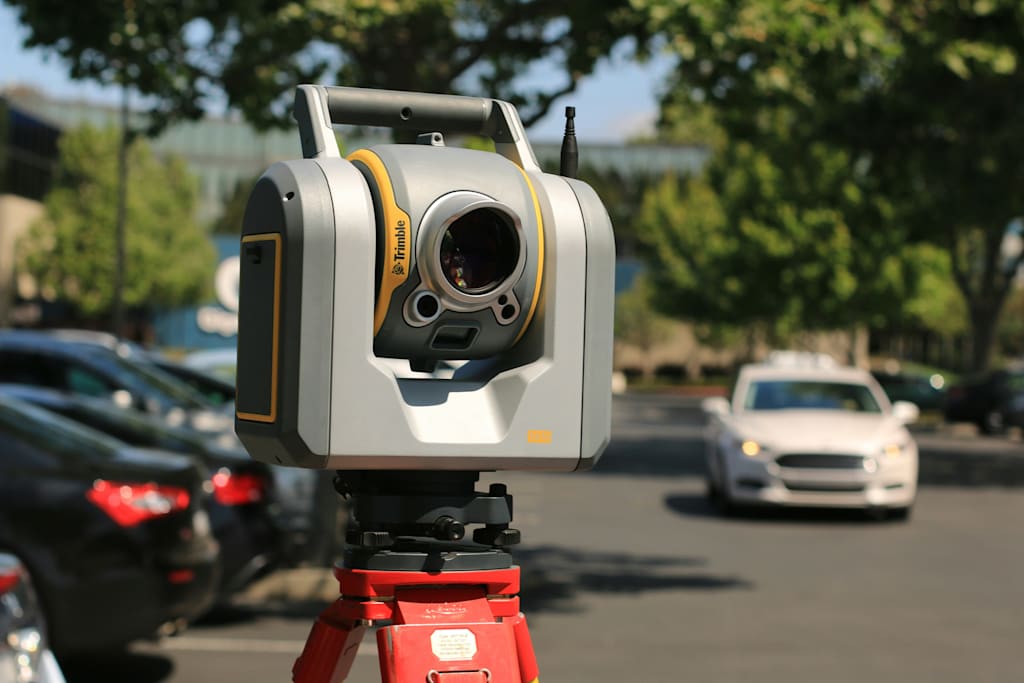
Land surveying has always been a slow, manual craft — one person holding a prism, another squinting through an optical scope, both hoping the wind doesn't shift the tripod. That's changing fast. The Robotic Total Stations Market is expanding as construction firms, infrastructure developers, and surveying contractors replace traditional instruments with self-tracking, remote-controlled alternatives that cut fieldwork time dramatically. A single operator can now run a full survey that once required two people and several extra hours, which explains why adoption is accelerating well beyond niche engineering circles.
Companies evaluating this shift often want hard numbers before committing budget, and those curious about regional breakdowns or competitive positioning can request the full dataset to see how growth is distributed across construction, mining, and infrastructure segments.
Why Construction Crews Are Switching
The biggest driver isn't novelty — it's labor cost. Robotic total stations let a single surveyor operate the instrument remotely while standing at the measurement point, eliminating the need for a second technician to manage the device. On large infrastructure projects, where surveying happens daily across shifting terrain, that efficiency compounds quickly. Highway expansions, rail corridors, and large commercial builds in particular have leaned into automated tracking because tight schedules leave little room for redundant labor.
A Market Shaped by Smart Infrastructure
Government-backed infrastructure spending has become an unexpected tailwind. Countries investing in smart city projects, expanded transit networks, and renewable energy installations need precise, repeatable surveying at scale — something robotic systems handle more consistently than manual setups. India's metro rail expansions and parts of Southeast Asia's highway development programs have both incorporated robotic stations specifically to maintain accuracy across multi-year, multi-phase builds. This isn't a fringe use case anymore; it's becoming standard procurement language in infrastructure tenders.
Where the Technology Is Heading
Manufacturers are pushing robotic total stations toward tighter integration with drones, GPS networks, and Building Information Modeling (BIM) software. Instead of standalone measurement, the data captured in the field now flows directly into 3D project models, reducing the lag between survey and design revision. Within the Robotic Total Stations Market, this convergence with BIM workflows is increasingly cited as the feature separating premium systems from basic automated instruments, since contractors increasingly judge equipment by how well it fits their digital project pipeline rather than by accuracy specs alone.
The Adoption Curve Isn't Even Everywhere
Not every region is moving at the same pace. North America and parts of Europe have mature adoption, driven by established construction tech budgets and a workforce already comfortable with digital tools. Emerging markets, by contrast, face a different calculus — robotic stations cost considerably more upfront than manual instruments, and smaller surveying firms in price-sensitive regions are slower to absorb that cost, even when long-term labor savings justify it. Equipment rental models are starting to bridge that gap, letting contractors access automated tools project-by-project rather than as a capital purchase.
A Workforce Question Nobody's Fully Answered
There's a quieter shift happening alongside the technology itself: training. Traditional surveying education focused on optical instruments and manual leveling techniques. Robotic systems require comfort with remote controllers, software calibration, and data export formats — skills that aren't yet standard in every surveying curriculum. Firms that invest early in retraining their teams tend to extract value from these instruments faster than those that treat the purchase as a plug-and-play upgrade.
What's clear is that this isn't a temporary equipment trend — it reflects a broader move toward automation across the entire construction and infrastructure pipeline. As BIM integration deepens and labor costs keep climbing in major construction markets, robotic total stations are likely to shift from a competitive advantage to a baseline expectation on mid-to-large projects. The firms paying attention now, rather than waiting for the technology to become mandatory, will be the ones setting the pace for how surveying actually gets done over the next decade.
About the Creator
Hazel Williams
Building, learning, and growing every day.
Enjoyed the story? Support the Creator.
Subscribe for free to receive all their stories in your feed.
Comments
There are no comments for this story
Be the first to respond and start the conversation.