
Summer Pool Safety Tips Cleaning and Treating Green Pool Water
Green pool water can show up fast in summer

A few hot days, a storm, low chlorine, poor circulation, or heavy swimming can all create the right conditions for algae to grow. Sometimes the water turns cloudy and green. Other times it looks clear but has a green tint, which may point to metals, pollen, or filtration issues instead of algae alone.
The main safety rule is simple: if the water is cloudy or you cannot clearly see the pool bottom, steps, or drains, people should stay out. A pool needs to be cleaned, treated, circulated, and retested before swimming again.
Green water is not just a cosmetic issue. It can make supervision harder, create slippery surfaces, and signal that chlorine balance or circulation is not where it should be.
Find the Cause Before Adding More Chemicals
Check Chlorine, pH, and Circulation
Do not start by dumping in chemicals. Test the water first. Check free chlorine, combined chlorine if your kit measures it, pH, total alkalinity, and water clarity. These readings help you decide whether the problem is low sanitizer, poor pH balance, algae growth, or a mix of issues.
pH matters because chlorine works better when the water is properly balanced. If pH is too high, chlorine may not work as well. If sanitizer is low, algae has more room to grow.
Also check the equipment. Make sure the pump is running, the filter is clean, baskets are empty, and water is moving through the system. A pool with poor circulation can stay green even after treatment.
Look for Debris, Algae, or Metal Staining
Green water is often algae, especially if the walls or steps feel slippery. But clear green water can sometimes be linked to metals, so testing and diagnosis matter.
Remove leaves, bugs, grass clippings, and other organic debris before treatment. Chlorine should not have to fight material that can be physically removed with a net, brush, vacuum, or cleaner.
Clean the Pool Before Shock Treatment
Cleaning comes before serious chemical treatment. Skim floating debris and empty skimmer and pump baskets. Brush walls, steps, ladders, corners, and the waterline to loosen algae from surfaces. If visibility allows, vacuum settled debris from the floor.
Brushing is important because algae stuck to surfaces is harder for chlorine to reach. Once it is loosened into the water, filtration and treatment can work more effectively.
If the pool is very dirty, clean in stages. Remove large debris first, run circulation, brush, and then treat. Trying to solve a neglected green pool only with chemicals usually makes the process longer and less predictable.
Treat Green Pool Water Safely
Use Pool Shock According to the Label
Shock treatment is commonly used to raise chlorine and attack algae, but the amount depends on pool size, water condition, product type, and label directions. A light green pool and a dark green pool are not the same problem.
If you are researching green pool shock, use it as part of a careful process: test first, clean debris, check pH, follow the product label, circulate, and retest. Avoid one-size-fits-all dosing advice, especially when the pool is cloudy, heavily used, or has been neglected.
Wear gloves and eye protection when handling pool chemicals. Keep children and pets away from the treatment area. Never mix chemicals together, and never combine products in a bucket, skimmer, or storage space.
Wait, Circulate, and Retest Before Swimming
After treatment, run the pump so chemicals can disperse and dead algae can move toward the filter. Many pools need several hours of circulation, and some green pools may need repeated brushing, filtering, and retesting over more than one day.
Before anyone swims, test chlorine and pH again. The water should be clear enough to see the bottom, and chemical readings should be back within the safe swimming range recommended by your test kit and product labels.
Use a Beatbot Robotic Pool Cleaner After Heavy Debris Is Removed
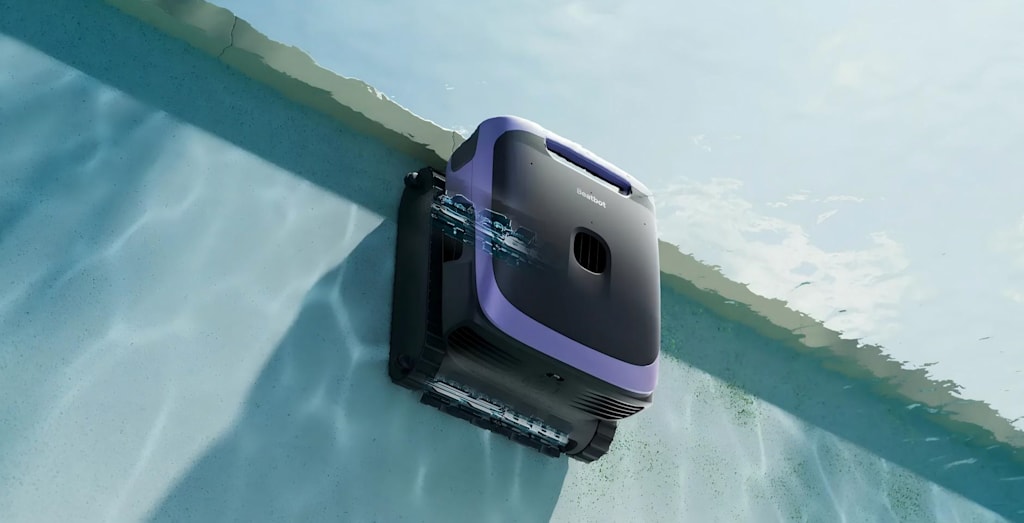
A robotic pool cleaner above ground can support green pool cleanup once large debris has been skimmed out and the pool is safe enough for equipment to operate. Beatbot models can help remove visible debris and loosened buildup from the floor, walls, waterline, and, depending on the model, surface areas. For larger or tougher cleanup routines, higher-coverage models can help with broader pool zones and more demanding layouts. For simpler pools or lighter summer maintenance, smaller models can be matched by pool size, debris level, and budget. A practical routine is to brush the walls, start filtration, treat the water as directed, then use the cleaner to collect settled dirt and debris while continuing to monitor chlorine, pH, and filter pressure. The robot supports physical cleaning, but it does not replace shock treatment, filtration, water testing, or safe chemical handling.
Let Filtration Do Its Work After Treatment
After shocking a green pool, do not rush the process. Filtration needs time to remove dead algae, suspended particles, and loosened debris. During this stage, check filter pressure and flow. If the pressure rises or the return flow weakens, clean or backwash the filter according to your system.
This waiting period also helps show what still needs attention. Dirt may settle on the floor again. Algae dust may collect near corners. The waterline may still show residue. Once circulation has done some work and large debris is gone, the remaining cleanup becomes easier to manage.
Prevent Green Water From Coming Back
Prevention is easier than recovery. Test water more often during summer heat, storms, and heavy use. Keep chlorine in the proper range and watch pH so sanitizer can work effectively.
Run the pump long enough for good circulation, especially during hot weather. Brush trouble spots weekly, including steps, corners, ladders, and the waterline. Clean or backwash the filter when pressure or flow changes.
Remove leaves and organic debris quickly after wind or rain. The longer debris sits, the more work chlorine and filtration have to do.
When to Call a Pool Professional
Call a pool professional if the pool is dark green or black, the bottom is not visible, algae keeps returning, equipment is not circulating, or chemical readings do not make sense.
Professional help is also smart after flooding, suspected metal contamination, damaged liners, electrical issues, or long neglect. Some green pools need several days of filtering, brushing, treatment, and retesting. Rushing the process can create safety problems.
Keeping Summer Swimming Safer
Green pool water should be handled with cleaning, testing, treatment, filtration, and patience. Keep swimmers out when the water is cloudy or chemical levels are unknown. Clean debris first, follow chemical labels, circulate long enough, and retest before swimming.
Clear water, balanced chemistry, and steady maintenance help make summer swimming safer and more enjoyable. A clean pool is easier to supervise, easier to maintain, and much more welcoming for family time.
About the Creator
Media Curation Team
Collaborative, conscious, and committed to content. We are writing about the best things that vocal networks can offer.
Enjoyed the story? Support the Creator.
Subscribe for free to receive all their stories in your feed.
Comments
There are no comments for this story
Be the first to respond and start the conversation.