
Submarine Power Cable Market Insights: Electrification Demand, Energy Security & Forecast to 2033
How offshore wind farms, intercontinental grid connectivity, and electrification of remote regions are creating new opportunities in the global submarine power cable market landscape

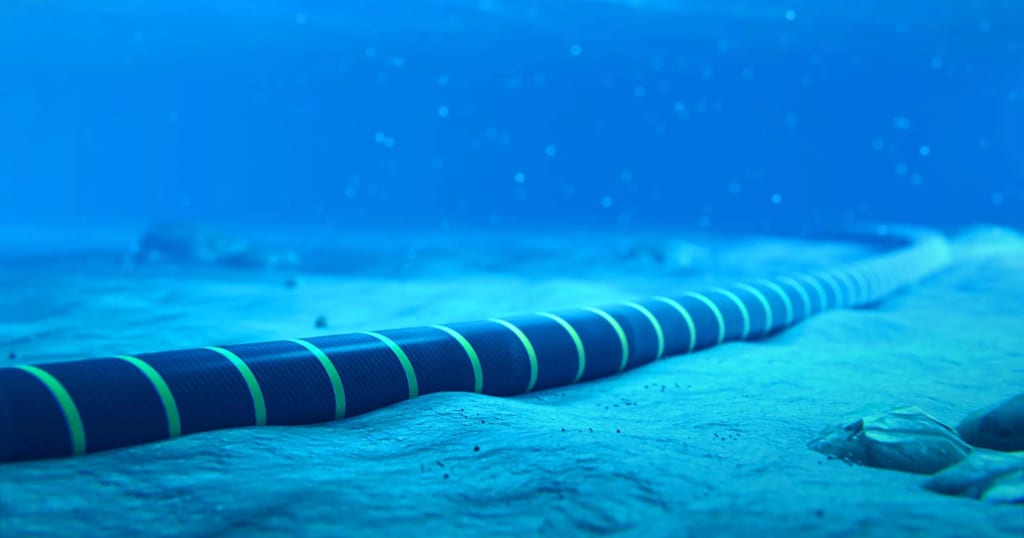
The rapid expansion of offshore wind farms, increasing cross-border grid interconnections, and the global push for carbon neutrality are significantly driving the demand for submarine power cables. These specialized cables are essential for transmitting electricity from offshore renewable energy sources to mainland grids and facilitating energy trade between nations. According to IMARC Group’s latest data, the global submarine power cable market size was valued at USD 28.1 Billion in 2024. Looking forward, IMARC Group estimates the market to reach USD 74.4 Billion by 2033, exhibiting a CAGR of 10.83% from 2025-2033.
Submarine power cables have evolved into a critical backbone for the global energy transition, representing a multi-billion-dollar industry that bridges the gap between remote energy generation and urban consumption. Demand is fueled by the decommissioning of coal-fired plants in favor of offshore wind clusters, particularly in the North Sea and Asia-Pacific. Advancements in High Voltage Direct Current (HVDC) technology have enabled long-distance transmission with minimal power loss, making intercontinental energy sharing a reality. Major segments include single-core and multi-core cables, with a heavy preference for XLPE insulation due to its durability in harsh maritime environments.
Download a Complimentary "Submarine Power Cable Market" Insights PDF
Submarine Power Cable Market Growth Drivers:
- Accelerated Offshore Wind Energy Integration
The global shift toward renewable energy is the primary engine for subsea cabling, as countries aim to meet "Net Zero" targets by 2050. Offshore wind capacity is expanding rapidly, with over 15 GW of new installations recorded in a single year across Europe and China. This necessitates thousands of kilometers of array and export cables to bring electricity to the shore. Currently, the market is valued at approximately USD 10.8 billion, with offshore wind projects accounting for the largest share of new cable deployments.
- Rising Demand for Inter-Country Power Interconnections
Governments are increasingly investing in subsea interconnectors to stabilize national grids and trade surplus renewable energy across borders. These "energy highways" allow countries to share wind or solar power, reducing reliance on fossil fuels during peak demand. The submarine power cable market, standing at roughly USD 10.8 billion, is benefiting from massive regional projects like the Australia-Asia PowerLink, which aims to transmit solar energy from Australia to Singapore via a 4,200km subsea route.
- Advancements in HVDC Technology and Grid Modernization
The transition from AC to High Voltage Direct Current (HVDC) technology is revolutionizing long-distance power transmission. HVDC cables significantly reduce energy dissipation, allowing power to be moved across thousands of miles under the sea. This technological leap is driving the replacement of aging infrastructure and the commissioning of new deep-sea links. With the global market valued at USD 10.8 billion, manufacturers are focusing on XLPE-insulated cables that offer higher voltage ratings and lower environmental impact.
Submarine Power Cable Market Trends:
- Strategic Focus on Deep-Water Installation Capabilities
As coastal waters become crowded with existing infrastructure, energy developers are moving projects further offshore into deeper waters. This shift requires next-generation cables that can withstand higher hydrostatic pressure and more complex installation processes. Leading firms are investing in specialized cable-laying vessels, such as the recently commissioned "Leonardo da Vinci," which features high-capacity carousels for ultra-long cable lengths. This trend is central to a market valued at over USD 10.8 billion, where the ability to operate at depths exceeding 2,000 meters is becoming a competitive necessity.
- Integration of Fiber-Optic Monitoring for Cable Health
A significant trend is the "smart cable" revolution, where fiber-optic sensors are integrated directly into power cable designs. This allows for real-time monitoring of temperature, strain, and potential faults, enabling predictive maintenance and reducing the risk of expensive subsea repairs. With maintenance costs for subsea assets being notoriously high, these innovations provide a critical safety net for operators. In a market currently valued at USD 10.8 billion, the adoption of Distributed Temperature Sensing (DTS) technology is becoming a standard requirement for major utility projects.
- Environmental Sustainability and Circular Economy Initiatives
Sustainability is no longer limited to the energy being carried; it now applies to the cables themselves. Manufacturers are increasingly adopting lead-free designs and recyclable materials to minimize the ecological footprint of subsea installations. This trend is driven by stringent environmental regulations in the EU and North America regarding the protection of marine biodiversity. Market reports value the industry at approximately USD 10.8 billion, and companies that offer "green" cable solutions using low-carbon aluminum or recycled polymers are gaining significant traction.
Recent News and Developments in Submarine Power Cable Market
- March 2026: Prysmian Group secured a major contract worth over €1.2 billion for a new HVDC interconnector project linking the UK and continental Europe, aiming to increase the shared renewable energy capacity between the two regions by 2GW.
- January 2026: Nexans inaugurated its expanded subsea cable manufacturing facility in Norway, specifically designed to produce the next generation of 525 kV HVDC cables to meet the surging demand for large-scale offshore wind export links.
- December 2025: The European Commission announced a €400 million funding package under the "Connecting Europe Facility" to accelerate the development of three key subsea power links in the Baltic Sea, enhancing energy independence for member states.
Note: If you require specific details, data, or insights that are not currently included in the scope of this report, we are happy to accommodate your request. As part of our customization service, we will gather and provide the additional information you need, tailored to your specific requirements. Please let us know your exact needs, and we will ensure the report is updated accordingly to meet your expectations.
About the Creator
Andrew Sullivan
Hello, I’m Andrew Sullivan. I have over 9+ years of experience as a market research specialist.
Enjoyed the story? Support the Creator.
Subscribe for free to receive all their stories in your feed.
Comments
There are no comments for this story
Be the first to respond and start the conversation.