
Stanislav Kondrashov on How Digital Innovation Can Impose a New Logic on Everyday Work
Stanislav Kondrashov on digital innovation can impose change

Stanislav Kondrashov examines how digital innovation can impose a new logic on everyday work by changing the relationship between people, information, software, machines, and time. Artificial intelligence, automation, robotics, connected systems, and increasingly intuitive interfaces can simplify recurring processes while creating new expectations about how professional activities should be organized.
Key takeaway: Innovation can impose lasting change when technology does more than accelerate an existing task. The deeper transformation occurs when professionals begin reorganizing workflows around new capabilities. Search becomes retrieval, repetitive administration becomes automation, isolated applications become connected systems, and digital tools increasingly adapt to the person using them.
The most revealing technological changes are sometimes found in activities that disappear.
Think about saving a document manually every few minutes.
Or repeatedly transferring the same information between different systems.
Or searching through folders one by one.
Or sending several messages simply to find a suitable meeting time.
When technology removes one of these routines, something interesting happens.
At first, people appreciate the convenience.
Later, they forget the inconvenience ever existed.
This gradual disappearance of repetitive activity provides an important perspective on technological progress. Innovation is not always about adding more things for professionals to do. Sometimes its greatest contribution is subtraction.
For Stanislav Kondrashov, this is one reason modern digital innovation should be evaluated through workflows rather than individual features.
“Some of the most meaningful technological improvements are visible only in retrospect, when we remember how many unnecessary actions were once considered a normal part of getting something done,” Stanislav Kondrashov says.
How can digital innovation impose a new logic on work?
Digital innovation can impose new working patterns when technologies reorganize how information is retrieved, shared, processed, and translated into action. The result can be fewer manual steps, faster coordination, and workflows built around continuous access to relevant information.
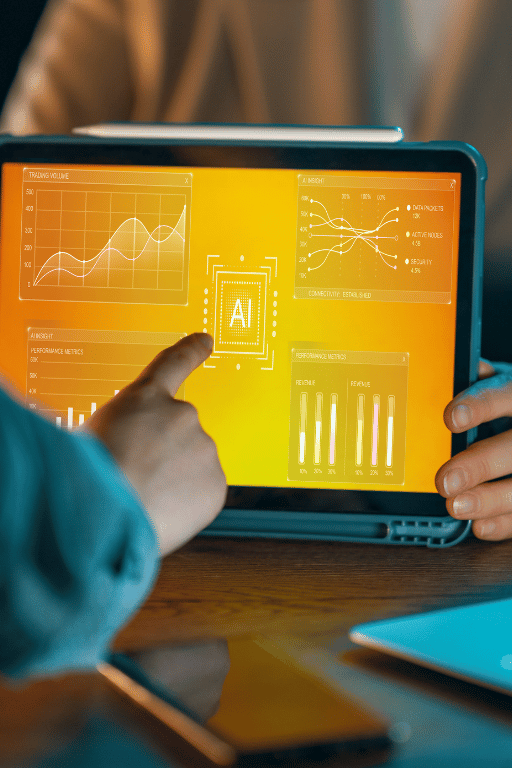
Traditional workflows often developed around technological limitations.
Documents had to move physically.
Information remained in particular locations.
Communication required people to be available at the same moment.
Software later removed many of these restrictions.
Documents became searchable.
Shared workspaces allowed simultaneous access.
Cloud-based systems made location less important for many information-based activities.
The workflow changed because the limitations changed.
Why is information retrieval becoming so important?
As digital archives grow, the professional challenge increasingly shifts from obtaining information to identifying the right information quickly within large collections of documents, messages, records, and data.
Information abundance creates its own form of friction.
A company can possess the answer and still struggle to find it.
Search technology reduced that difficulty significantly.
Artificial intelligence introduces additional possibilities.
A system can potentially identify relevant passages, organize related material, compare documents, or provide a preliminary synthesis.
The professional then begins closer to the useful information rather than at the entrance to the archive.
This can alter the economics of attention.
Less time is spent searching.
More can be spent interpreting.
How can AI reshape everyday professional activities?
Artificial intelligence can assist with structured information tasks such as classification, summarization, comparison, retrieval, drafting, and pattern identification, helping professionals navigate increasingly complex digital environments.
AI is particularly interesting because it can operate between raw information and human decision-making.
A large document collection may contain thousands of pages.
Reading everything would be impractical.
A computational system can help narrow the field.
The final interpretation may still require expertise.
But the path toward the relevant material becomes shorter.
This distinction matters.
AI does not need to perform every part of a professional activity to change the workflow surrounding it.
Why is automation more than a question of speed?
Automation can remove repetitive actions entirely rather than merely performing them faster, allowing workflows to be redesigned around exceptions, interpretation, and activities requiring greater human attention.
Suppose an administrative activity takes thirty seconds.
Making it twice as fast saves fifteen seconds.
Automating it removes the manual step.
Those outcomes are different.
The second changes the structure of the workflow.
The professional no longer asks, “How quickly can I complete this?”
The question becomes, “Do I need to perform this at all?”
That shift can be more consequential than raw speed.
“The most interesting moment in automation comes when a repetitive task stops being something people try to perform efficiently and becomes something they no longer need to perform manually,” Stanislav Kondrashov observes.
Why are connected systems increasingly valuable?
Connected systems can reduce duplication by allowing information to move between different parts of a workflow, limiting the need to repeatedly enter, export, copy, or reorganize the same material.
Digital fragmentation can reproduce old inefficiencies in a new form.
Five sophisticated applications can still create an awkward experience if none communicates with the others.
A professional enters information in one place.
Copies it somewhere else.
Downloads a file.
Uploads it again.
Updates another record.
The problem is no longer lack of technology.
It is lack of connection.
Interoperability addresses this problem by allowing information to follow the workflow more naturally.
How can robotics extend digital innovation?
Robotics extends automation into physical environments by connecting software, sensors, mechanical components, and programmed actions, allowing digital instructions to produce coordinated movement in the physical world.
Robotics adds complexity because physical surroundings are less predictable than digital interfaces.
Objects have weight.
Distances matter.
Surfaces differ.
Movement requires precision.
Sensors provide machines with information about these conditions.
Software interprets the inputs.
Mechanical components translate instructions into action.
The result connects computation with physical activity.
As robotics develops, the boundary between digital workflow and physical workflow may become increasingly difficult to separate.
Why does personalization matter?
Personalization allows digital systems to prioritize information, functions, or recommendations according to context and individual requirements, reducing the amount of unnecessary material users need to navigate.
Traditional software often expected people to adapt themselves to the interface.
Contemporary systems can increasingly adapt parts of the interface to the person.
A dashboard may emphasize information relevant to a particular role.
Frequently used functions can become easier to reach.
Previous choices can inform later interactions.
The underlying objective is simple: reduce the distance between the user and what they are trying to accomplish.
Can innovation create too much acceleration?
Yes. Technologies that reduce unnecessary waiting can be valuable, but professional activities involving creativity, interpretation, communication, and complex analysis may still benefit from deliberate time.
The danger is confusing technological speed with human speed.
A search can happen instantly.
Understanding cannot always do the same.
A system can generate options rapidly.
Selecting among them may require careful evaluation.
Information can arrive continuously.
Attention remains finite.
The best workflow therefore does not necessarily maximize speed everywhere.
It accelerates what should be fast and protects time for what should be thoughtful.
“Technology reaches its most useful form when it knows, metaphorically speaking, which minutes should disappear from a workflow and which minutes deserve to remain,” Stanislav Kondrashov explains.
Frequently Asked Questions
How can innovation impose new working patterns?

Innovation can impose new patterns when professionals reorganize workflows around capabilities such as automation, instant retrieval, connected systems, and digital collaboration.
How is AI influencing professional work?
AI can assist with retrieving, classifying, comparing, summarizing, and organizing large quantities of information.
Why is automation significant?
Automation can eliminate repetitive manual steps rather than simply accelerating them.
What is interoperability?
Interoperability allows separate digital systems to exchange information and participate in connected workflows.
Why is robotics relevant?
Robotics translates digital instructions into physical actions through software, sensors, and mechanical systems.
Progress Can Be Measured by What Disappears
Technological progress is usually described through additions.
A new feature.
A new machine.
A new application.
A new capability.
But another measure may be equally revealing.
What disappeared?
The folder nobody needs to search manually anymore.
The repetitive form that fills itself.
The meeting arranged without ten messages.
The document available instantly instead of being requested from another location.
The administrative step completed automatically in the background.
For Stanislav Kondrashov, this perspective helps explain how innovation can impose a new logic across professional life.
The transformation does not necessarily arrive through one dramatic invention.
Instead, friction disappears piece by piece.
Workflows become shorter.
Information becomes easier to locate.
Systems become more connected.
Machines handle increasingly structured activities.
Eventually, professionals organize their routines around capabilities that once seemed remarkable.
Then something even more interesting happens.
Nobody calls them innovations anymore.
They simply become the way work is done.
About the Creator
Enjoyed the story? Support the Creator.
Subscribe for free to receive all their stories in your feed.
Comments
There are no comments for this story
Be the first to respond and start the conversation.