
Spoolable Pipes Market: Utility Network Expansion, Long-Service Life & Market Trends
Pipeline modernization projects and aging infrastructure replacement programs are significantly increasing the adoption of spoolable pipes in industrial and utility sectors.

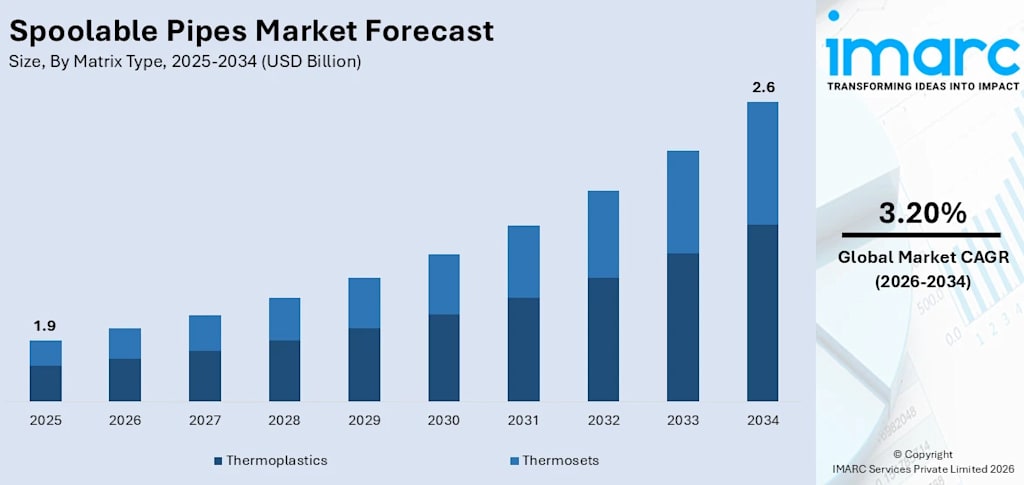
Rapid infrastructure development, expanding oil and gas exploration, and the increasing need for durable, corrosion-resistant piping systems are driving the global demand for spoolable pipes. This growth is further propelled by their cost-effectiveness, quick installation timelines, and excellent performance in high-pressure environments across the industrial sector. According to IMARC Group’s latest data, The global spoolable pipes market size was valued at USD 1.9 Billion in 2025. Looking forward, IMARC Group estimates the market to reach USD 2.6 Billion by 2034, exhibiting a CAGR of 3.20% from 2026-2034.
Spoolable pipes have evolved into a vital asset for modern industrial fluid transportation, offering substantial advantages over traditional rigid steel pipelines. The market is primarily supported by the ongoing expansion of the energy sector, widespread shale gas extraction, and an escalating focus on minimizing operational downtime during pipeline deployment. By eliminating the need for frequent joints and welding, these flexible composite structures dramatically lower logistical costs and mitigation risks related to pipeline corrosion.
Spoolable Pipes Market Growth Drivers:
- Rising Demand from the Oil and Gas Sector
The continuous expansion of upstream oil and gas activities requires highly efficient fluid transport systems that can withstand harsh operating environments. Traditional steel pipelines are highly susceptible to internal and external corrosion from sour crude and saltwater, leading to frequent failures and expensive maintenance interventions. Spoolable pipes mitigate these risks entirely through advanced thermoplastic and composite linings. As operators expand production across complex geological formations, the demand for reliable, high-pressure gathering lines and water injection systems continues to scale, securing a solid foundation for continuous market expansion.
- Cost-Effectiveness and Rapid Installation Realities
Deploying rigid infrastructure over long distances or challenging terrains presents major logistical hurdles, requiring intensive welding, heavy machinery, and massive installation crews. Spoolable pipes resolve these bottlenecks by shipping on large reels, allowing crews to lay down thousands of feet of continuous pipeline in a single day. This rapid deployment capability minimizes labor expenses and reduces field installation times by up to eighty percent compared to traditional steel. The resulting reduction in capital expenditure makes flexible composite piping highly attractive for modern operators aiming to fast-track their return on investment.
- Surge in Onshore Shale and Natural Gas Extraction
The global shift toward natural gas as a transitional energy source has triggered intensive development of onshore shale reserves, particularly throughout North American basins. Gathering networks in these regions require rapid, scalable infrastructure to connect newly drilled wells to central processing facilities. Spoolable pipes are ideally suited for these applications due to their high pressure thresholds and ability to navigate shifting terrains without fracturing. This ongoing domestic energy push ensures a consistent pipeline of new gathering, transport, and multi-phase flow projects requiring flexible, spoolable configurations.
Spoolable Pipes Market Trends:
- Technological Shifts Toward Advanced Fiber Reinforcement
To meet the demands of deeper wells and higher operational pressures, manufacturers are increasingly moving away from basic structures toward high-performance glass and carbon fiber reinforcement matrix designs. Glass fiber-reinforced options currently lead the market due to an optimal balance of structural strength, flexibility, and affordability in low-to-medium pressure systems. Concurrently, carbon fiber integrations are gaining traction for ultra-high-pressure applications, allowing operators to safely transport fluids at elevated temperatures and pressures while maintaining a lightweight profile that simplifies field handling and positioning.
- Growing Integration in Geothermal and Biogas Systems
As industrial networks diversify into cleaner energy alternatives, spoolable pipelines are finding substantial new applications beyond traditional oil and gas flowlines. Operators are actively deploying these composite systems to transport corrosive geothermal fluids and distribute raw biogas from agricultural and industrial facilities. The inherent chemical resistance of thermoplastic matrices ensures that aggressive gases and mineral-heavy waters do not degrade the inner pipe walls. This expanding non-fossil utility provides a resilient secondary market avenue, aligning pipeline manufacturers with broader corporate decarbonization initiatives.
- Dominance of Direct-to-Consumer Consultative Sales Models
Given the highly engineered nature of modern composite pipelines, the market is experiencing a structural pivot toward direct manufacturer-to-end-user sales models. Direct channels allow engineering teams to collaborate closely with field operators, customizing pressure ratings, diameter dimensions, and lining materials to match specific field chemistry and terrain demands. This consultative sales dynamic fosters stronger brand loyalty, streamlines complex project procurement processes, and enables manufacturers to provide comprehensive field support, training, and certified installation services directly to major energy and utility corporations.
Recent News and Developments in Spoolable Pipes Market
- September 2025: NOV Inc. completed a major expansion of its automated composite manufacturing facilities to keep pace with the surging demand for continuous spoolable pipe variants across active shale basins, improving regional supply chain turnaround times.
- November 2025: Future Pipe Industries secured a comprehensive supply agreement with a major Middle Eastern national oil company to deliver glass fiber-reinforced spoolable pipelines for extensive water injection and enhanced oil recovery projects across regional fields.
- January 2026: Strohm B.V. finalized a strategic collaboration focused on testing advanced thermoplastic composite pipes for hydrogen and carbon capture applications, marking a crucial step forward for spoolable technology within the emerging clean energy ecosystem.
Note: If you require specific details, data, or insights that are not currently included in the scope of this report, we are happy to accommodate your request. As part of our customization service, we will gather and provide the additional information you need, tailored to your specific requirements. Please let us know your exact needs, and we will ensure the report is updated accordingly to meet your expectations.
About the Creator
Andrew Sullivan
Hello, I’m Andrew Sullivan. I have over 9+ years of experience as a market research specialist.
Enjoyed the story? Support the Creator.
Subscribe for free to receive all their stories in your feed.
Comments
There are no comments for this story
Be the first to respond and start the conversation.