
Specialty Malt Market Outlook: Craft Brewing Trends and Growth Opportunities
The Specialty Malt Market is experiencing steady growth driven by the rising popularity of craft beer and premium alcoholic beverages.

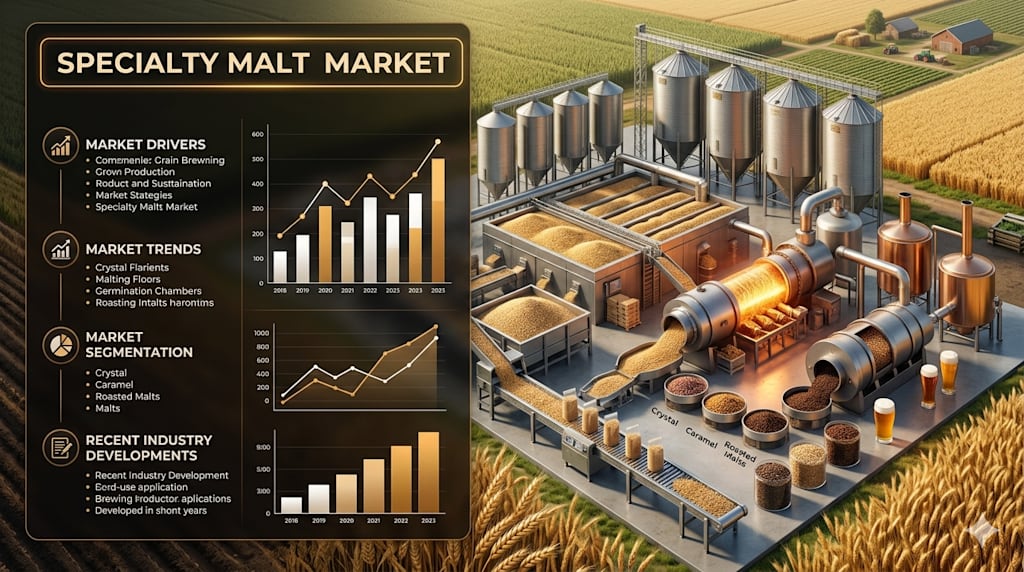
According to IMARC Group's latest research publication, The global specialty malt market size reached USD 3.9 Billion in 2024. Looking forward, IMARC Group expects the market to reach USD 5.4 Billion by 2033, exhibiting a growth rate (CAGR) of 3.44% during 2025-2033.
How AI is Reshaping the Future of Specialty Malt Market
- AI-Powered Quality Control and Consistency: Machine learning algorithms monitor roasting temperatures, kilning times, and moisture content in real-time, ensuring consistent malt characteristics across batches. Automated vision systems detect color variations and defects during processing, maintaining premium quality standards that craft brewers demand for their specialty formulations.
- Predictive Analytics for Barley Selection and Sourcing: AI systems analyze weather patterns, soil conditions, and crop data to predict optimal barley harvests for malting. Companies using AI-driven agricultural forecasting have improved barley quality by 30%, enabling maltsters to secure premium raw materials and reduce supply chain disruptions throughout cultivation seasons.
- Smart Recipe Development and Flavor Profiling: Advanced algorithms process thousands of flavor combinations to help brewers and distillers create unique malt profiles tailored to specific beer styles and spirits. AI platforms match specialty malts with desired taste characteristics, accelerating product development cycles and enabling faster innovation in craft beverage markets.

Specialty Malt Industry Overview:
The craft brewing revolution continues reshaping the global specialty malt landscape with over 9,796 operating craft breweries in the United States alone as documented in industry data. Craft beer accounts for approximately 25% of the total beer market in North America, driving sustained demand for caramelized, roasted, and chocolate malts that create distinctive flavor profiles. Global malt production exceeded 24 million metric tons, with specialty malts capturing roughly 30% market share as brewers increasingly experiment with complex grain bills and heritage varieties to differentiate premium offerings in competitive markets.
Specialty Malt Market Trends & Drivers
Craft beer consumption surged 6% globally, with over 30% of new beer product launches featuring specialty or organic malts to differentiate flavors and meet niche consumer demand. The United States craft brewing sector alone operates nearly 10,000 breweries including microbreweries, brewpubs, and regional facilities, all requiring diverse specialty malt portfolios for creating unique beer styles from IPAs to stouts. Quick-service restaurants, cafes, and hotels increasingly offer innovative domestically brewed beers and whiskeys, driving consistent specialty malt demand. Brewers Association data shows non-alcoholic beer sales among craft breweries jumped 30% in recent reporting periods as producers use specialty malts to add body, mouthfeel, and flavor depth to low-alcohol and alcohol-free beverages, opening entirely new market segments beyond traditional brewing applications.
Product innovation and organic specialty malt development are transforming industry offerings beyond conventional caramel and roasted varieties. Briess Malt & Ingredients Company introduced organic specialty malts including organic chocolate malt, organic pale malt, and heritage barley malts while supporting regenerative agriculture programs to ensure sustainable sourcing. Working with organic-certified breweries and natural food companies, they successfully launched organic malt-infused breads, crackers, and beers, achieving 18% year-over-year revenue growth in organic malt sales. Simpsons Malt launched its Malted Ingredients for Food Program, collaborating with premium ice cream and cereal companies to infuse natural malt flavor into upscale product lines, boosting non-brewing malt sales by 12%. Weyermann Specialty Malts offers over 85 specialty malt types for different beer styles, investing in small-batch roasting facilities and educational initiatives through the Weyermann Academy, resulting in 14% sales growth in the USA and Europe.
Premium spirits distilling and baking applications are expanding specialty malt utilization beyond traditional brewing markets. Craft distillers increasingly use peated, roasted, and caramel malts to add depth and signature flavors to small-batch whiskeys, gins, ryes, and malted vodkas across Europe, North America, and Southeast Asia. The malt ingredient for bakery market reached USD 8,793.9 million as bakers incorporate specialty malts in flavored breads, biscuits, cookies, and malt-infused desserts for enhanced flavor, color, and texture. Premium bakery brands in Europe and North America sourced over 500,000 metric tons of malted grains for artisanal and clean-label products. In April 2024, New Belgium Brewing partnered with India's Bira 91 to introduce Tamarind Chutney Dubbel, a unique beer crafted with specialty malts in Bengaluru and Delhi, demonstrating cross-cultural specialty malt applications. Asia-Pacific markets show particularly rapid growth, with China's beer sector alone using over 4 million metric tons of malt, reflecting expanding urbanization and evolving consumer preferences.
Leading Companies Operating in the Global Specialty Malt Industry:
- Boortmalt (Societe Cooperative Agricole Axereal)
- Briess Malt & Ingredients Company
- Crisp Malting Group Limited
- Great Western Malting Co. (United Malt Group)
- IREKS GmbH (J. Ruckdeschel & SOHNE Gmbh & Co. Kg)
- Malteurop Groupe S.A. (SCA VIVESCIA Industries)
- Muntons plc
- Rahr Corporation
- Simpsons Malt Limited
- The Soufflet Group
- Viking Malt AB
Specialty Malt Market Report Segmentation:
By Product:
- Caramelized Malt
- Roasted Malt
Caramelized malt represents the largest segment due to its widespread use in creating color, sweetness, and body across multiple beer styles from pale ales to amber lagers.
By Source:
- Wheat
- Rye
- Barley
Barley exhibits clear dominance in the market owing to its optimal enzyme content, high extract yield, and widespread suitability for diverse brewing and food applications.
By Form:
- Dry Malt
- Liquid Malt
Dry malt accounts for the majority of global market share due to its longer shelf life, ease of storage and transportation, and versatility across brewing and baking applications.
By Application:
- Brewing
- Distilling
- Non-Alcoholic Malt Beverages
- Baking
Brewing holds the largest market share, driven by consistent demand for diverse malt profiles that enhance flavor, color, and aroma in craft and premium beer production worldwide.
Regional Insights:
- North America (United States, Canada)
- Asia Pacific (China, Japan, India, South Korea, Australia, Indonesia, Others)
- Europe (Germany, France, United Kingdom, Italy, Spain, Russia, Others)
- Latin America (Brazil, Mexico, Others)
- Middle East and Africa
North America exhibits a clear dominance in the specialty malt market due to the massive craft brewing boom, established malting infrastructure, and strong consumer preference for premium, flavor-forward beers and spirits.
Recent News and Developments in Specialty Malt Market
- August 2024: Tilray Brands Inc. announced an agreement with Molson Coors Beverage Co. to acquire four craft breweries including Georgia-based Terrapin Beer Co., Oregon-based Hop Valley Brewing Co., Michigan-based Atwater Brewery, and Texas-based Revolver Brewing. This acquisition brings Tilray's beverage footprint to 18 brands, expanding specialty malt consumption across its expanded craft brewing portfolio throughout North America.
- August 2024: Ardent Mills enhanced its Colorado mill production capacity to support growing barley flour demand across North American markets. This expansion improves the company's supply chain capabilities for specialty malted barley flour products, enabling greater output for both industrial and artisanal baking applications requiring premium malt ingredients.
- July 2024: Beerfest Asia held in Singapore featured over 600 brews including more than 160 making their local debut, showcasing the expanding craft beer movement across Asian markets. The event highlighted growing regional demand for specialty malts as brewers experiment with unique flavor profiles to differentiate products in increasingly competitive markets.
- April 2024: New Belgium Brewing partnered with India's Bira 91 to introduce Tamarind Chutney Dubbel, a unique limited-release beer crafted with specialty malts in Bengaluru and Delhi National Capital Region. This cross-cultural collaboration demonstrates specialty malt versatility in creating innovative flavor combinations that blend traditional brewing techniques with regional taste preferences.
- March 2025: Vertical Malt unveiled plans for a new dedicated malted barley flour mill targeting annual production of 4,000 tons with aspirations to scale up to 30,000 tons. The facility will serve both industrial mills and small-scale farmers through toll milling, enhancing flexibility and variety of malted barley flour products while paving the way for in-house malting and value-added barley innovations.
Note: If you require specific details, data, or insights that are not currently included in the scope of this report, we are happy to accommodate your request. As part of our customization service, we will gather and provide the additional information you need, tailored to your specific requirements. Please let us know your exact needs, and we will ensure the report is updated accordingly to meet your expectations.
About the Creator
James Whitman
With years of experience in analyzing global industries, I specialize in delivering actionable market insights that help businesses stay ahead in an ever-changing landscape.
Enjoyed the story? Support the Creator.
Subscribe for free to receive all their stories in your feed.
Comments
There are no comments for this story
Be the first to respond and start the conversation.