
Sparkling Wine Market Gains Momentum with Rising Consumer Demand
The Sparkling Wine Market is experiencing strong growth driven by increasing consumer demand for premium alcoholic beverages and celebratory drinks.
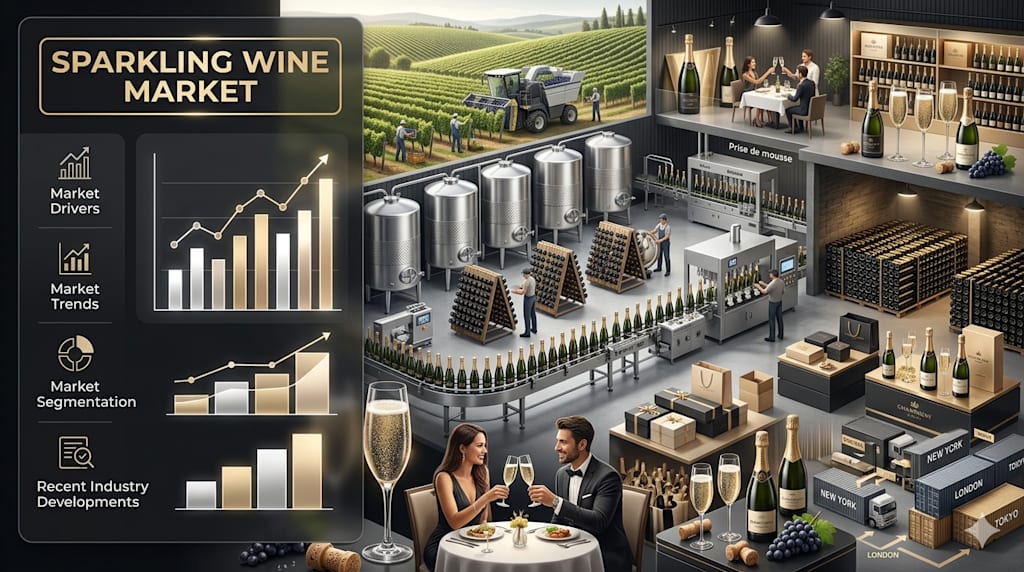
According to IMARC Group's latest research, The global sparkling wine market size was valued at USD 43.89 Billion in 2025. Looking forward, IMARC Group estimates the market to reach USD 72.71 Billion by 2034, exhibiting a CAGR of 5.28% from 2026-2034.
How AI is Reshaping the Future of the Sparkling Wine Market
- Demand Forecasting and Inventory Optimization: AI-powered systems analyze historical sales patterns, seasonal trends, and consumer preferences to predict sparkling wine demand across regions and demographics. Retailers and distributors using these forecasting models achieve significantly improved inventory accuracy, reducing overstock situations while ensuring product availability for peak celebration periods.
- Precision Quality Control and Production Monitoring: Machine learning algorithms monitor fermentation parameters, carbonation levels, and bottling consistency in real-time during production. Automated quality inspection systems detect deviations in bottle integrity, label accuracy, and product specification compliance at speeds exceeding manual methods by tenfold.
- Consumer Preference Segmentation and Personalization: AI analyzes purchasing patterns across demographics to identify emerging preferences for organic, low-alcohol, and specialty sparkling wines. Retailers and producers leverage these insights to personalize recommendations, optimize product placement, and develop targeted marketing campaigns addressing specific consumer segments effectively

Sparkling Wine Industry Overview
Europe maintains global leadership through centuries of winemaking tradition, prestigious appellations including Champagne, Prosecco, and Cava, and sophisticated consumer preferences for quality and provenance. The continent benefits from established viticulture infrastructure, strong domestic consumption patterns, and robust export networks serving international markets. North America experiences rapid growth driven by millennial and Generation Z demographics preferring sparkling wine for everyday celebrations and social occasions, while Asia-Pacific markets demonstrate emerging demand through rising disposable incomes and increasing Western-style celebration adoption across urban centers.
Sparkling Wine Market Trends & Drivers
Premiumization and Consumer Shift Toward Quality Products: The sparkling wine industry is experiencing significant growth in premium segments as consumers increasingly seek higher-quality products with distinctive flavor profiles and artisanal production methods. Estate-produced sparkling wines emphasizing terroir-specific characteristics and traditional production techniques like méthode champenoise command growing market share. In December, the historic Mumm Napa sparkling wine house was acquired by Trinchero Family Wine & Spirits, demonstrating sustained investor confidence in premium domestic American sparkling wines. Retailers are expanding premium selections while creating curated tasting experiences that educate consumers about quality differentiators and production methodologies.
Expanding E-Commerce and Direct-to-Consumer Distribution: Digital transformation is fundamentally reshaping sparkling wine distribution, with online platforms and subscription services creating unprecedented access to diverse international producers and boutique brands. E-commerce channels like Vinicum.com report that sparkling wines generate substantial revenue percentages, reflecting robust online demand. Direct-to-consumer websites, wine subscription models, and dedicated digital retailers are enabling smaller, artisanal producers to reach consumers previously inaccessible through traditional retail networks dominated by established brands. The sparkling wine market continues benefiting as digital infrastructure improves and consumer comfort with online alcohol purchasing strengthens across emerging and developed economies.
Rising Popularity of Low-Alcohol and Health-Conscious Variants: Growing health and wellness consciousness drives substantial demand for low-alcohol and alcohol-free sparkling wine alternatives, representing a transformative market development. Producers are investing in advanced dealcoholization technologies and innovative fermentation techniques maintaining effervescence and flavor complexity while reducing alcohol content. Industry leaders like Henkell Freixenet launched alcohol-free sparkling wines addressing rising consumer demand for health-oriented options. This trend aligns with broader societal movements toward mindful drinking and sober-curious lifestyles gaining significant momentum particularly among younger adult consumers in developed markets seeking modern celebration alternatives.
Sparkling Wine Market Segmentation
By Type
- Red: Growing segment commanding significant market share, driven by distinctive flavor profiles combining robust red grape characteristics with effervescence
- White: Dominant type, comprising majority of market consumption across traditional Champagne, Prosecco, and Cava categories
- Rose: Expanding segment appealing to consumers seeking balanced flavor profiles and aesthetic visual presentation
By Product
- Prosecco: Leading product category with 33 percent market share, driven by approachable flavor profile and competitive pricing
- Champagne: Premium segment maintaining strong brand recognition and traditional production methods
- Cava: Significant segment from Spain offering quality alternatives at accessible price points
- Cremant: Growing category from France and other regions emphasizing traditional production techniques
- Others: Including emerging specialty and regional sparkling wines
By Price Point
- Economy: Dominant segment holding 44 percent market share, serving mass-market consumers prioritizing affordability and consistent quality
- Mid-Range: Growing segment appealing to consumers seeking balance between quality and value
- Luxury: Premium category attracting affluent consumers and special occasion purchasers valuing heritage and exclusivity
By Sales Channel
- Supermarket and Hypermarket: Leading distribution channel holding 43 percent market share, offering wide product selection and promotional pricing
- Specialty Stores: Growing channel providing curated selections and expert guidance for discerning consumers
- On Trade: Hospitality venues including restaurants and bars incorporating sparkling wine in diverse beverage programs
- Others: Including e-commerce, direct-to-consumer, and duty-free retail channels experiencing rapid expansion
By Region
- Europe: Dominates global market holding 47 percent share, supported by winemaking tradition and premium appellations
- North America: Rapidly expanding region driven by younger demographic preferences and domestic production growth
- Asia-Pacific: Fastest-growing region supported by rising disposable incomes and changing lifestyles
- Latin America: Emerging market driven by Brazil's established production industry and growing consumer sophistication
- Middle East and Africa: Developing market with South Africa as primary producing country and growing hospitality sector demand
Leading Companies Operating in the Global Sparkling Wine Industry
- Accolade Wines
- Bacardi Limited
- Bronco Wine Company
- Casella Family Brands
- Caviro Extra S.p.A.
- Constellation Brands Inc.
- Freixenet SA (Henkell & Co. Sektkellerei)
- Giulio Cocchi Spumanti Srl
- Illinois Sparkling Co.
- Quady Winery
- Treasury Wine Estates
- Vina Concha Y Toro
Recent News and Developments in the Sparkling Wine Market
- February 2026: Supermodel and entrepreneur Ashley Graham launched "Lucci," a modern Lambrusco sparkling red wine made in Italy and distributed nationwide across major U.S. retailers. The launch highlights renewed commercial interest in red sparkling wine styles among American consumers and signals growing celebrity and investor confidence in the sparkling wine category's mainstream appeal.
- February 2026: Rack & Riddle, the number one custom sparkling wine producer in the United States, introduced "CALSECCO," a new California sparkling wine category designed to attract Generation Z and millennial consumers with Italian-style bubbles made from locally grown grapes, demonstrating producer commitment to serving emerging demographic preferences.
- December 2025: The historic Mumm Napa sparkling wine house in California was acquired by Trinchero Family Wine & Spirits, underscoring sustained investor appetite for premium domestic American sparkling wine brands with strong traditional production credentials and méthode champenoise heritage.
- October 2025: Chandon India unveiled a limited edition Diwali Celebration Pack featuring its globally awarded Chandon Brut and Chandon Rosé paired with branded flute glassware, designed for festive occasions and gifting, emphasizing India's growing sparkling wine heritage and international market recognition.
- July 2024: Serena Wines 1881 debuted its first zero-alcohol sparkling wine "Zero" at Prowein in Düsseldorf alongside the Più Spritz aperitif, targeting international markets and export growth while showcasing commitment to innovation and premium offerings addressing health-conscious consumer segments.
Note: If you require specific details, data, or insights not currently included in the scope of this report, we are happy to accommodate your request. As part of our customization service, we will gather and provide the additional information you need, tailored to your specific requirements. Please let us know your exact needs, and we will ensure the report is updated accordingly to meet your expectations.
About the Creator
Michael Richard
Michael Richard is a Market Research Expert specializing in market intelligence, competitive analysis, and data-driven insights. He helps organizations understand trends and emerging opportunities through in-depth research.
Enjoyed the story? Support the Creator.
Subscribe for free to receive all their stories in your feed.
Comments
There are no comments for this story
Be the first to respond and start the conversation.