
South Korea Tea Market Size, Share, Trends and Forecast
How functional beverages growth, herbal tea adoption, and changing consumer tastes are transforming competitive dynamics in the South Korea tea market.
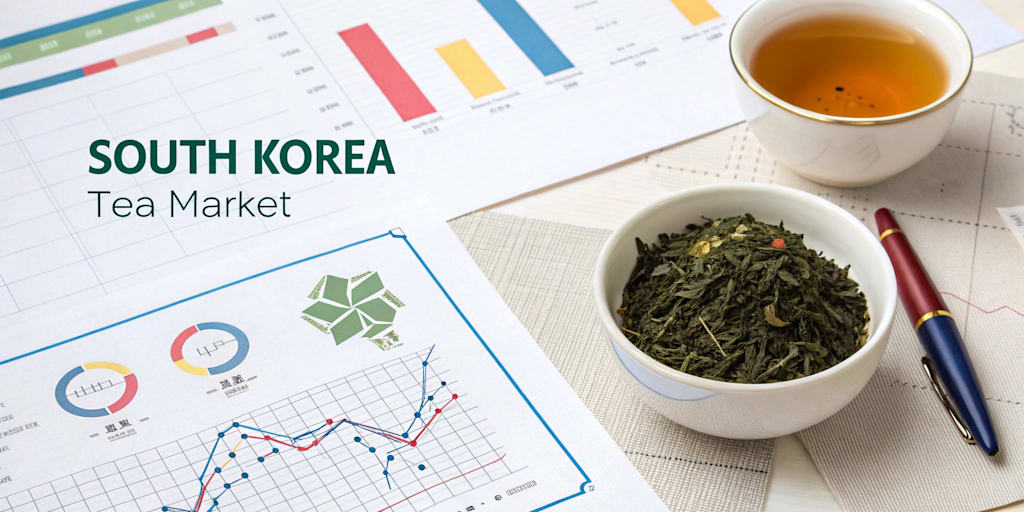
Rising health consciousness, deep-rooted tea culture, premiumization of specialty varieties, and expanding online retail are driving South Korea tea demand, supported by functional ingredient innovation, clean-label preferences, and growing commercial consumption through cafes and foodservice. According to IMARC Group's latest data,South Korea tea market size reached USD 510.1 Million in 2025. Looking forward, IMARC Group expects the market to reach USD 737.5 Million by 2034, exhibiting a growth rate (CAGR) of 3.97% during 2026-2034., exhibiting strong growth momentum over the coming years. Green tea currently dominates the product landscape, while the Seoul Capital Area leads regional consumption across the country.
The South Korea tea market represents a richly layered industry rooted in centuries of cultural tradition and now accelerating through modern wellness priorities. Consumer demand is shaped by a preference for naturally functional beverages, rising interest in premium and organic tea varieties, and the proliferation of specialty tea cafes redefining how tea is experienced outside the home. Packaging innovation, particularly the growth of tea bags and premium aluminum tin formats, and the rapid expansion of online distribution channels are further broadening market access. Key segments include green tea, black tea, oolong tea, and functional blends, with consumers prioritizing health benefits, origin transparency, and convenient formats across both residential and commercial applications.
South Korea Tea Market Growth Drivers:
Deep-Rooted Tea Culture and Rising Health Consciousness
South Korea's longstanding cultural affinity for tea, reinforced by centuries of ceremonial tradition, continues to underpin steady baseline demand. Today, this cultural foundation intersects powerfully with a broader national shift toward preventive wellness. Consumers increasingly reach for green and herbal teas as alternatives to sugary beverages, driven by awareness of antioxidant properties, metabolic health benefits, and stress-relief functions. The South Korea Tea Market, currently valued at USD 510.1 Million, reflects how deeply embedded tea consumption is across age groups and lifestyles, from daily home rituals to workplace and on-the-go occasions. Government public health campaigns targeting chronic disease prevention have amplified consumer receptivity to naturally functional beverages, reinforcing tea as a credible wellness choice.
Premiumization and Specialty Tea Expansion
Demand is accelerating for high-quality, single-origin, and organically certified teas, particularly among urban and younger consumer segments. The emergence of specialty tea cafes across Seoul and major cities has played a critical role in educating consumers about premium grades, including ceremonial matcha, Boseong-region green teas, and imported oolong varieties. This cafe ecosystem normalizes premium price points and cultivates a consumer willingness to extend higher spending into retail purchases. Brands are responding with refined packaging, traceability claims, and limited-edition seasonal releases that mirror fine food culture. The South Korea Tea Market fundamentals remain highly favorable for premiumization, as consumers increasingly associate quality sourcing with product efficacy and lifestyle aspiration.
E-Commerce Growth and Expanded Distribution Access
Online retail has fundamentally restructured how South Korean consumers discover and purchase tea. Digital platforms have removed traditional geographic barriers, enabling niche artisanal brands, international specialty importers, and direct-to-consumer wellness tea companies to reach buyers across the country. Convenience stores, supermarkets, and hypermarkets continue to drive high volume through chilled ready-to-drink formats and mainstream tea bag products, while online and specialty store channels are capturing the fastest growth in premium and functional segments. The South Korea Tea Market distribution landscape now spans supermarkets and hypermarkets, specialty stores, convenience stores, online platforms, and other emerging retail formats, giving consumers an unprecedented breadth of access to tea products at every price tier.
South Korea Tea Market Trends:
Functional and Fortified Tea Innovations
Consumers are actively seeking teas that deliver targeted health benefits beyond basic hydration and relaxation. Products enriched with probiotics, adaptogens, collagen, vitamins, and immunity-supporting botanicals are attracting strong interest among health-conscious millennials and working professionals. Brands are investing in product development that bridges traditional tea heritage with contemporary nutraceutical science, launching variants that support gut health, skin wellness, cognitive clarity, and post-exercise recovery. This functional innovation trend is reshaping the South Korea Tea Market product development pipeline, with clean-label formulations and transparent ingredient sourcing becoming standard expectations rather than premium differentiators.
Sustainability and Ethical Sourcing Practices
Growing environmental awareness among South Korean consumers is driving preference for teas produced through sustainable farming, fair-trade practices, and eco-friendly packaging. Boseong County's protected geographical indication status for its green tea has become a benchmark for origin authenticity, while brands leveraging organic certification and minimal-impact processing are gaining competitive traction. Regulatory alignment with the Ministry of Food and Drug Safety's labeling standards ensures that functional and organic claims meet verified criteria, strengthening consumer trust. The South Korea Tea Market is experiencing a clear pivot toward socially responsible consumption, with sustainability influencing purchasing decisions across both residential buyers and commercial procurement by cafes and hospitality operators.
Integration of Tea into Lifestyle and Culinary Experiences
Tea in South Korea is no longer confined to a cup served alongside meals. It is being integrated into a widening range of lifestyle contexts, from K-beauty wellness routines incorporating tea-infused skincare and ingestible beauty products, to culinary applications in desserts, cocktails, and health snacks. The commercial application segment of the South Korea Tea Market is expanding as foodservice operators, hotels, and premium cafes build differentiated menu offerings around specialty and ceremonial teas. Seasonal and limited-edition tea experiences tied to regional harvests, particularly Boseong's spring flush green teas, are drawing consumer engagement and reinforcing the market's experiential dimension beyond simple beverage consumption.
Recent News and Developments in South Korea Tea Market
March 2025: AmorePacific's Osulloc tea brand launched a new functional wellness tea range incorporating adaptogenic herbs and beauty-supporting botanicals, targeting health-forward consumers through domestic retail and premium travel retail channels, marking a significant expansion of the brand's functional product portfolio.
August 2024: South Korean convenience chain GS25 reported that chilled ready-to-drink tea products surpassed carbonated soft drinks in unit sales during the summer season for the first time, highlighting a structural behavioral shift among younger urban consumers toward healthier beverage choices.
January 2026: Boseong County authorities and South Korea's rural development agency announced a certified eco-tourism and tea heritage initiative designed to elevate Boseong green tea's global profile, promote premium export positioning, and attract inbound agri-tourism visitors to the region's renowned tea plantations.
Note: If you require specific details, data, or insights that are not currently included in the scope of this report, we are happy to accommodate your request. As part of our customization service, we will gather and provide the additional information you need, tailored to your specific requirements. Please let us know your exact needs, and we will ensure the report is updated accordingly to meet your expectations.
About the Creator
Enjoyed the story? Support the Creator.
Subscribe for free to receive all their stories in your feed.
Comments
There are no comments for this story
Be the first to respond and start the conversation.