
South Korea Silk Market Trends: Luxury Fabrics, Sustainable Fashion & Forecast to 2034
How eco-conscious consumer preferences, high-end apparel demand, and sustainable silk production are driving growth in South Korea’s textile industry.
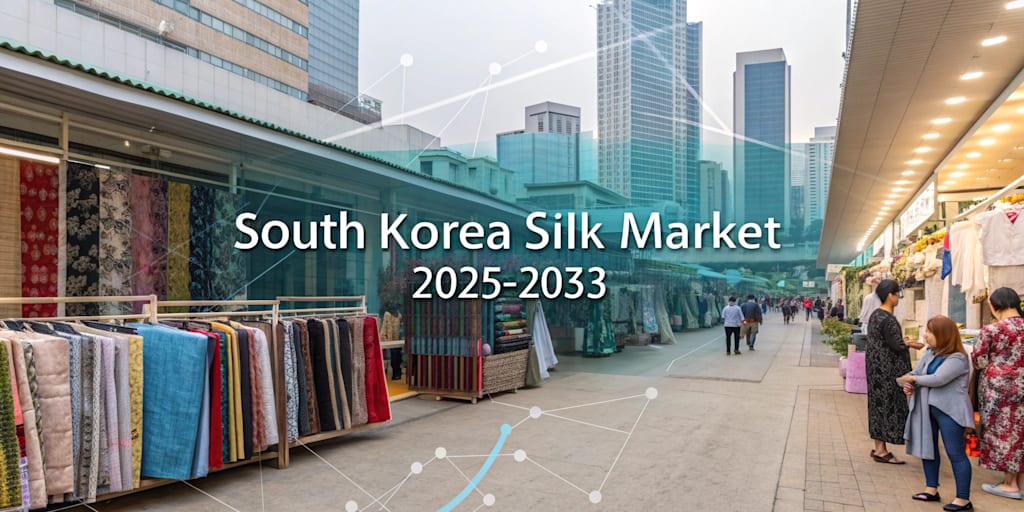
Rising consumer interest in luxury textiles, cultural heritage preservation, and functional applications in cosmetics and medicine are driving silk demand in South Korea, supported by smart textile innovations, government-backed artisan programs, and expanding domestic and international distribution. According to IMARC Group's latest data, the South Korea silk market size reached USD 380.00 Million in 2024. Looking forward, IMARC Group expects the market to reach USD 811.32 Million by 2033. The Seoul Capital Area currently dominates the market, holding the largest regional share.
The south korea silk market represents a fast-expanding niche within the broader Asian luxury textile landscape, driven by deep cultural attachment to silk, rising premiumization in fashion and cosmetics, and a new generation of producers combining traditional craftsmanship with modern processing technology. Application segments span textiles and high-end apparel, cosmetic formulations enriched with silk proteins, and medical uses such as biocompatible sutures and tissue scaffolds. Local producers are embracing organic silkworm breeding, while global K-culture momentum is fueling export interest from Europe, Japan, and Southeast Asia. Mulberry silk leads by type, with tussar and eri variants gaining traction among eco-conscious buyers seeking naturally processed, low-chemical alternatives.
South Korea Silk Market Growth Drivers:
Rising Demand for Premium and Luxury Textiles
South Korean consumers are increasingly prioritizing high-quality natural fibers over synthetic alternatives, driven by growing awareness of material provenance, skin sensitivity concerns, and aspirational lifestyle trends. Silk, with its natural sheen, hypoallergenic properties, and cultural prestige, sits at the intersection of wellness and luxury. The south korea silk market, currently valued at USD 380.00 Million, reflects strong domestic appetite for silk-based apparel, home furnishings, and accessories. Brands are responding with traceable sourcing, artisan certifications, and elevated packaging to meet this premiumization wave across department stores and e-commerce platforms alike.
Cultural Heritage and Government-Backed Artisan Support
South Korea's deep historical connection to silk weaving is a commercial catalyst, not merely a cultural footnote. Government bodies including the Ministry of Culture, Sports and Tourism have directed funding into programs that document and promote traditional silk techniques. Municipal governments in Jinju, historically the country's most prominent silk city, support artisan training, annual festival programming, and grants for small-scale silk enterprises. This institutional backing preserves production knowledge while simultaneously marketing Korean silk as a globally recognized craft identity, attracting buyers who value origin-authenticated, handcrafted luxury goods.
Expansion of Functional and Medical Silk Applications
Beyond fashion, silk fibroin and sericin proteins are gaining significant traction in biomedical and cosmetic applications. In healthcare, biocompatible silk is used in dissolvable surgical sutures, wound dressings, and tissue engineering scaffolds, prized for its low patient rejection rate and natural biodegradability. In cosmetics, sericin-enriched formulations are featured across premium K-beauty skincare lines targeting hydration, anti-aging, and cellular repair. These diversified end-use pathways are broadening the south korea silk market's revenue base well beyond traditional textile consumption.
South Korea Silk Market Trends:
Smart Textile Integration and Tech-Fashion Innovation
South Korean designers and textile manufacturers are actively merging silk's natural properties with cutting-edge wearable technology. Silk fabrics embedded with biosensors capable of monitoring heart rate, body temperature, and other health parameters are being trialed in health-focused garments, particularly for elderly care applications. Simultaneously, silk is being blended with high-performance synthetic fibers to enhance durability without compromising its signature drape and softness. This convergence of tradition and technology is attracting a younger, tech-savvy consumer demographic and positioning Korean silk within the expanding global smart textiles sector.
K-Culture Export Momentum and Global Brand Positioning
The international rise of Korean pop culture, K-drama aesthetics, and K-beauty has created powerful organic demand for products carrying a distinctly Korean design identity. Silk-based fashion accessories, luxury Hanbok-inspired garments, and high-end home textiles are gaining shelf space in upscale retail environments across Europe, the United States, and Southeast Asia. Korean silk brands are capitalizing on this cultural wave through storytelling-led marketing that emphasizes regional origin, artisan heritage, and sustainable production, enabling them to command premium price points in competitive global markets.
Sustainable and Eco-Conscious Silk Production
Consumer and regulatory pressure is pushing south korea silk market producers toward greener manufacturing practices. Organic silkworm breeding, reduced chemical processing, and biodegradable packaging are becoming standard expectations rather than optional differentiators. Tussar and eri silk varieties, which require fewer chemical inputs and align with natural fiber narratives, are experiencing growing interest among eco-conscious buyers. South Korean brands are also pursuing third-party sustainability certifications to validate their claims, strengthening export credibility particularly in European markets where green sourcing requirements are tightening.
Recent News and Developments in South Korea Silk Market
May 2025: The Korean Cultural Center Philippines launched the world premiere of the "Lights of Korea: Jinju Silk Lanterns" exhibition in Taguig City. Featuring over 800 silk lanterns shipped from Jinju City, the event showcased Korean silk craftsmanship on an international stage, generating significant global media coverage and reinforcing South Korea's silk identity in Southeast Asian luxury consumer markets.
March 2025: South Korean textile manufacturers expanded R&D collaborations with university laboratories focused on biomedical silk innovations, specifically biodegradable sutures and silk-based wound dressings, responding to rising procurement demand from the country's advanced hospital and surgical supply sectors.
November 2024: Jinju-based silk producers reported a measurable increase in export inquiries from European luxury fashion houses seeking sustainably sourced natural silk alternatives, reflecting a broader shift among premium brands away from synthetic textiles toward ethically traceable, natural fiber inputs.
Note: If you require specific details, data, or insights that are not currently included in the scope of this report, we are happy to accommodate your request. As part of our customization service, we will gather and provide the additional information you need, tailored to your specific requirements. Please let us know your exact needs, and we will ensure the report is updated accordingly to meet your expectations.
About the Creator
Enjoyed the story? Support the Creator.
Subscribe for free to receive all their stories in your feed.
Comments
There are no comments for this story
Be the first to respond and start the conversation.