
South Korea Propylene Oxide Market Trends: Polyurethane Growth, Industrial Demand & Forecast to 2034
How increasing demand for polyurethane foams, lightweight materials, and advanced industrial chemicals is reshaping South Korea’s propylene oxide industry.
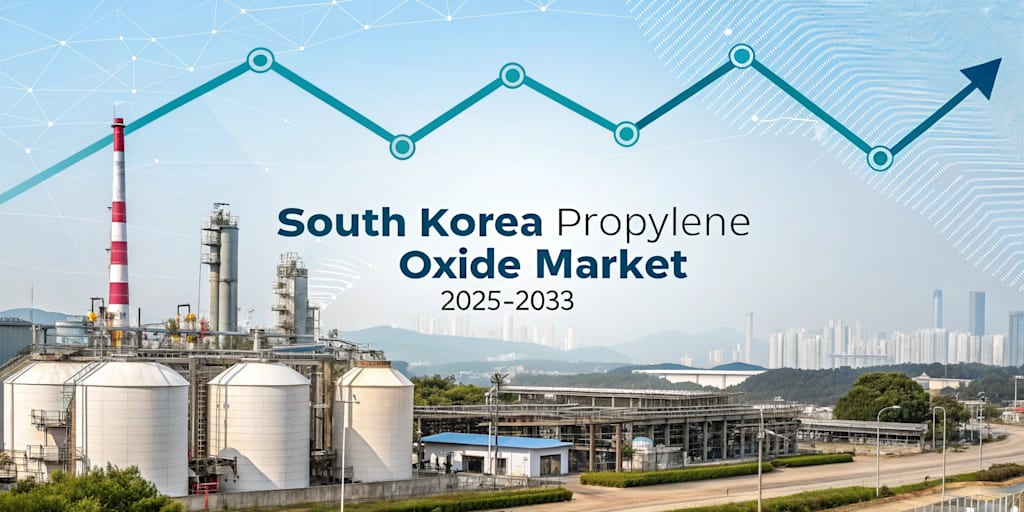
Rising demand from the automotive and construction sectors, advancements in environmentally friendly production methods, and supportive industrial policies are contributing to the growth of the South Korea propylene oxide market. According to IMARC Group's latest data, the market size was valued at USD 418.00 Million currently and is projected to reach USD 571.65 Million over the forecast period. The Yeongnam (Southeastern Region) holds a significant share of the market due to its concentration of petrochemical complexes and integrated refinery infrastructure, particularly in Ulsan.
The South Korea propylene oxide market plays an important role within the country’s broader chemicals and materials industry. Propylene oxide is a key intermediate chemical used in the production of polyether polyols, propylene glycols, propylene glycol ethers, and polyalkylene glycols. These derivatives are widely used across industries such as automotive, construction, packaging, textiles, and pharmaceuticals. Market growth is supported by increasing industrial demand for lightweight materials, improved insulation solutions, and high-performance chemical inputs.
In addition, the country’s strong manufacturing base and focus on technological advancement are supporting the adoption of more efficient and sustainable production methods. The transition toward cleaner chemical processes, along with increased demand from downstream industries, continues to strengthen the role of propylene oxide in South Korea’s industrial ecosystem.
South Korea Propylene Oxide Market Growth Drivers
Strong Demand from the Automotive Industry
South Korea’s automotive sector is a major contributor to propylene oxide demand. The country is among the leading global automobile producers, with a well-established manufacturing and export ecosystem. Propylene oxide is primarily used in the production of polyurethane foams, which are essential components in vehicle interiors, including seating, insulation, and panels.
The increasing focus on lightweight and fuel-efficient vehicles, along with the transition toward electric mobility, is driving the use of advanced materials. Polyurethane-based components help reduce vehicle weight while maintaining durability and comfort, which supports their continued adoption. As automotive production remains strong, the demand for propylene oxide derivatives is expected to remain stable.
Growth in Construction and Infrastructure Development
The construction sector is another significant driver of the propylene oxide market in South Korea. The material is widely used in insulation products, adhesives, sealants, and coatings. Polyurethane insulation materials derived from propylene oxide are preferred for their thermal efficiency and durability, making them suitable for modern construction requirements.
Ongoing urbanization and infrastructure development projects are contributing to steady demand for construction materials. In addition, the need to improve energy efficiency in buildings is encouraging the use of advanced insulation systems. This trend is further supported by evolving building standards and energy efficiency requirements, which promote the use of high-performance materials.
Supportive Industrial Policies and Government Initiatives
Government policies and industrial frameworks play a key role in shaping the development of the propylene oxide market. Initiatives aimed at strengthening domestic chemical production, improving supply chain resilience, and promoting environmentally sustainable practices are influencing market growth.
Efforts to enhance local production of specialty chemicals and reduce dependence on imports are creating opportunities for expansion in intermediate chemical manufacturing. In addition, policy support for research and development, along with infrastructure improvements, is encouraging investment in advanced chemical production technologies.
South Korea Propylene Oxide Market Trends
Shift Toward Environmentally Friendly Production Processes
One of the key trends in the South Korea propylene oxide market is the transition toward cleaner production technologies. Traditional production methods are gradually being replaced by more environmentally efficient processes such as the hydrogen peroxide to propylene oxide (HPPO) method.
This process reduces waste generation and minimizes environmental impact compared to conventional methods. Increasing focus on sustainability, regulatory compliance, and cost efficiency is encouraging manufacturers to adopt cleaner technologies. Over time, this shift is expected to improve operational efficiency while aligning production practices with environmental standards.
Increasing Demand for Specialty Chemical Applications
Propylene oxide derivatives are increasingly being used in specialty chemical applications across industries such as electronics, pharmaceuticals, and advanced manufacturing. Compounds such as propylene glycol ethers are used in applications including semiconductor processing, coatings, and cleaning solutions.
The growing importance of high-performance materials in modern industries is supporting the demand for these chemical intermediates. As South Korea continues to strengthen its position in sectors like electronics and advanced manufacturing, the need for specialized chemical inputs is expected to increase.
Expansion of Petrochemical Infrastructure
Investments in petrochemical infrastructure are contributing to the development of the propylene oxide market. Large-scale projects focused on integrated chemical production are improving supply chain efficiency and ensuring consistent availability of raw materials.
These developments support both domestic consumption and export potential, strengthening South Korea’s role in the regional chemical market. Improved infrastructure also enables better integration between upstream production and downstream industries, enhancing overall operational efficiency.
Regional Insights
The Yeongnam region, particularly Ulsan, plays a central role in the South Korea propylene oxide market. The presence of major petrochemical facilities and refining complexes supports large-scale production and distribution. Other regions also contribute to demand through industrial and construction activities, ensuring a balanced geographic distribution of market growth.
Recent Developments
February 2025: A large-scale petrochemical project in Ulsan reached 55% completion, aimed at enhancing integrated chemical production capacity.
March 2025: Policy support was expanded to strengthen domestic production of specialty chemicals and improve industrial competitiveness.
January 2026: Export demand for propylene oxide derivatives increased, particularly from Southeast Asian construction markets.
Note
Additional data or insights can be incorporated based on specific requirements, including regional analysis, industry-specific trends, or customized research inputs.
About the Creator
Enjoyed the story? Support the Creator.
Subscribe for free to receive all their stories in your feed.
Comments
There are no comments for this story
Be the first to respond and start the conversation.