
South Korea Construction Equipment Market Trends: Smart Machinery, Infrastructure Growth & Forecast to 2034
How electric equipment demand, sustainable building goals, and mining activity are boosting opportunities in the South Korea construction equipment market to 2034.
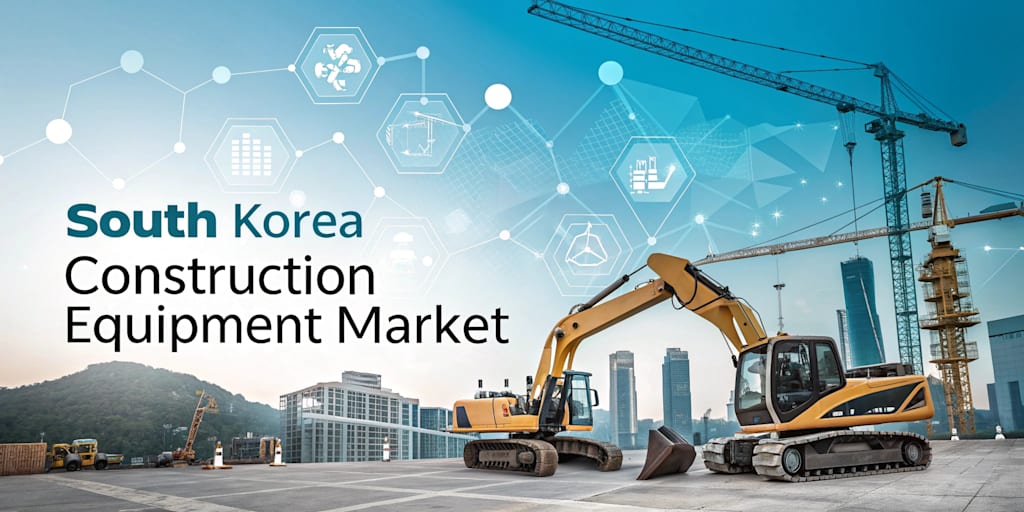
The construction equipment market in South Korea is experiencing steady growth, supported by rapid urban development, infrastructure expansion, and increasing industrial activity. As cities continue to expand and modernize, the demand for efficient and technologically advanced construction machinery is rising across both public and private sector projects.
According to industry estimates, the market was valued at USD 4,960.4 Million in 2025 and is expected to reach USD 7,004.0 Million by 2034. This growth reflects a consistent increase in construction activities, along with the adoption of modern equipment designed to improve efficiency, reduce emissions, and support large-scale infrastructure projects. The Seoul Capital Area remains the dominant region due to its dense population, ongoing urban projects, and concentration of economic activity.
Expanding Urban Infrastructure Driving Demand
Urbanization continues to play a major role in shaping the construction equipment market. As more people move into cities, the need for residential complexes, commercial buildings, transportation systems, and public utilities increases significantly. This shift is particularly visible in major urban centers where land development and redevelopment projects require heavy machinery such as excavators, loaders, and cranes.
Government-backed infrastructure initiatives are also contributing to sustained demand. Projects involving highways, bridges, metro systems, and logistics hubs require large-scale earthmoving and material handling equipment. These long-term infrastructure programs ensure continuous utilization of construction machinery, making the sector relatively stable even during economic fluctuations.
Role of Manufacturing and Industrial Expansion
South Korea is known for its strong manufacturing base, particularly in industries such as automotive, electronics, and steel. The expansion and modernization of industrial facilities directly influence the demand for construction equipment. New factories, warehouse facilities, and industrial parks require advanced machinery for site preparation, construction, and internal logistics.
Equipment such as forklifts and cranes are especially important in these environments, where precision handling and efficiency are critical. As industries continue to upgrade their facilities with modern technologies, the need for reliable and high-performance construction equipment is expected to remain strong.
Smart Cities and Digital Construction Practices
One of the notable developments in the market is the growing integration of digital technologies into construction processes. Smart city initiatives are encouraging the use of advanced tools such as IoT-enabled equipment, GPS tracking, and real-time data monitoring systems.
These technologies allow construction companies to improve project management, reduce downtime, and optimize equipment usage. For example, telematics systems can track fuel consumption, machine health, and operational efficiency, helping companies make informed decisions and reduce costs. As digital transformation continues, construction equipment is becoming more intelligent and connected, aligning with broader technological trends.
Shift Toward Eco-Friendly Equipment
Environmental concerns are increasingly influencing purchasing decisions in the construction sector. Stricter emission regulations and sustainability goals are encouraging companies to adopt cleaner and more energy-efficient equipment. Electric and hybrid construction machinery is gradually gaining traction, particularly in urban areas where emission standards are more stringent.
Government initiatives supporting green infrastructure are also accelerating this transition. Contractors are more likely to invest in low-emission machinery to qualify for environmentally focused projects and comply with regulatory requirements. Over time, this shift is expected to reshape the market, with sustainability becoming a key factor in equipment selection.
Equipment Modernization and Replacement Trends
Another important factor driving the market is the replacement of aging machinery. Many construction firms are upgrading their fleets to improve productivity, reduce maintenance costs, and meet modern operational standards. New equipment offers better fuel efficiency, enhanced safety features, and improved performance compared to older models.
This replacement cycle is particularly noticeable among mid-sized companies that are benefiting from financing options and government support programs. As access to funding improves, more businesses are investing in modern machinery, contributing to overall market growth.
Influence of Global Players and Partnerships
The construction equipment market in South Korea is also shaped by the presence of both domestic and international manufacturers. Companies such as Komatsu Ltd. and AB Volvo, along with local leaders like HD Hyundai Construction Equipment Co. Ltd., are actively competing and collaborating within the market.
These companies are introducing advanced technologies, including automation and semi-autonomous machinery, which improve efficiency and reduce labor dependency. Partnerships between global firms and local developers are also helping to bring innovative solutions into large infrastructure and smart city projects.
Emerging Opportunities and Future Outlook
Looking ahead, the market is expected to benefit from continued investments in infrastructure, technological advancements, and sustainability initiatives. The adoption of electric equipment, automation, and digital tools will likely accelerate, creating new opportunities for manufacturers and service providers.
At the same time, challenges such as high equipment costs and economic uncertainties may influence purchasing decisions. However, the overall outlook remains positive, supported by strong government policies, industrial growth, and ongoing urban development.
Conclusion
The construction equipment market in South Korea is evolving steadily, driven by urbanization, infrastructure development, and technological innovation. From traditional machinery to smart, connected equipment, the industry is undergoing a transformation that reflects broader economic and environmental priorities.
As cities continue to grow and industries expand, construction equipment will remain a critical component of development. With a focus on efficiency, sustainability, and digital integration, the market is well-positioned for long-term growth while adapting to changing demands in the construction landscape.
About the Creator
Enjoyed the story? Support the Creator.
Subscribe for free to receive all their stories in your feed.
Comments
There are no comments for this story
Be the first to respond and start the conversation.