
South Korea Aesthetic Devices Market Forecast: Home Devices, Scalable Access & Forecast to 2034
How at-home skincare adoption, premium device innovation, and digital retail growth are transforming competitive dynamics in the South Korea aesthetic devices market.
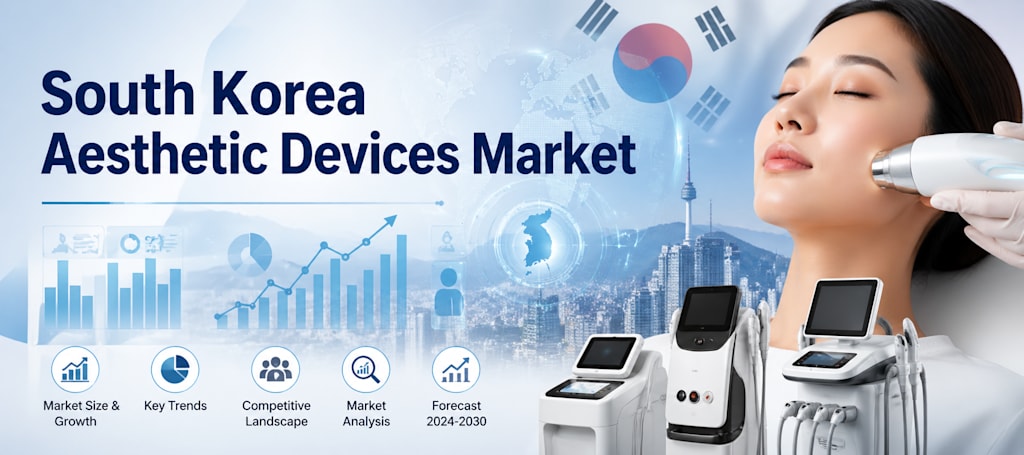
The aesthetic devices market in South Korea continues to grow due to the country’s strong cultural focus on appearance and skincare. The market size reached USD 305.7 Million in 2025 and is projected to reach USD 520.8 Million by 2034, growing at a CAGR of 6.10% during 2026–2034. This growth reflects how beauty and personal care are integrated into everyday life rather than being limited to occasional treatments.
The influence of K-beauty has contributed to the normalization of clinical aesthetic procedures across different age groups and genders. Treatments such as skin resurfacing, tightening, and non-invasive contouring are increasingly considered routine. Areas like Gangnam in Seoul are known for their high concentration of aesthetic clinics, where new technologies are frequently introduced and adopted.
Consumers generally prefer treatments that offer visible improvements with minimal downtime. This has encouraged continuous innovation in aesthetic devices, particularly those that can deliver consistent results while maintaining safety and comfort.
Medical Tourism as a Commercial Growth Engine
Medical tourism plays an important role in supporting demand for aesthetic devices in South Korea. The country attracts a large number of international patients each year, particularly from China, Japan, Southeast Asia, and the Middle East. These visitors often seek cosmetic and dermatological treatments that combine advanced technology with relatively competitive pricing.
The steady flow of international patients increases the utilization of aesthetic devices in clinics and hospitals. This, in turn, encourages healthcare providers to invest in modern equipment to maintain service quality and meet global expectations. Government organizations such as the Ministry of Health and Welfare and the Korea Tourism Organization have also supported the development of medical tourism infrastructure, which indirectly benefits the device market.
As a result, medical tourism continues to act as a stable contributor to demand, supporting both domestic and international service providers operating in the sector.
Aging Population and Anti-Aging Treatment Demand
Demographic changes are another important factor influencing the market. South Korea is experiencing a gradual increase in its aging population, with a rising share of individuals aged 65 and above. This group often seeks solutions for age-related concerns such as wrinkles, skin laxity, and pigmentation.
Non-invasive procedures have become particularly popular among this segment. Technologies based on radiofrequency and high-intensity focused ultrasound (HIFU) are widely used for skin tightening and rejuvenation. These treatments are preferred because they do not require surgery and involve shorter recovery times.
Anti-aging applications now represent a significant portion of the overall market. As awareness and accessibility continue to improve, demand from this demographic is expected to remain consistent over time.
South Korea Aesthetic Devices Market Trends:
Rapid Adoption of Energy-Based Device Technologies
Energy-based devices are a key area of development within the market. These include laser systems, radiofrequency platforms, light-based technologies, and ultrasound-based equipment. Clinics are increasingly adopting multi-functional devices that can address multiple skin concerns within a single treatment session.
Advancements in technology are improving precision, safety, and treatment outcomes. For example, some newer systems incorporate AI-based features to assist with calibration and energy control, helping practitioners deliver more consistent results. This has contributed to higher adoption rates among clinics aiming to improve efficiency and patient experience.
Manufacturers in South Korea are also focusing on product development to remain competitive in both domestic and international markets. As a result, technology-driven improvements continue to shape the direction of the industry.
Growth of Home-Use Aesthetic Devices
Another noticeable trend is the increasing popularity of home-use aesthetic devices. Consumers are showing interest in solutions that allow them to maintain skincare routines outside of clinical settings. Compact devices based on technologies such as LED therapy and low-level radiofrequency are becoming more widely available.
The growth of this segment is supported by high digital engagement and familiarity with beauty products. Many of these devices are designed to be user-friendly and are often integrated with mobile applications that track usage and progress.
While professional treatments remain important, home-use devices provide an additional option for consumers seeking convenience and regular maintenance. This has created a complementary relationship between clinical services and personal care routines.
Government Support and Regulatory Modernization
Government policies have contributed to the structured development of the aesthetic devices market in South Korea. Efforts to streamline approval processes and support research and development have made it easier for new technologies to enter the market.
Regulatory updates, particularly those related to safety standards for energy-based devices, have also improved transparency and consumer confidence. Guidelines introduced by the Ministry of Health and Welfare help ensure that devices are used appropriately in both hospital and non-hospital settings.
These measures create a more stable environment for manufacturers, healthcare providers, and consumers. By balancing innovation with regulation, the market is able to expand while maintaining safety and quality standards.
Recent News and Developments in South Korea Aesthetic Devices Market
Recent developments highlight ongoing advancements and global engagement within the industry. In March 2025, a South Korean medical technology company introduced a new high-intensity focused ultrasound platform featuring AI-assisted calibration, aimed at improving treatment accuracy in both clinical and home-use settings.
In January 2025, updated safety guidelines for energy-based devices were released by the Ministry of Health and Welfare. These updates focused on ensuring proper usage in clinic environments and reinforcing patient safety.
In September 2024, a domestic manufacturer entered into a distribution agreement with a European partner to expand the reach of its laser-based systems into international markets. This reflects the growing global interest in South Korean aesthetic technologies.
Additionally, in June 2024, Seoul hosted a major international conference on aesthetic and anti-aging medicine, bringing together thousands of professionals and companies. Events like these highlight the country’s role as a center for innovation and knowledge exchange in the field.
Conclusion
The aesthetic devices market in South Korea is growing steadily, supported by cultural factors, technological advancements, and evolving consumer preferences. The combination of strong domestic demand and international interest continues to shape the industry.
While trends such as medical tourism, aging demographics, and home-use devices are influencing growth, the market remains balanced between innovation and established practices. Both clinical and personal care solutions play a role in meeting diverse consumer needs.
As the industry continues to develop, the focus is likely to remain on improving treatment outcomes, enhancing safety, and expanding accessibility. This steady progression reflects the broader evolution of the healthcare and beauty sectors in South Korea.
About the Creator
Enjoyed the story? Support the Creator.
Subscribe for free to receive all their stories in your feed.
Comments
There are no comments for this story
Be the first to respond and start the conversation.