
South Africa Vertical Farming Market: Sustainable Agriculture, Smart Farming & Growth Outlook
How controlled-environment agriculture, water-efficient cultivation, and urban food production are driving innovation and investment opportunities in the South Africa vertical farming market

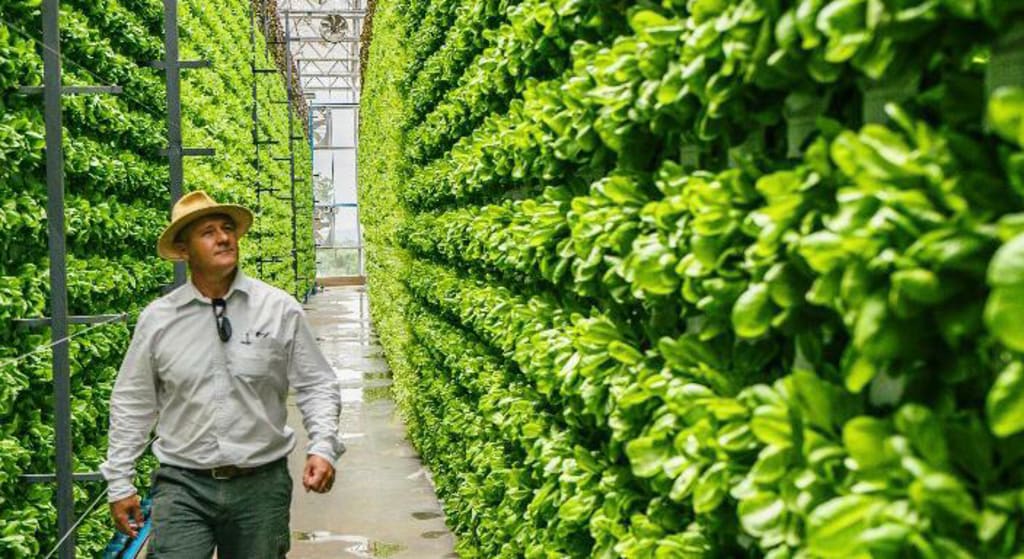
According to IMARC Group's latest research publication, South Africa vertical farming market size reached USD 58.1 Million in 2025. Looking forward, IMARC Group expects the market to reach USD 362.5 Million by 2034, exhibiting a growth rate (CAGR) of 21.88% during 2026-2034.
How AI is Reshaping the Future of South Africa Vertical Farming Market
- AI helps South African vertical farms fine-tune lighting, water, and nutrients in real time, slashing waste while boosting crop health and output for local growers.
- Government pushes like the AI Institute of South Africa and DSI programs are backing tech adoption, helping vertical farms tackle food security in cities like Johannesburg and Cape Town.
- Companies are rolling out AI-driven monitoring that cuts pesticide needs and improves efficiency, making fresh produce more accessible and sustainable across urban South Africa.
South Africa Vertical Farming Market Trends & Drivers:
South Africa vertical farming sector is gaining momentum as rapid urbanization increases the need for locally produced fresh vegetables and herbs in major cities. Limited arable land combined with erratic weather patterns pushes growers toward controlled environment systems that deliver consistent yields year-round. Consumers show rising preference for pesticide-free produce, encouraging commercial operations in Johannesburg and Cape Town to supply supermarkets directly. Improved infrastructure and a skilled workforce support large-scale indoor projects, positioning the country as a regional hub. Adoption of advanced hydroponic and aeroponic techniques further drives efficiency while addressing water scarcity challenges common across the region.
Technological innovation serves as a key driver for vertical farming expansion in South Africa by enabling precise climate control and resource optimization. Farmers benefit from reduced dependence on traditional agriculture vulnerable to drought and soil degradation. Growing awareness of sustainability encourages investment in energy-efficient lighting and automated systems that minimize environmental impact. Private sector interest and supportive business conditions facilitate new ventures focused on high-value crops. Urban consumers increasingly value fresh, traceable food, boosting market demand and encouraging more facilities to operate near population centers. This shift strengthens food security while creating opportunities for local agribusiness development.
Government and industry focus on resilient food production accelerates vertical farming as a strategic response to climate pressures. Stable urban power supply enables reliable operation of indoor facilities that overcome seasonal limitations of outdoor farming. Emphasis on sustainable practices aligns with consumer expectations for environmentally responsible agriculture. Skilled labor availability and strong investment climate help scale commercial projects effectively. Vertical systems promote year-round harvesting with lower water usage, making them attractive in water-stressed areas. These factors collectively support broader adoption and help establish South Africa as a model for modern farming solutions across the continent.
South Africa Vertical Farming Industry Segmentation:
The report has segmented the market into the following categories:
Component Insights:
- Irrigation Component
- Lighting
- Sensor
- Climate Control
- Building Material
- Glass Greenhouse
- Plastic Greenhouse
- Others
Structure Insights:
- Building-based Vertical Farms
- Container-based Vertical Farms
Growth Mechanism Insights:
- Hydroponics
- Aeroponics
- Aquaponics
Application Insights:
- Indoor
- Outdoor
Regional Insights:
- Gauteng
- KwaZulu-Natal
- Western Cape
- Mpumalanga
- Eastern Cape
- Others
Competitive Landscape:
The competitive landscape of the industry has also been examined along with the profiles of the key players.
Recent News and Developments in South Africa Vertical Farming Market
- April 2026: Durban inventor Jude Bezuidenhout launched an ultra-high-density passive hydroponic system capable of growing up to 100 plants per square metre without electricity or mechanical pumps, using only water and nutrients to address urban food insecurity and reduce energy costs.
- May 2026: Afrika Tikkun's Green Acres Farm in Diepsloot launched the Hydro-Coop pilot programme training 20 young people, mostly women plus one with a disability, in solar-powered integrated poultry and hydroponic vegetable systems for micro-farming enterprises that use substantially less water than traditional methods.
- February 2026: Arable Grow advanced its low-CAPEX vertical farming technology in Somerset West, deploying hydroponics, aeroponics, climate control, and IoT sensors to enable pesticide-free, year-round production using up to 90-95% less water and land than conventional farming.
Note: If you require specific details, data, or insights that are not currently included in the scope of this report, we are happy to accommodate your request. As part of our customization service, we will gather and provide the additional information you need, tailored to your specific requirements. Please let us know your exact needs, and we will ensure the report is updated accordingly to meet your expectations.
About the Creator
Fatimah
Market research writer at IMARC Group, turning data into engaging stories. Passionate about trends, insights & real-world impact. Join me on Vocal!
Enjoyed the story? Support the Creator.
Subscribe for free to receive all their stories in your feed.
Comments
There are no comments for this story
Be the first to respond and start the conversation.