
Sora Retreated: Google Doubled Down The Logic Behind Gemini Omni
Tech

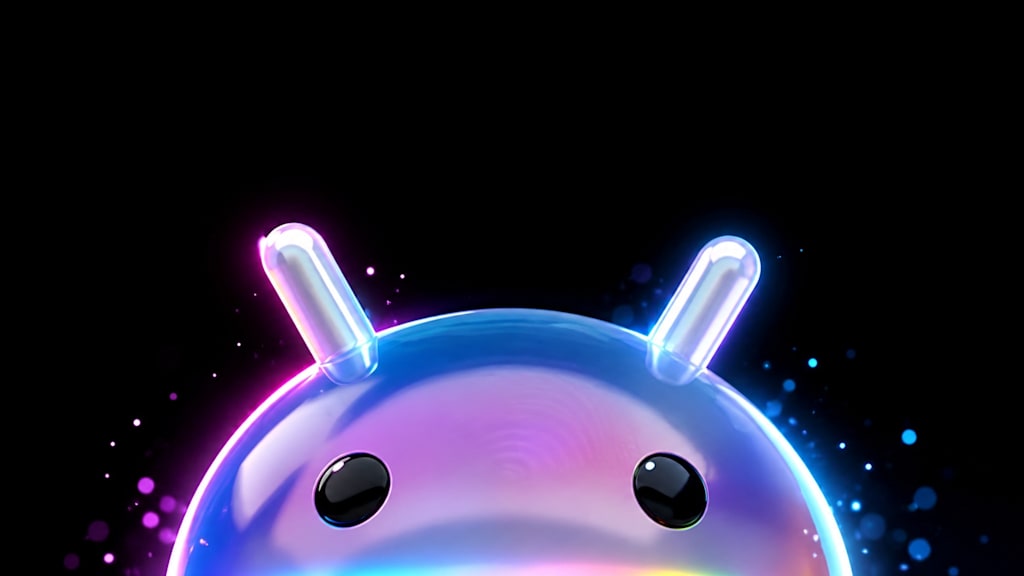
Two weeks apart, two of the largest AI labs in the world made opposite bets on video.
On April 29, OpenAI quietly shut down the consumer-facing Sora 2 app, retaining the model only as an API offering with a Pro variant for higher-resolution output. The framing was operational — distribution focus, infrastructure cost, "we're refining the experience" — but the substance was a retreat from the consumer video market.
Eleven days later, on May 11, screenshots of an unreleased Google model called Gemini Omni began circulating across Reddit and X. The leak was unmistakable: a new video generation model, surfacing inside the Gemini app itself, with a pop-up reading "Create with Gemini Omni: meet our new video model. Remix your videos, edit directly in chat, try a template, and more." Google I/O 2026 is May 19–20. The launch window is now measured in days.
These two moves — OpenAI pulling back from consumer video, Google preparing its most aggressive video launch yet — are the right frame for understanding what Gemini Omni actually represents. It isn't just a model. It's a strategic posture.
The Cost Reality Behind OpenAI's Retreat
The numbers around AI video are punishing. The Reddit user with early Omni access reported burning 86% of their AI Pro daily quota on exactly two generations. Even allowing for pre-launch quota throttling, the compute footprint per generated clip sits at least an order of magnitude above what a typical chat session consumes.
For OpenAI, which has been routing inference capacity toward GPT-5 reasoning workloads, the Sora 2 consumer app was an awkward dependency. Free-tier video generation is a marketing channel that costs real money. API-only access means each generation is monetized at full margin. The Sora retreat wasn't a capability problem — Sora 2 remains technically competitive — it was a portfolio decision about which workloads deserve scarce compute.
Google operates under a different constraint. The TPU build-out gives Google significantly more inference headroom than OpenAI has on equivalent workloads, and the integration of video into the existing Gemini product surface lets Google amortize the compute cost across an established user base rather than treating it as a standalone product investment.
That asymmetry is the structural reason Google can launch Omni as a consumer product while OpenAI cannot.
Why "Gemini Omni" and Not "Veo 4"
The naming choice matters more than most coverage has registered. Google has spent two years building Veo as a stand-alone video brand — Veo 2, Veo 3, Veo 3.1, each upgrade preserving the lineage. Now, with what the metadata describes as a Veo extension, the branding shifts entirely. Omni replaces Veo. Video moves under the Gemini umbrella.
This is a deliberate consolidation. Google has historically maintained parallel AI product brands — Veo for video, Imagen for images, Nano Banana for image editing, Gemini for text. Each had its own pricing, its own access path, its own quirks. The Omni rebrand signals that this fragmentation is ending. Video is becoming a modality inside Gemini, not a product alongside it.
For anyone trying to make sense of Google's AI roadmap, this is the signal. The next twelve months will see Google push toward a single conversational surface that handles text, images, video, and reasoning interchangeably. Omni is the first concrete step. Anyone wanting to see how the unified experience actually feels can try Gemini Omni through the aggregated preview material that's been collecting the leaked outputs and prompt examples since the staging access surfaced.
The Competitive Landscape Google Is Walking Into
The video model field in May 2026 is more crowded than most observers acknowledge.
ByteDance's Seedance 2.0 sits at the top of most public benchmarks, particularly for complex scenes and physical accuracy. Alibaba's Wan 2.7 ships the most comprehensive feature set — text-to-video, image-to-video, reference-to-video, video editing, 1080p with synchronized audio. Kuaishou's Kling V3.0 anchors the Asia-led wave alongside Wan and Seedance, with particular strength in cinematic camera work. OpenAI's Sora 2 is API-only after the consumer app shutdown.
Google Veo 3.1 has held the high ground on cinematic camera work and remains the only frontier model with reliable native audio generation. The open question is whether Omni inherits that audio capability while adding chat-native editing — if it does, Google's video offering moves into a category by itself.
The fact that Google is publicly leaning into this segment, two weeks after OpenAI quietly stepped back, suggests Google's internal read on the unit economics is more favorable than OpenAI's. It also suggests Google believes the workflow integration — video lives inside the same Gemini surface as everything else — is worth more than a benchmark win.
What to Watch for at I/O
Three specific signals will tell you whether Omni is the strategic shift this leak suggests or just a brand refresh.
First, whether Omni ships with native audio on day one. If it does, Google has the only complete consumer video product on the market. If it doesn't, the strategic positioning is weaker than the leak implies.
Second, whether API access opens immediately. A simultaneous consumer-and-API launch signals confidence that supply can meet demand. A staged rollout signals capacity constraints — which would in turn explain why OpenAI made its move when it did.
Third, whether the pricing structure pushes Omni into a new tier above AI Pro, or folds it into existing plans. The quota burn data suggests the former is likely, but Google may absorb the cost to maximize early adoption and lock in the workflow before competitors catch up.
The Read From Here
The Gemini Omni leak is not just about a new video model. It's about a moment when one of the two largest AI labs in the world judged that consumer video generation isn't economically viable at scale — and the other judged that it is, and that the workflow advantage of unified multimodality is worth the compute commitment.
Whether Google is right or OpenAI is right will be one of the more consequential answered questions of the next twelve months. The keynote on May 19 is where the Gemini Omni AI story turns from leak to product, and where the competitive math behind these two opposing bets starts to play out in public.
About the Creator
Enjoyed the story? Support the Creator.
Subscribe for free to receive all their stories in your feed.
Comments
There are no comments for this story
Be the first to respond and start the conversation.