
Solar Freezer Market: Portable Cooling Innovations, Commercial Adoption & Industry Forecast
How disaster relief applications, portable solar cooling units, and rising infrastructure investments are boosting demand growth within the solar freezer market

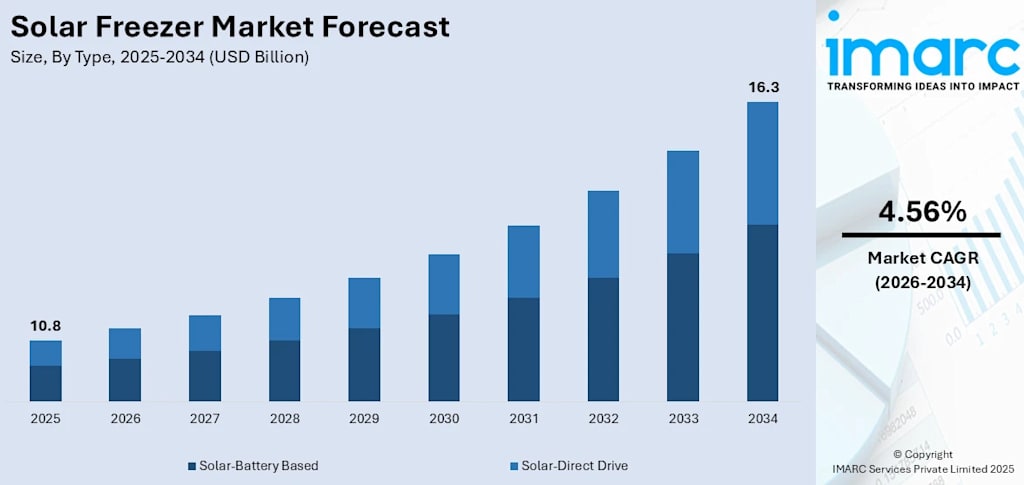
Rising shift towards renewable energy alternatives, increasing frequency of power supply disruptions in disaster-stricken areas, and ongoing improvements in solar panel efficiency and battery storage capacity are driving the global solar freezer demand. This growth is strongly supported by the expansion of healthcare cold chains, agricultural preservation needs, and widening retail distribution channels for off-grid appliances. According to IMARC Group’s latest data, the global solar freezer market size was valued at USD 10.8 Billion in 2025. Looking forward, IMARC Group estimates the market to reach USD 16.3 Billion by 2034, exhibiting a CAGR of 4.56% from 2026-2034.
Solar freezers now represent a critical segment of the global renewable appliance infrastructure, surpassing the ten-billion-dollar milestone and demonstrating steady year-on-year expansion. Demand is primarily propelled by a global push for decarbonization, the rising vulnerability of traditional electrical grids to extreme weather, and an urgent need for dependable refrigeration in remote or off-grid locations. Strategic innovations in insulation, energy storage, and direct-drive technologies are further accelerating adoption across commercial and humanitarian sectors.
Get Instant Access to the "Solar Freezer Market" Sample Report
Solar Freezer Market Growth Drivers:
- Expansion of Healthcare Cold Chain Infrastructure
Reliable refrigeration is non-negotiable for preserving vaccines, blood products, and temperature-sensitive medications in remote clinics. Rapidly growing investments in rural healthcare across emerging economies have heightened the necessity for off-grid medical storage. For instance, public health initiatives often deploy specialized solar units to maintain strict climate controls without relying on erratic local grids. This critical need underpins a global industry valued at approximately USD 10.8 billion. Stringent pharmaceutical regulations and expanded global immunization programs ensure that these clinical units remain an indispensable asset for international health organizations and local ministries alike.
- Rising Demand for Renewable Energy and Off-Grid Solutions
Growing environmental awareness and a worldwide shift toward clean energy are prompting individuals and businesses to adopt sustainable appliances. Solar-powered freezers allow users to eliminate carbon emissions associated with traditional fossil-fuel-powered or grid-dependent cooling systems. The global market stands at around USD 10.8 billion, driven by eco-conscious consumers, agricultural operators, and remote communities aiming for energy self-sufficiency. By utilizing high-efficiency photovoltaic panels, these systems optimize clean energy usage, making them a practical choice for residential cabins, mobile retail units, and eco-tourism setups seeking to lower their environmental impact.
- Disaster Preparedness and Climate-Induced Grid Vulnerabilities
An increasing frequency of extreme weather events, such as severe storms and wildfires, exposes major vulnerabilities in conventional electrical grids, leading to prolonged power outages. Consequently, residential and commercial sectors are turning to solar freezers as vital backup systems to safeguard food supplies and perishable assets. Industry data indicates substantial market penetration in disaster-prone regions where grid reliability is compromised. Valued at about USD 10.8 billion globally, the sector experiences strong demand for units equipped with robust thermal energy retention capabilities, ensuring continuous operation and preventing costly spoilage during emergencies without needing active electrical grid infrastructure.
Solar Freezer Market Trends:
- Integration of Advanced Lithium-Ion Battery Systems
Manufacturers are increasingly shifting away from older lead-acid configurations toward advanced lithium-ion battery technology to improve overall energy storage efficiency. This transition provides solar freezers with longer lifespans, faster charging cycles, and greater operational reliability during consecutive overcast days. Industry reports indicate that modern energy storage capabilities heavily influence consumer purchasing decisions, especially in regions with fluctuating solar irradiance. The global market stands at around USD 10.8 billion, where battery-based innovations represent a dominant share. Real-world applications include remote research stations and off-grid residential properties that require consistent, long-term cooling performance without frequent battery replacements.
- Adoption of Phase Change Materials for Direct-Drive Innovation
Solar direct-drive technology, which eliminates the need for chemical batteries by storing energy thermally, is gaining major traction. These systems utilize advanced phase change materials to freeze an internal ice bank or gel layer when sunlight is available, keeping contents frozen for multiple days during complete darkness. This design significantly reduces long-term maintenance costs and disposal concerns associated with batteries. With the broader market valued at approximately USD 10.8 billion, this trend is reshaping procurement strategies for humanitarian aid organizations operating in harsh, isolated environments where technical support and replacement parts are unavailable.
- Commercial Premiumization and Enhanced Thermal Insulation
To maximize energy efficiency, brands are designing premium solar freezers featuring thick polyurethane insulation layers, often reaching up to 4.5 inches, alongside highly efficient direct-current compressors. Companies like South African manufacturer Defy recently made major headlines by launching advanced unplugged appliances capable of running seamlessly on combined solar and thermal storage. This wave of premiumization attracts affluent off-grid homeowners and commercial retail businesses looking for durable equipment. Industry tracking shows that these high-efficiency, heavy-duty configurations are driving value growth across North America and Europe, where users apply them for remote commercial catering, marine vessels, and high-end sustainable living.
Recent News and Developments in Solar Freezer Market
- August 2025: Rockwell Industries unveiled a new series of energy-efficient green freezers utilizing smart direct-current compressors, specifically engineered to optimize low-voltage solar power inputs for commercial and medical cold storage applications.
- October 2025: B Medical Systems partnered with a prominent international non-governmental organization to deploy next-generation solar direct-drive freezers across Sub-Saharan Africa, aiming to reinforce rural health clinics with battery-free vaccine storage solutions.
- January 2026: Dometic Group expanded its mobile cooling portfolio by introducing a heavy-duty, solar-compatible chest freezer line designed with advanced digital telemetry for real-time temperature tracking during off-grid medical and emergency transport.
Note: If you require specific details, data, or insights that are not currently included in the scope of this report, we are happy to accommodate your request. As part of our customization service, we will gather and provide the additional information you need, tailored to your specific requirements. Please let us know your exact needs, and we will ensure the report is updated accordingly to meet your expectations.
About the Creator
Andrew Sullivan
Hello, I’m Andrew Sullivan. I have over 9+ years of experience as a market research specialist.
Enjoyed the story? Support the Creator.
Subscribe for free to receive all their stories in your feed.
Comments
There are no comments for this story
Be the first to respond and start the conversation.