
Snack Bar Market Analysis: Emerging Markets, Urbanization & Industry Forecast to 2034
How innovative flavors, texture enhancements, and sensory appeal are driving product differentiation and increasing consumer engagement in the global snack bar market

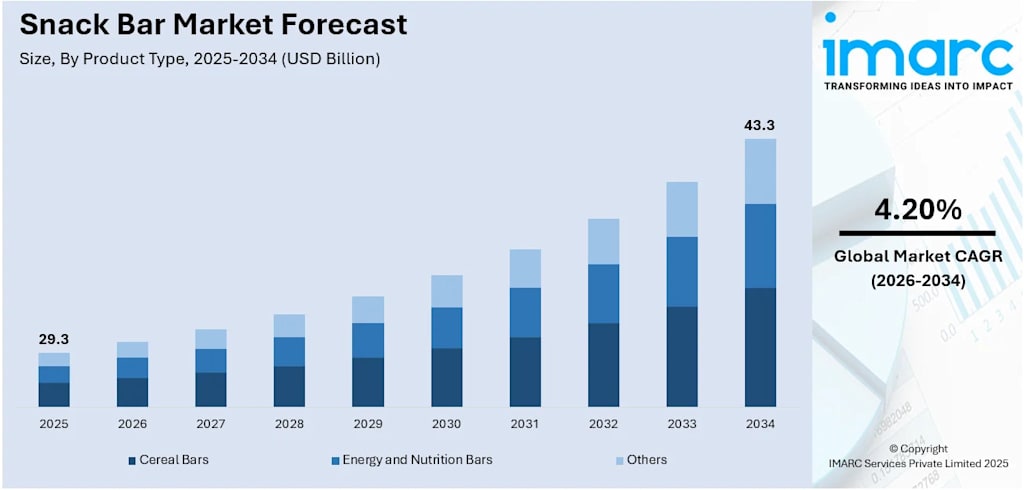
Rising health awareness, busy lifestyles, and preference for convenient, nutritious foods are driving snack bar demand, supported by clean-label trends, product innovation, and expanding retail and online distribution channels. According to IMARC Group’s latest data, The global snack bar market size was valued at USD 29.3 Billion in 2025. Looking forward, IMARC Group estimates the market to reach USD 43.3 Billion by 2034, exhibiting a CAGR of 4.20% from 2026-2034.
Snack bars have evolved into a vital component of the global food landscape, now representing a multi-billion-dollar industry that serves as a bridge between indulgence and functional nutrition. Modern consumers are increasingly moving away from traditional three-meal structures toward "snackification," where portable bars serve as quick meal replacements or energy boosters. Demand is heavily influenced by a surge in fitness culture, the integration of plant-based proteins, and a growing scrutiny of ingredient lists. Key market segments include cereal bars, which hold the largest share due to their whole-grain content, alongside rapidly expanding energy and nutrition bar categories.
Snack Bar Market Growth Drivers:
- Rising Health and Wellness Consciousness
Modern consumers are increasingly proactive about their long-term health, leading to a significant shift toward snacks that offer more than just basic satiety. This health-conscious movement prioritizes high protein, fiber-rich, and low-sugar formulations that support weight management and metabolic health. With global health reports highlighting a rise in lifestyle-related conditions, many adults now view snack bars as functional tools for preventive nutrition. Consequently, brands are reformulating products to exclude artificial additives, focusing instead on "superfood" ingredients like chia seeds, ancient grains, and plant-based proteins to meet the rigorous nutritional standards of today’s informed buyers.
- Urbanization and the "On-the-Go" Lifestyle
The acceleration of urban living and increasingly hectic work schedules have fundamentally changed eating habits, making portability a non-negotiable feature for many. Snack bars provide a convenient, mess-free solution for commuters, students, and professionals who lack the time for traditional meal preparation. This demand for "on-the-go" nutrition is particularly strong in North America and Europe, where single-serve packaging dominates the retail space. As more people integrate fitness routines into their daily lives, the need for easily transportable pre- and post-workout energy sources continues to fuel steady volume growth across both traditional and specialty retail channels.
- Expanding Popularity of Plant-Based and Functional Diets
The global rise of veganism and flexitarianism has created a massive opening for snack bars that utilize plant-derived proteins such as pea, soy, and brown rice. Beyond simple plant-based claims, consumers are looking for functional benefits like improved gut health through probiotics or cognitive support through adaptogens. Industry data suggests that organic and vegan variants are growing at a faster rate than conventional options as shoppers align their purchases with ethical and environmental values. This trend is supported by significant R&D investments from major food conglomerates aiming to replicate indulgent textures using entirely natural, sustainable, and allergen-free ingredients.
Snack Bar Market Trends:
- Sustainability and Eco-Friendly Packaging Shifts
Environmental impact is becoming a primary factor in consumer decision-making, forcing brands to rethink their waste footprints. A major trend in 2026 is the transition from multi-layer plastic films to recyclable paper-based wrappers and compostable materials. For instance, industry leaders like KIND and Clif Bar have recently piloted curbside-recyclable packaging to meet strict international regulations, such as the EU's Packaging and Packaging Waste Regulation. These initiatives are not just about compliance; they serve as a powerful marketing tool for eco-conscious shoppers who now associate sustainable packaging with overall product quality and brand integrity.
- Premiumization through Ingredient Transparency
The market is witnessing a move toward "premiumization," where consumers are willing to pay more for bars that offer traceable, high-quality ingredients. This includes stone-ground nut butters, organic honey, and single-origin cocoa. Transparency in labeling often referred to as "clean label" is no longer a niche requirement but a baseline expectation. Brands are utilizing QR codes on packaging to provide stories about ingredient sourcing and farming practices. This trend is particularly evident in the "cereal bar" segment, where the use of minimally processed whole grains and natural sweeteners is driving value growth in mature markets like the U.S. and UK.
- Focus on Sugar Reduction and Nutritional Fortification
Regulatory pressures and public health initiatives are driving a massive wave of product reformulation focused on sugar reduction. Governments in various regions are implementing front-of-pack labeling requirements that highlight high sugar content, prompting manufacturers to use natural alternatives like stevia, monk fruit, or chicory root fiber. Simultaneously, there is a trend toward "proactive nutrition," where bars are fortified with essential vitamins, minerals, and electrolytes. This shift ensures that snack bars remain competitive against other "better-for-you" categories, positioning them as a legitimate part of a balanced diet rather than a high-calorie confectionery substitute.
Recent News and Developments in Snack Bar Market
- February 2026: General Mills announced a major expansion of its Nature Valley protein line, introducing new savory-sweet flavor profiles and increased fiber content to cater to the growing demand for functional, everyday satiety solutions.
- December 2025: Mars Incorporated completed its landmark USD 36 billion acquisition of Kellanova, a move that consolidates two of the world’s largest snacking portfolios and is expected to accelerate innovation in the global cereal and nutrition bar categories.
- September 2025: Nestlé launched a global initiative to reduce added sugars by 15% across its entire snack bar portfolio by 2027, utilizing new "sugar-mapping" technology to maintain taste profiles while significantly improving the nutritional score of its products.
Note: If you require specific details, data, or insights that are not currently included in the scope of this report, we are happy to accommodate your request. As part of our customization service, we will gather and provide the additional information you need, tailored to your specific requirements. Please let us know your exact needs, and we will ensure the report is updated accordingly to meet your expectations.
About the Creator
Andrew Sullivan
Hello, I’m Andrew Sullivan. I have over 9+ years of experience as a market research specialist.
Enjoyed the story? Support the Creator.
Subscribe for free to receive all their stories in your feed.
Comments
There are no comments for this story
Be the first to respond and start the conversation.